
Will we ever get out of Shelter Bay? (Hint: yes.)
On the 1st of April I had a moment of utter rapture on my morning ride. I was moving slowly through Mot Mot Alley and heard at least a dozen of them – both broad-billed and rufous, though more of the latter – calling from both sides of the road. In awe, I climbed off my bike and looked for them in the tangle of greenery all around. It was quiet aside from the music of all the bird calls and songs, and so, so peaceful. The early morning sun was filtering through the forest, and a light breeze was coming up the road. A blanketing calm descended, leaving me profoundly happy, and grateful. With a deep breath I closed my eyes and thanked the birds; I was now a complete convert to forest bathing.
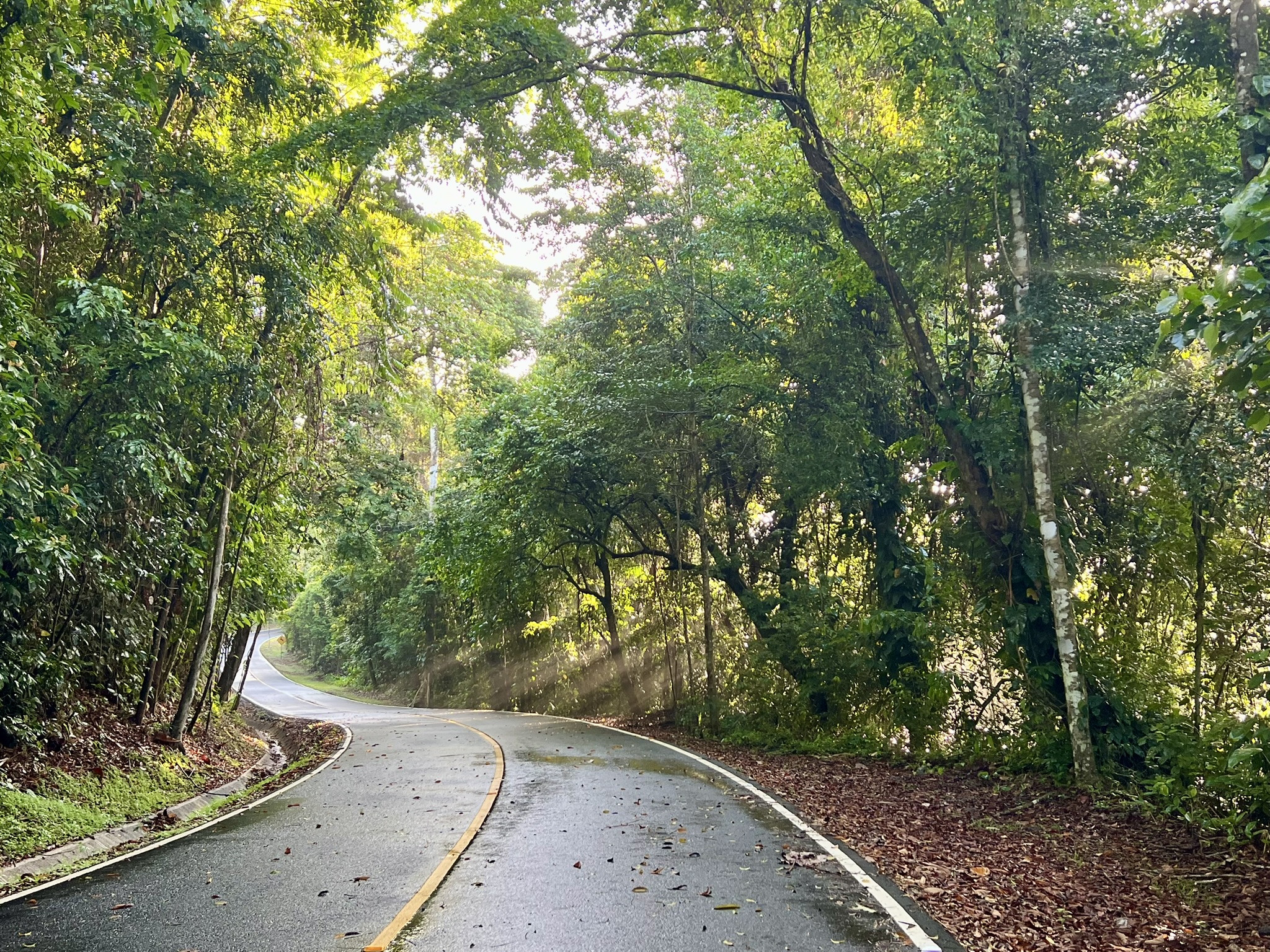
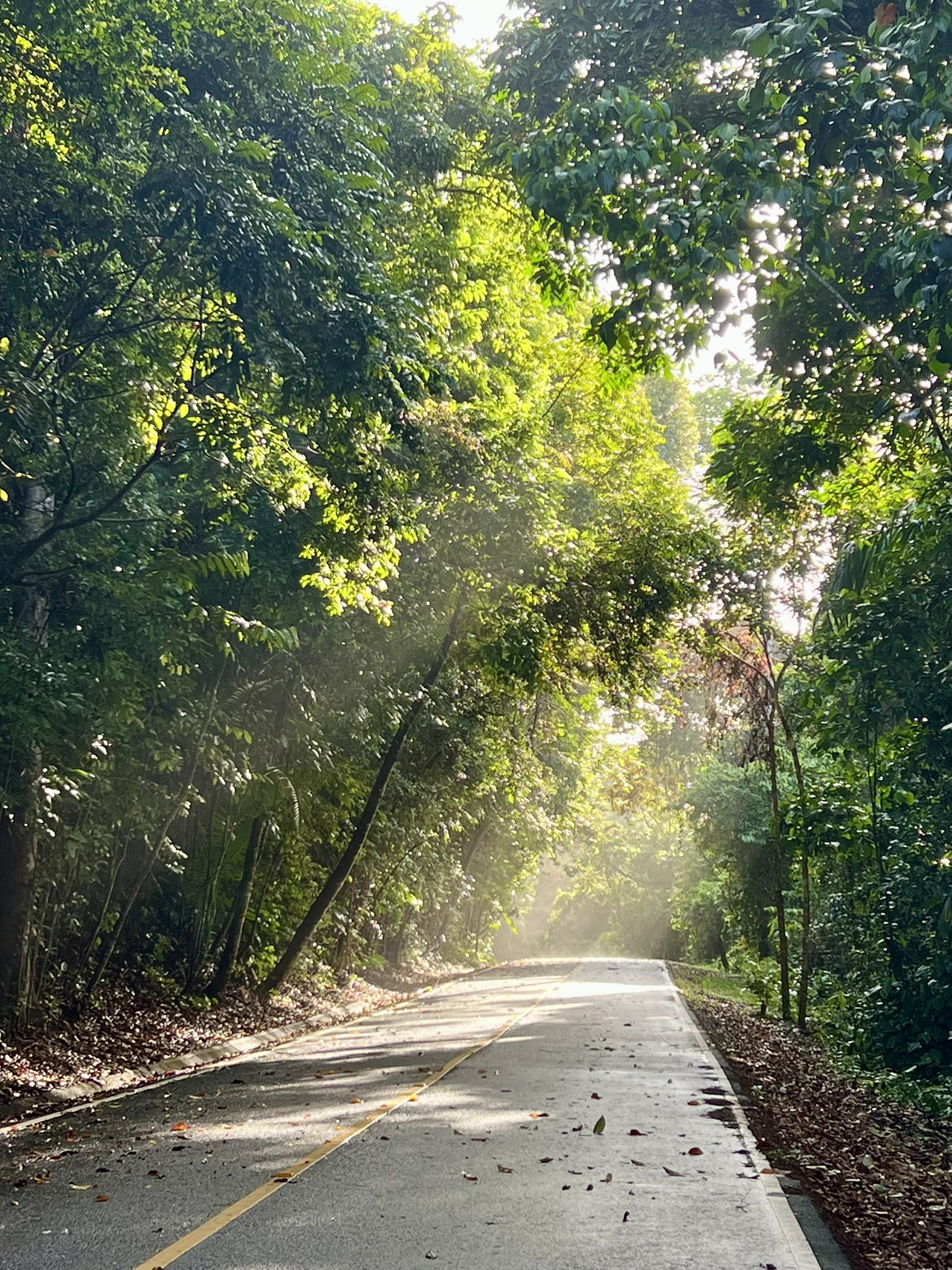
By this time the rides into the park every morning were by far the highlights of my days. I was seeing anywhere from 35-65 species per trip and logging them all on eBird checklists when I got back to the boat. My life list was up over 250 (265 by the time we transited the canal), and I was starting to dread leaving this birding paradise so soon. When would I have such a perfect arrangement again? A huge park to myself teeming with exotic birds, a smooth road with almost no traffic, plenty of time, and a growing passion for seeing as many as I could. Hard to imagine what else could compete.
A few mornings later while riding down I spied a huge Blue Morph butterfly floating down the middle of the road, and when I caught up to it, I slowed enough to move along next to it. It actually stuck with me – right off my left shoulder – for almost half a mile, when a loud noise scared both of us and I stopped braking. Thinking he was long gone, I looked back to see him just a few feet behind me, where he stayed for another hundred yards or so before veering off into the forest. Absolute magic.
At the same time as all this nature was happening, our struggles with getting our boat projects completed continued. One morning I saw Steve the Rigger coming down the dock on his bike, and without thinking I stepped out in front of him to block his way. His boat was permanently docked at the end of the same dock we were on, and he’d taken to looking anywhere but at us when he cycled slowly past us multiple times a day. He was already looking sheepish when I asked if I could have a word. I told him we knew we had been dropped to the bottom of his list yet again, which he admitted was the case, but then despite his previous repeated assurances that he would get to us “next week,” he told me all his scheduling is done by the marina, and until they had us on the list it wasn’t going to happen. That we’d put ourselves on their list when we arrived almost two months earlier was news to him, and I made sure he knew how frustrated we were with the whole situation. Apparently, there was little he could do, and he had to get to his current job. I growled under my breath and got out of his way.
In a surprise move, Steve the Rigger showed up at the boat that evening, and offered to call the manager of scheduling, then go meet with him along with Peter the very next morning. But we were scheduled to transit the canal in less than a week, and the bowsprit/roller furler project was going to take at least that long. He urged us to postpone again and confirmed what we’d already heard from some friends who had already transited: there is no other rigger in the country, and Steve no longer traveled to Panama City to work for anyone. These friends had urgent rigging work as well and were considering having a rigger they knew in Bonaire come in to do it. (Cheaper than retransiting the canal to get back to Steve!) That settled it. Another postponement. And the manager agreed to move us up on Steve’s list to the coming week. I was still skeptical, but willing to wait and see.
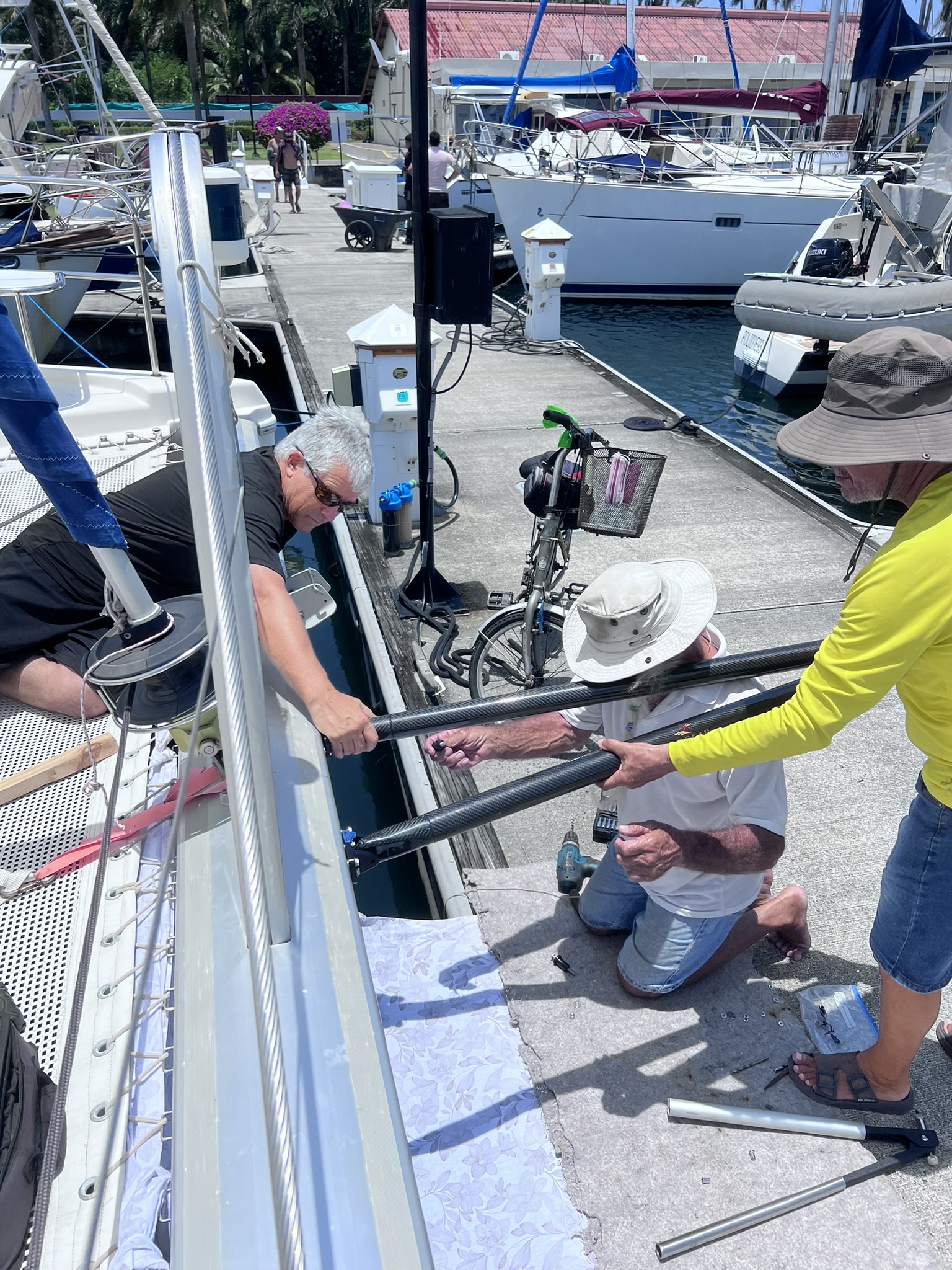
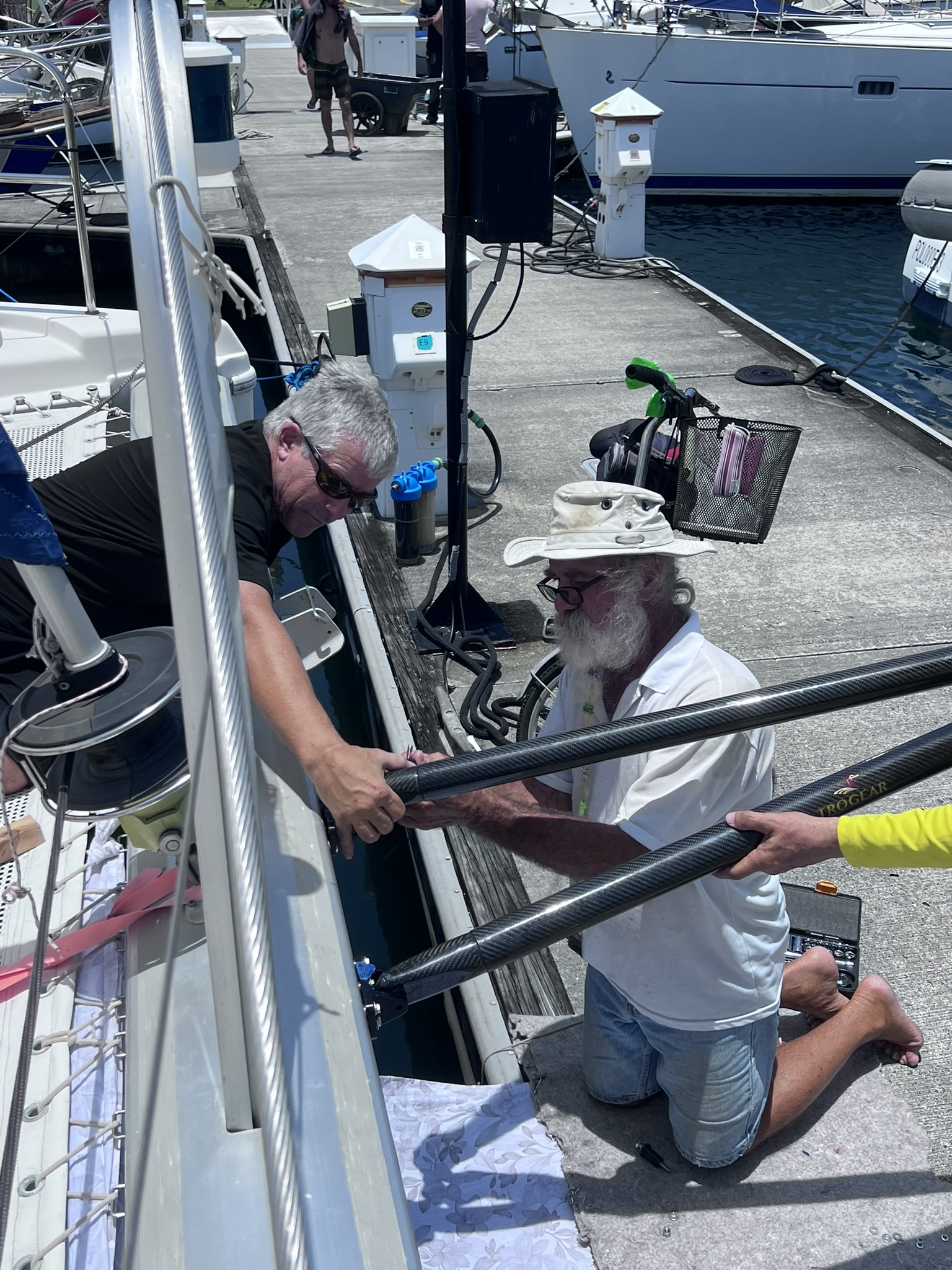
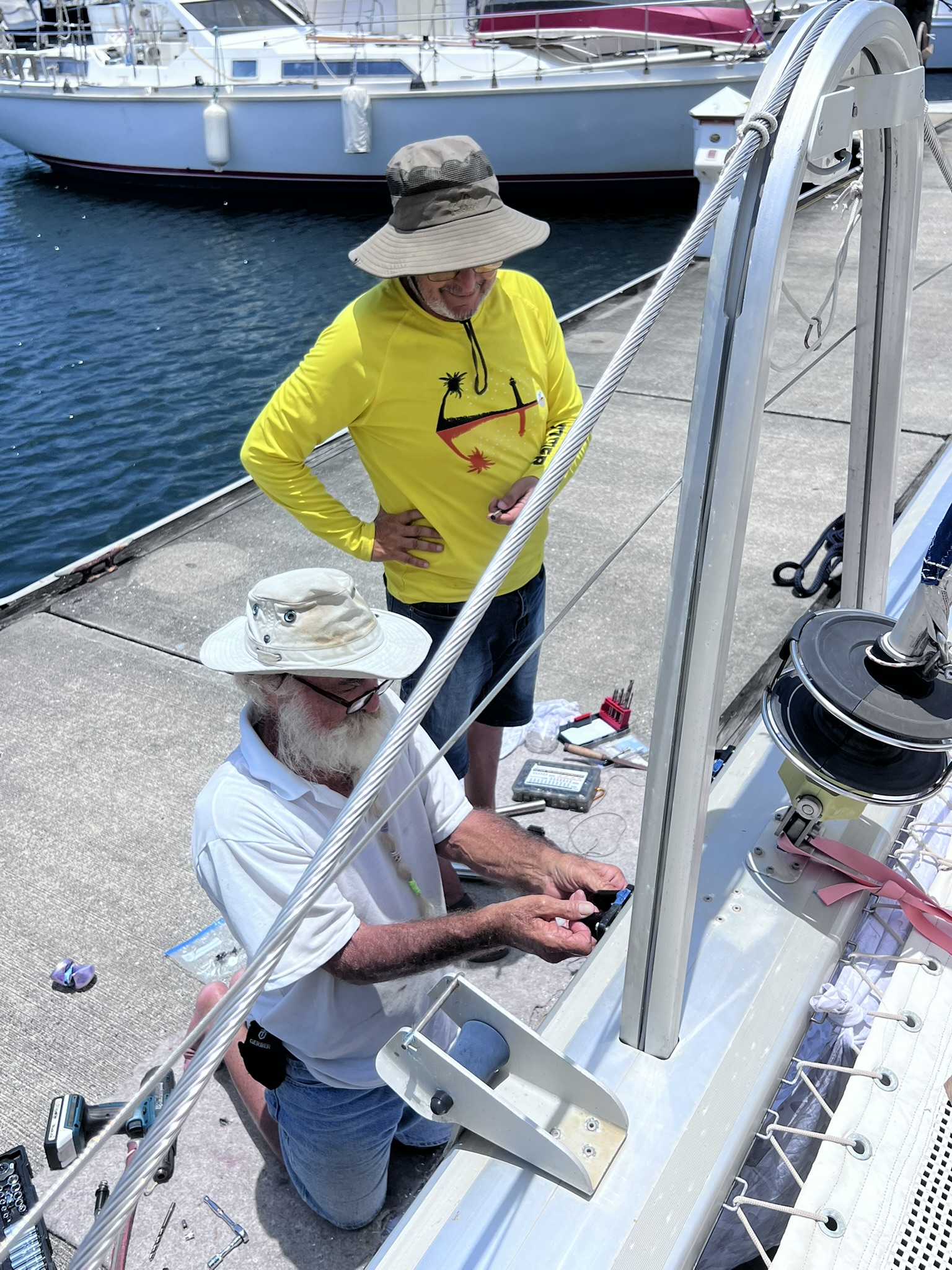
It was with some amazement that I greeted Steve the Rigger and his assistant Carlos a couple of mornings later, and as they sat down with Peter to review the steps of the project and the time each would take, I got out of the way, bemused and not a little relieved. A week and a few days later we had a new bowsprit, along with new holes in the hulls to support it, and a new roller furler and the new lines to control it. It was a very complicated project, and took many hot, sweaty hours of work. That I watched almost gleefully from the shade of the galley.


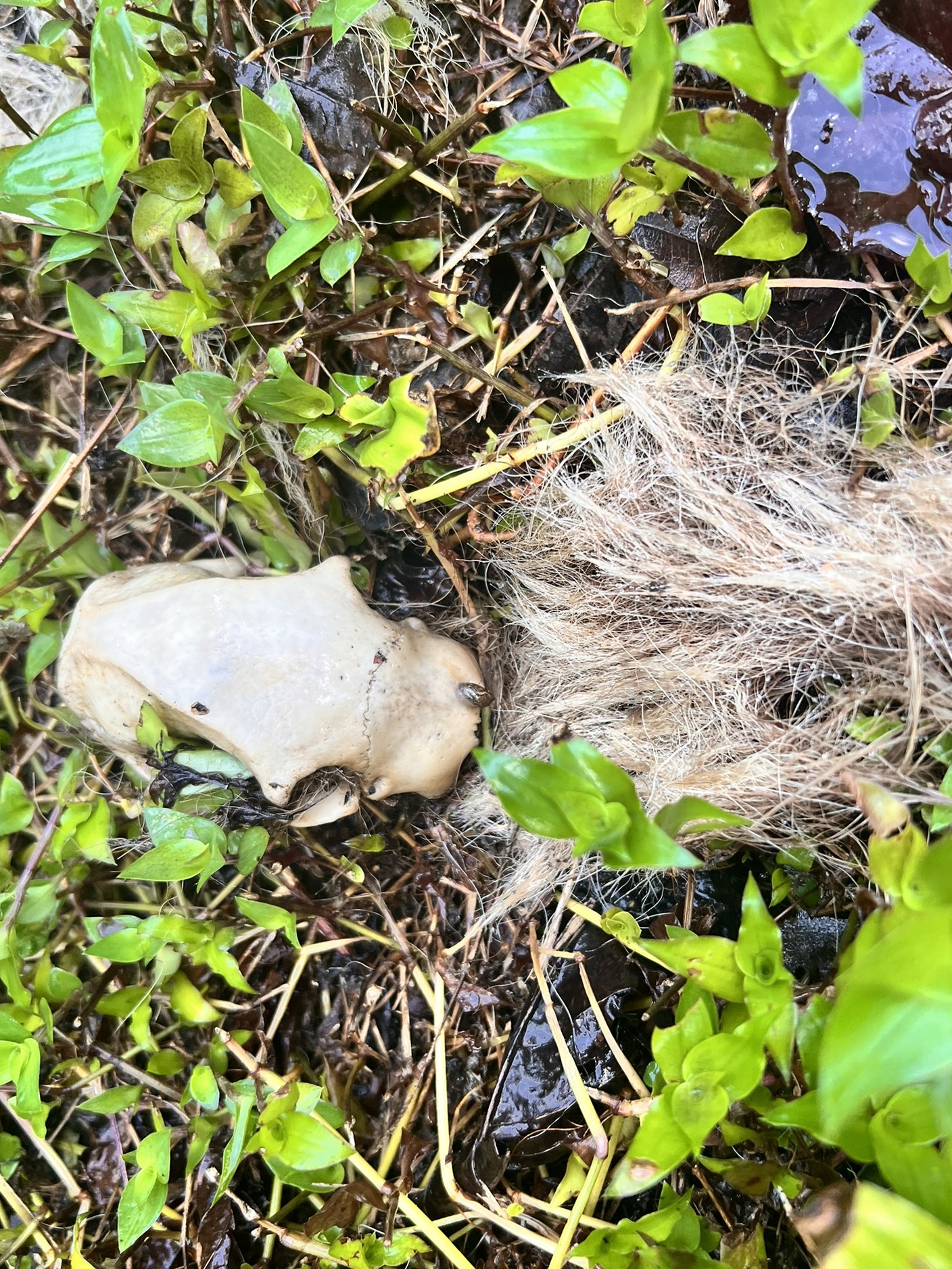
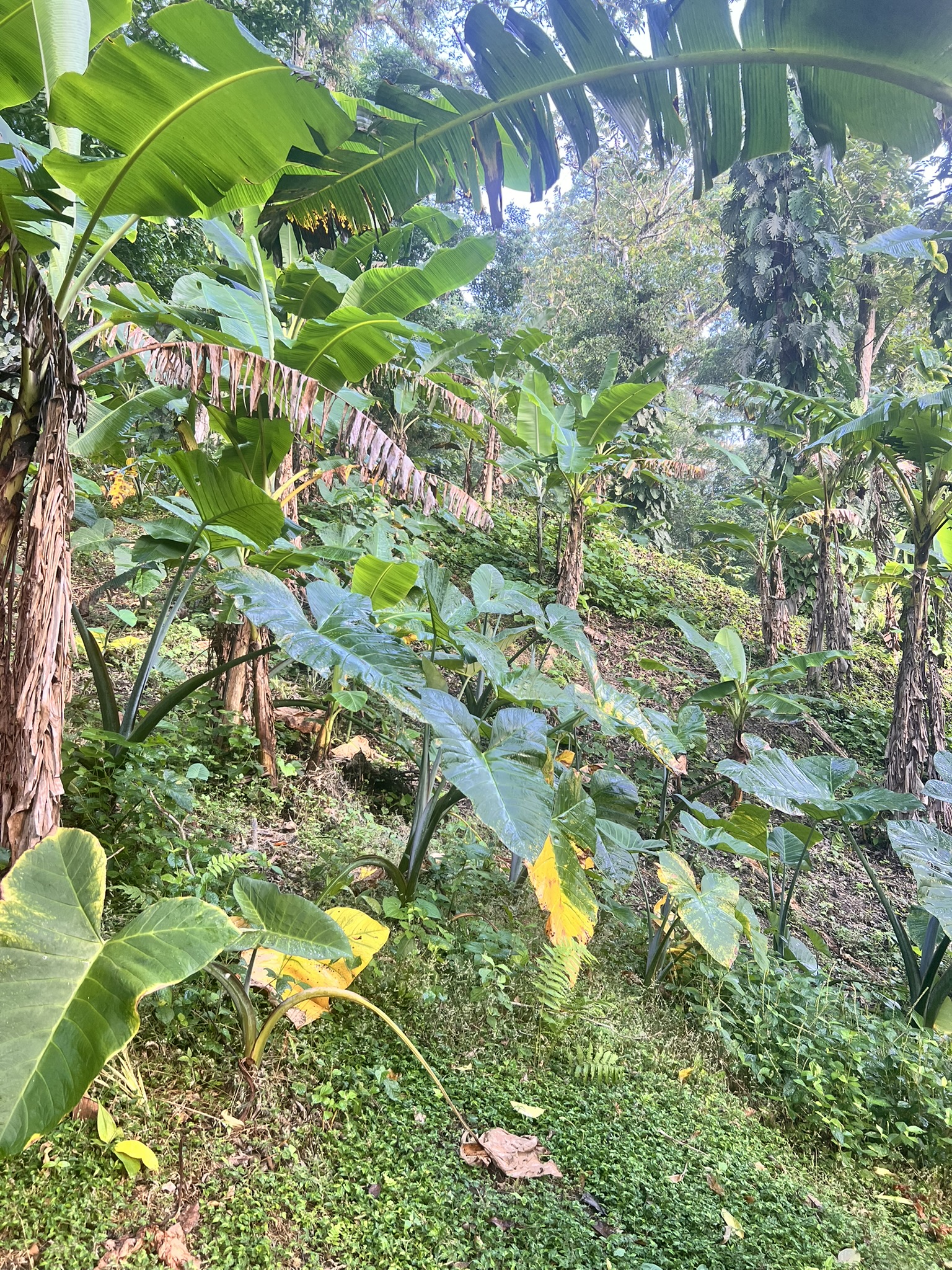
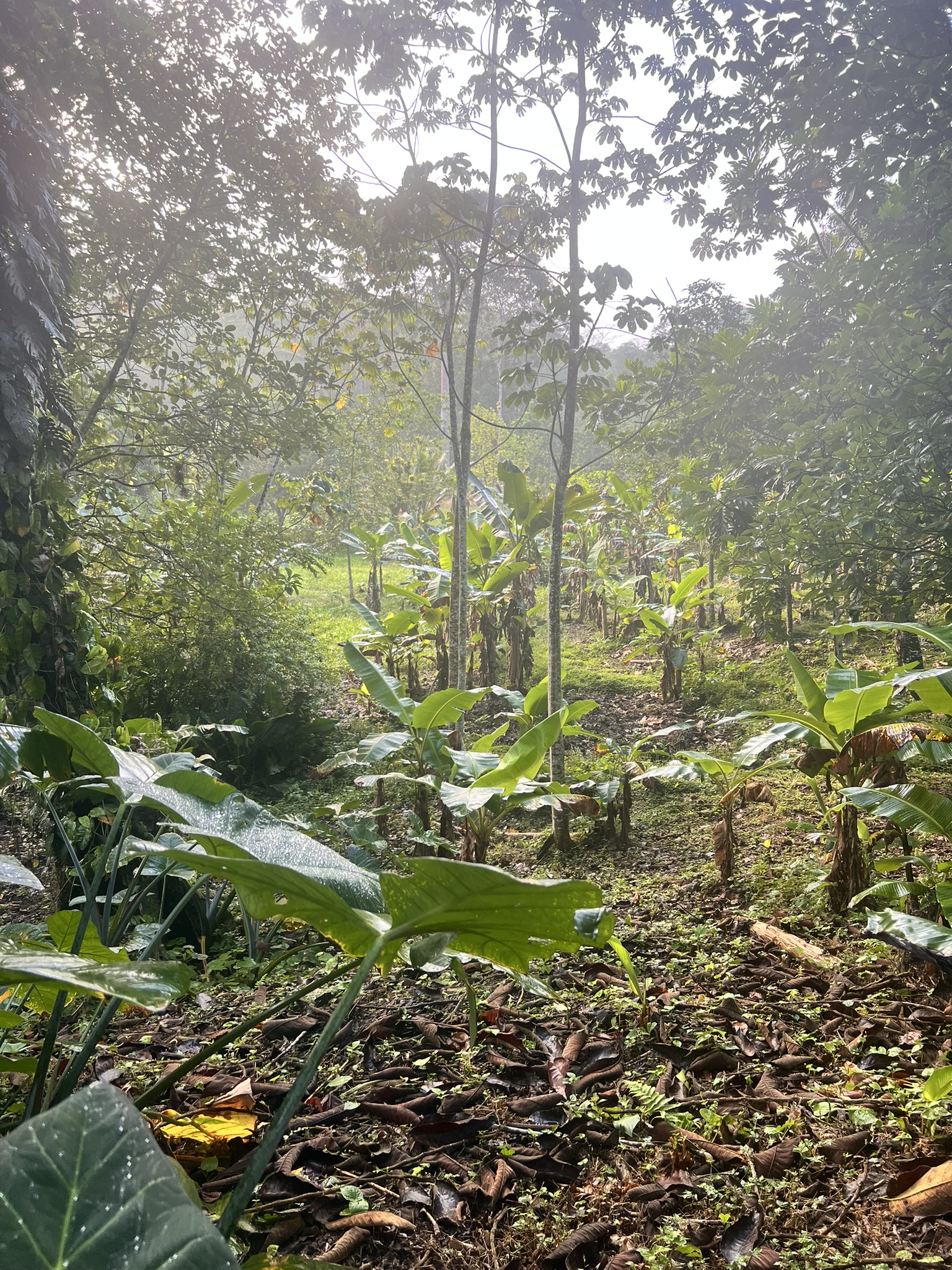
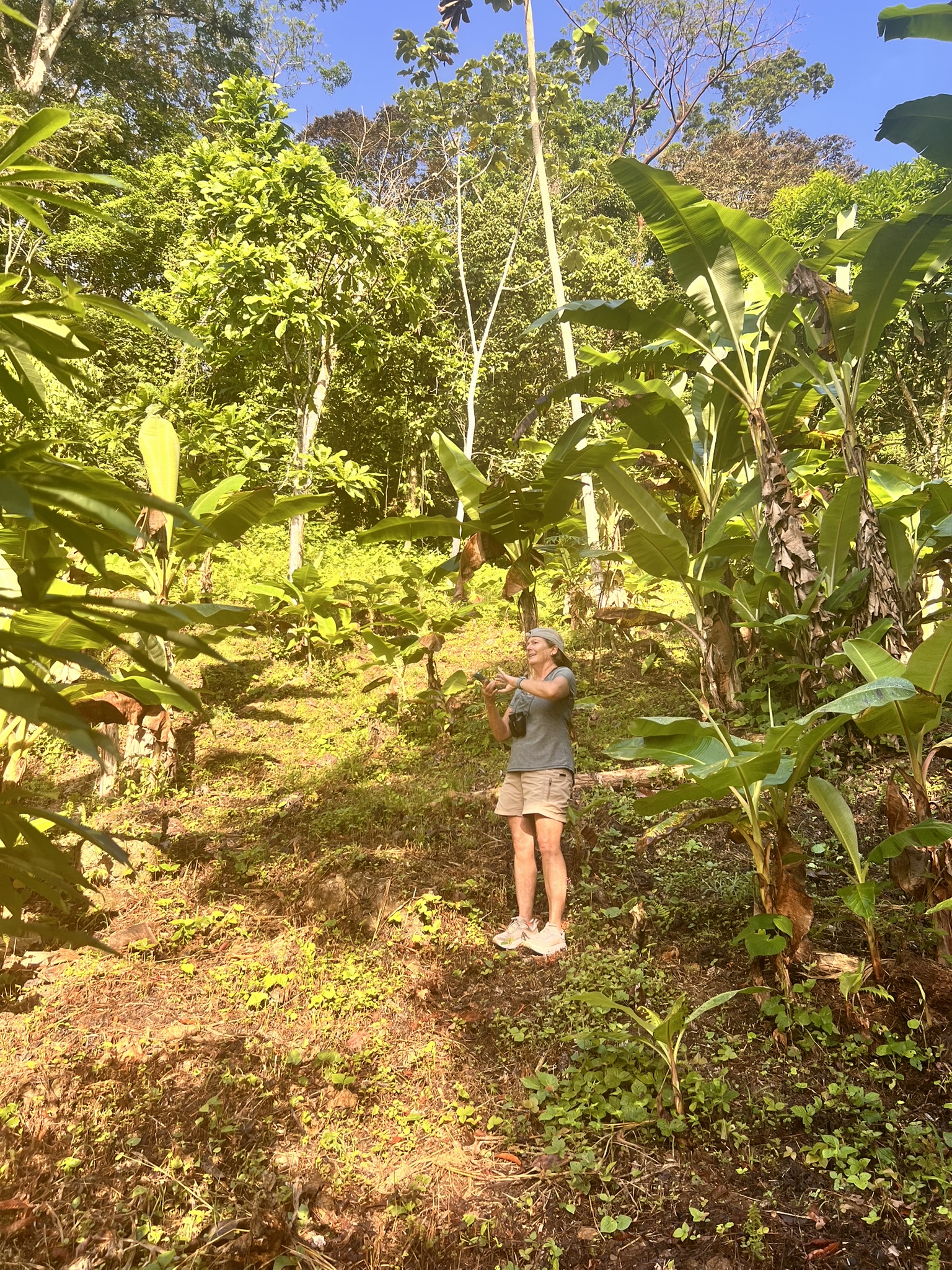
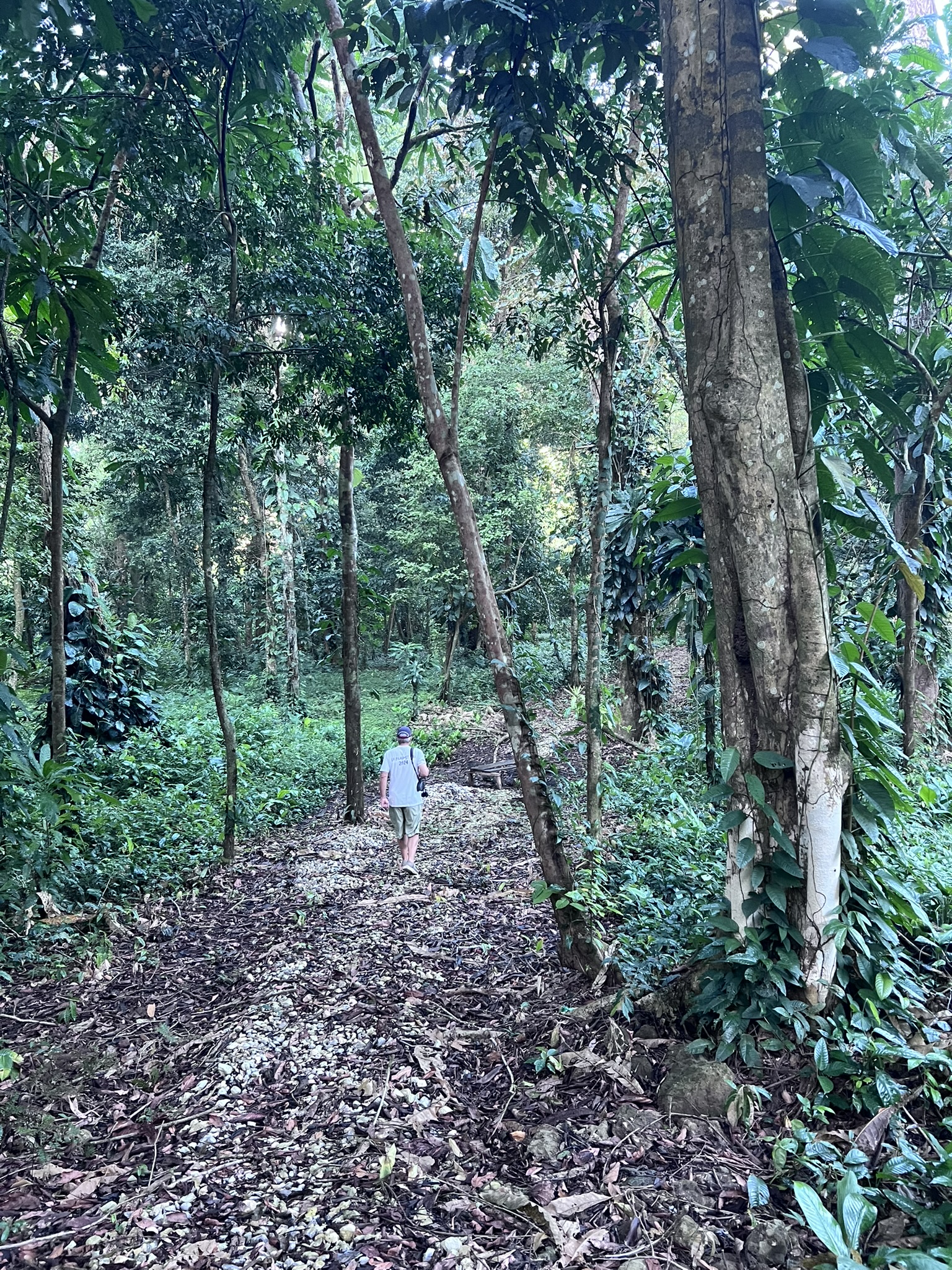
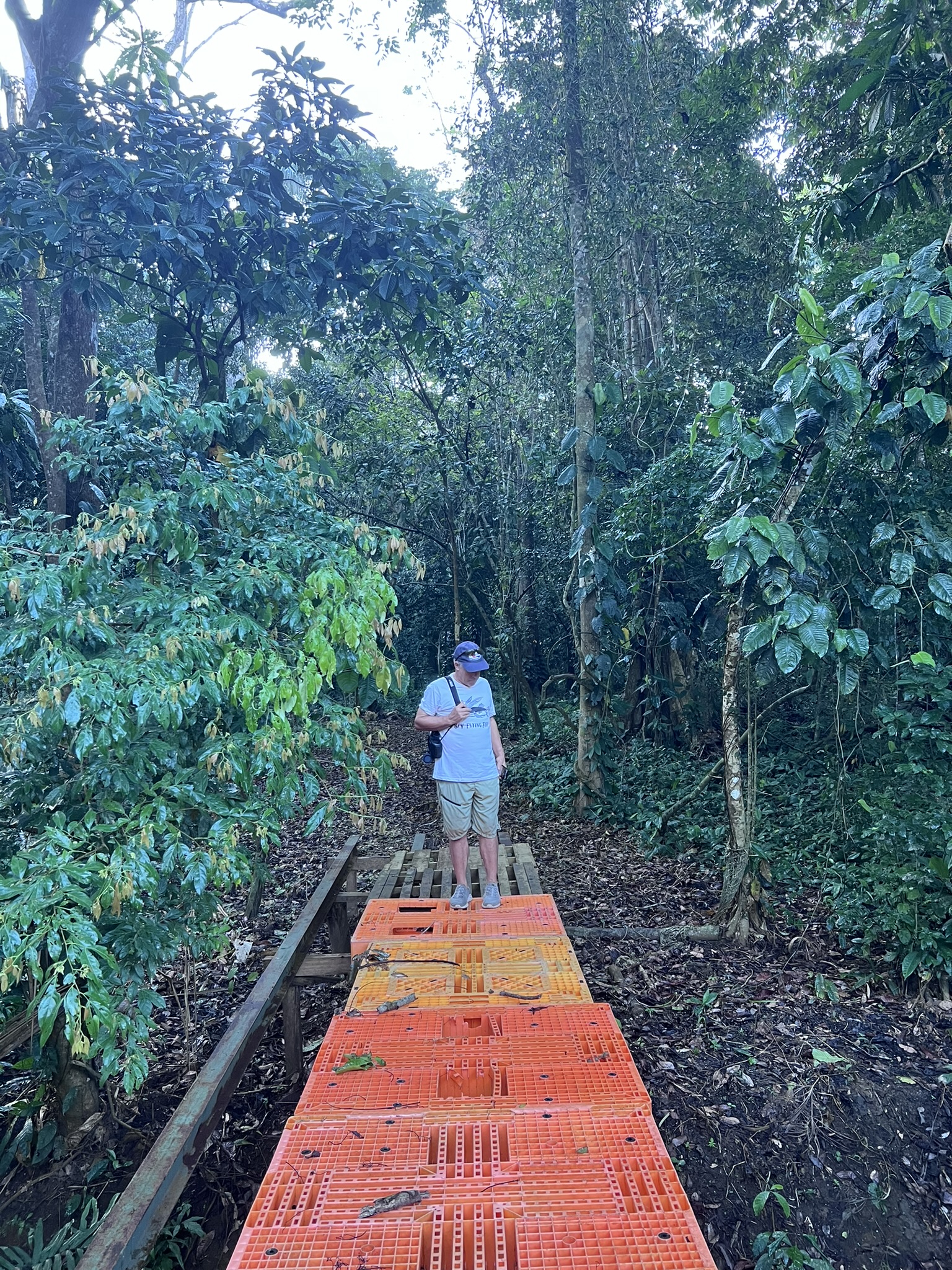
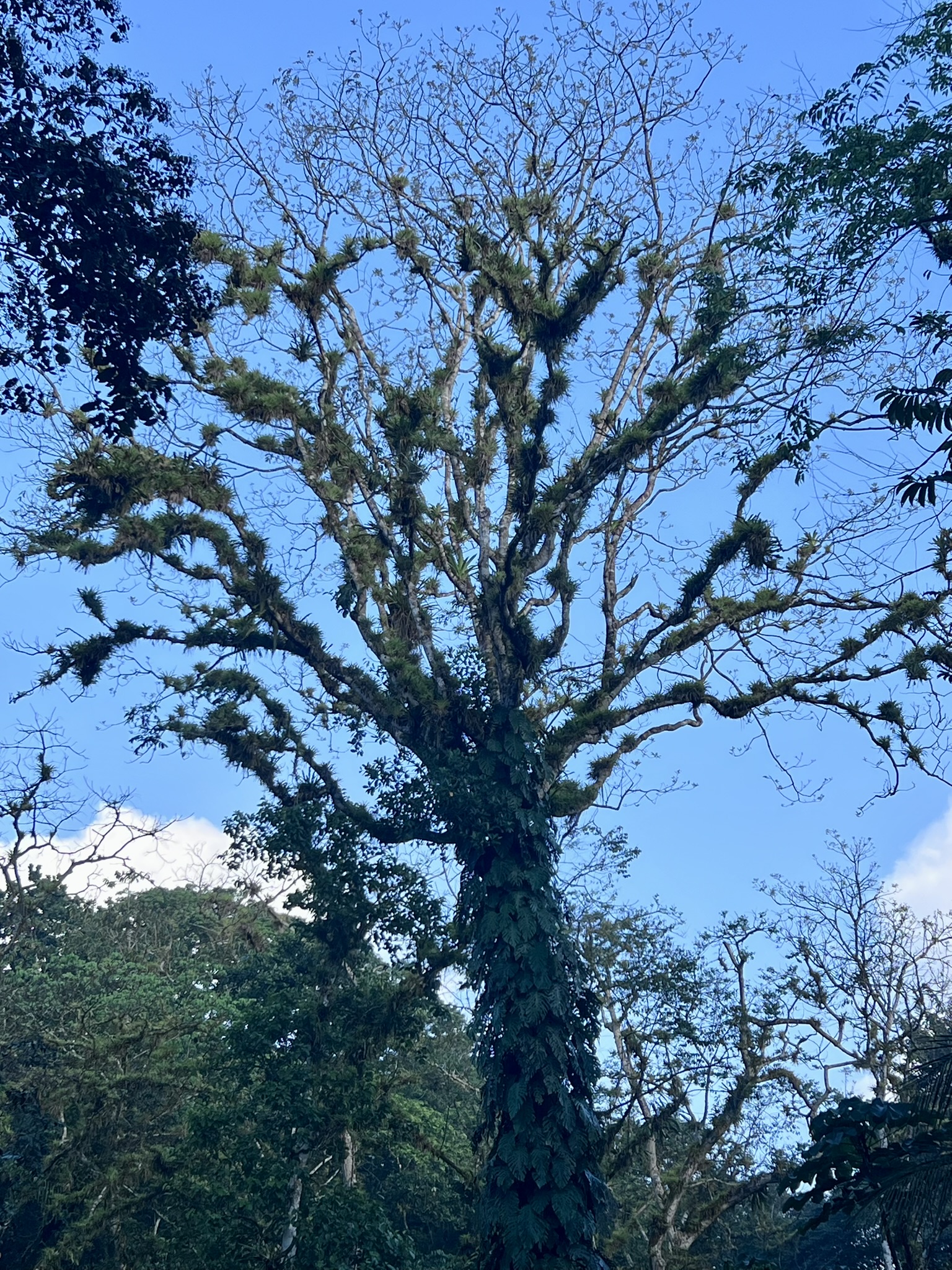
In the meantime, I rented a car for an Air Cargo and More trip to PC and then spent some time with a few different friends in La Playita, the marina in Panama City. After that I ran errands, looking in the posh groceries and tiny Asian markets – unsuccessfully – for Thai curry paste and – successfully – for powdered coconut milk and arrived back at the boat later that evening exhausted. We were still up and out on Achiote Road by 6:30 the next morning, looking for birds. eBird tracks tons of different things from all the data input every day by birders all over the world, and one of the most helpful is where people see the most birds in real time. I’d kept the rental car an extra day to check out this hotspot about ten miles past Gatún locks, and we spent a few hours that morning hiking around an overgrown banana plantation and enjoying the new scenery. I didn’t see a lot of new species, but it was great to be out of the marina and see more of the hinterland, and since much of it was new for Peter, he loved all of it.
We had a new transit date, and in addition to Carlos, Steve’s assistant, who volunteered to transit with us (he loves to help out transiting boats whenever he can so he’s gone through hundreds of times), we planned to hire at least one professional line handler. That meant I needed to follow the stringent requirements for the proscribed care and feeding of the pro – among other things every meal had to be hot, and I needed to have plenty of cold bottled water on hand for both the line handler and the required “advisor” provided by the canal authority. This was going to require a trip into the grocery store in Colón, and some pre-cooking. It was starting to feel real.
Peter was still deep in the battery project, even if he’d installed all the hardware, so he didn’t get to check the Yanmar engines until three days before the transit date. Aaaaand the port engine’s starter motor was dead. Brendall brought down a spare when they visited, but in a classic amazon bait and switch it was the wrong size. Fortunately, Steve knew of someone in Colón who could work on it, and Mr. Ranger, the shuttle driver, knew where to find him and agreed to drop it off with him the next day. Shockingly, the mechanic was indeed able to fix it, and it came back a couple of days later completely cleaned with a brand spanking new coat of gold paint. We had to delay our transit again – didn’t get a new date, but our agent thought it would be within another week or so. Good enough.
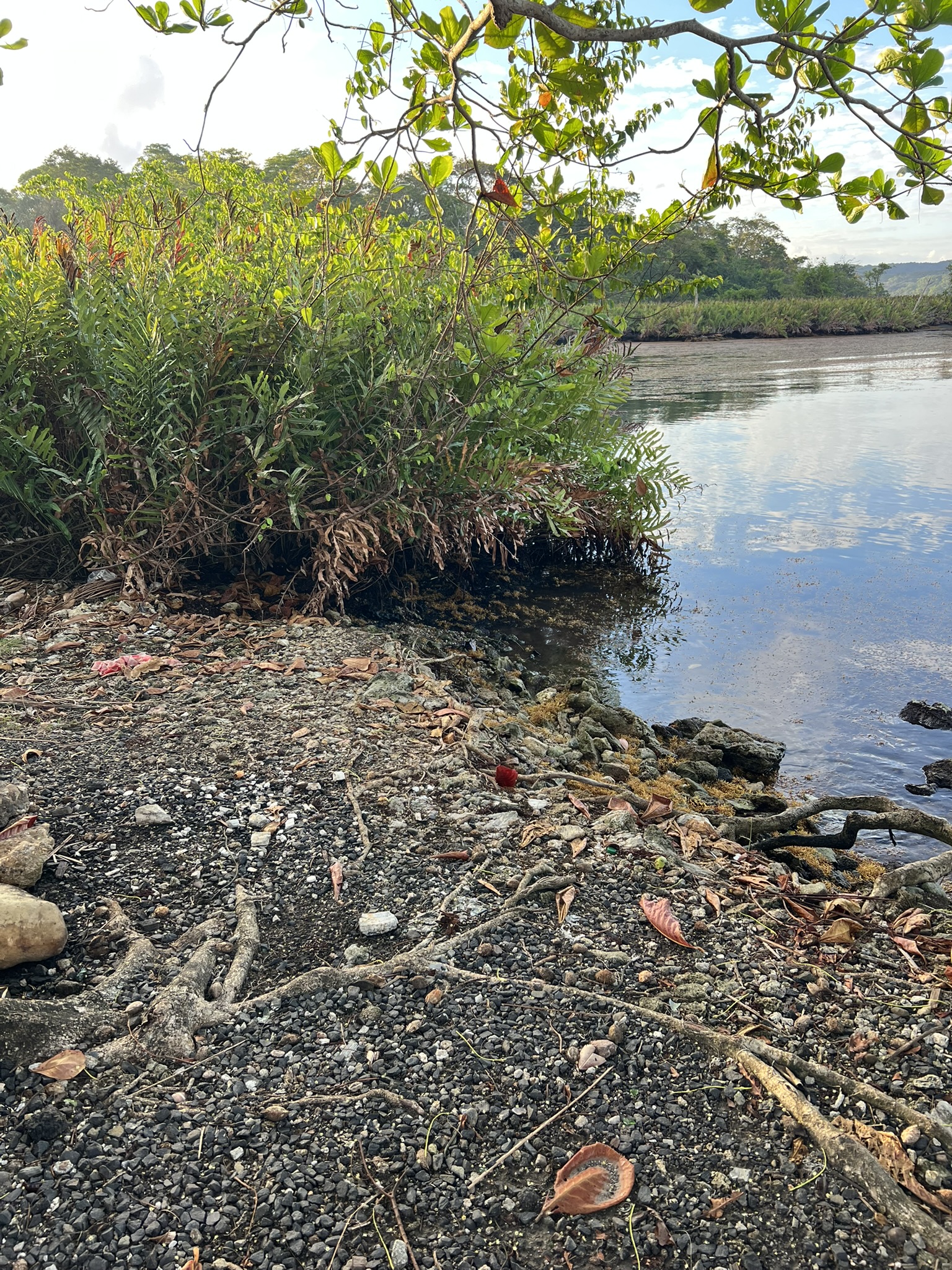
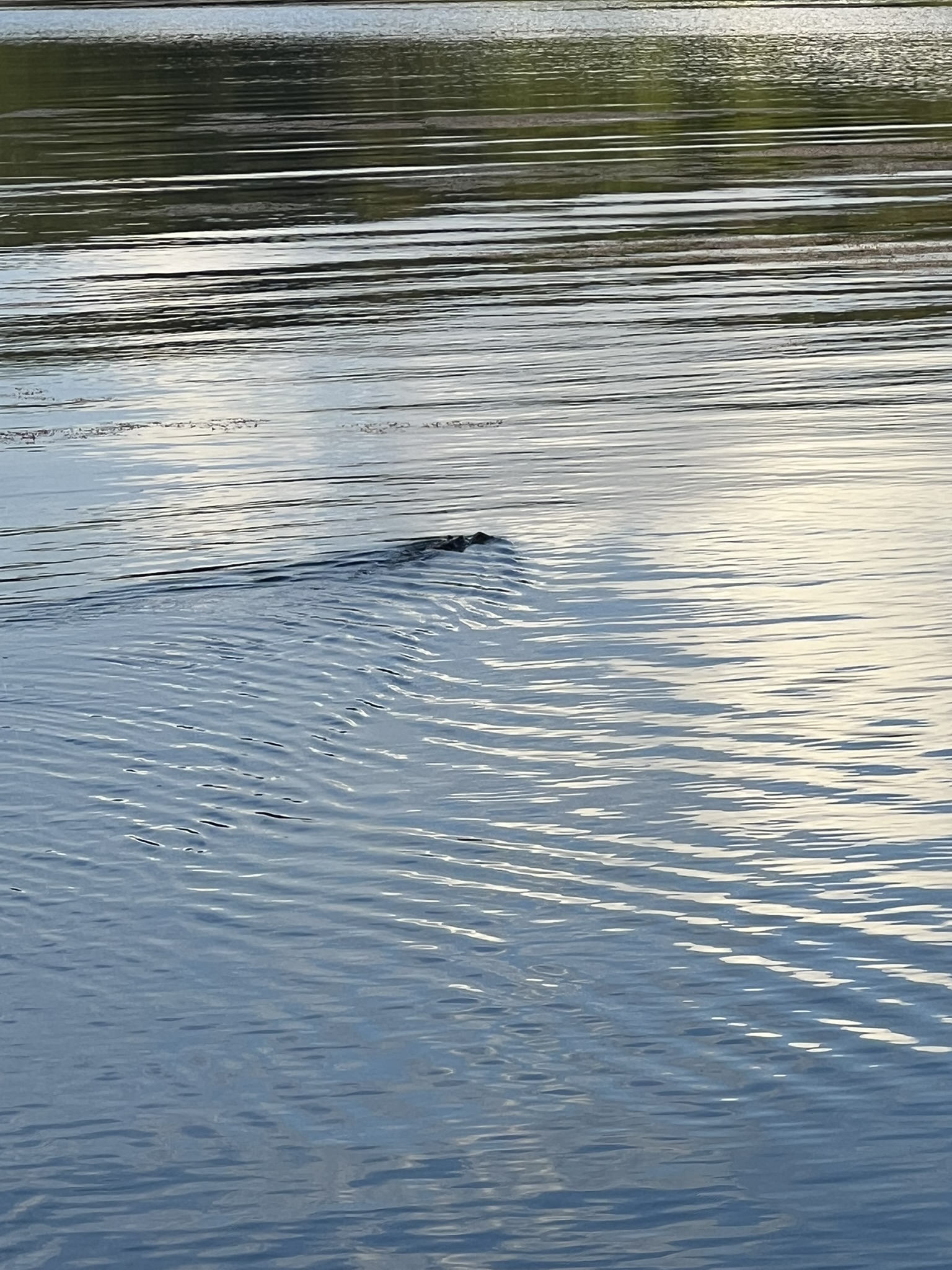
A few mornings later I got to the río with my new scope and tripod in my backpack and was leaning my bike up against my usual tree when movement on the bank in front of me caught my eye. With an almighty splash a very large crocodile flung himself into the water, but not before we both screamed in terror. It had to happen – we’d seen the resident croc in the marina often enough, especially with all the photos and videos of him shared on the marina’s WhatsApp group. I’m just very grateful in this instant “my” croc was as scared of me as I was of him. We weren’t ten feet apart. Does it go without saying that in the days that followed I didn’t approach that bank again without careful scanning from much, much further away?
Unfortunately, the problem with the port engine turned out not to be the starter motor, Or at least not just the starter motor. We made another trip into Colón, this time to the auto part stores. Not a one had the four-post relay he needed. We didn’t have time to order one from amazon now that our new transit date was the 25th – less than a week away. But if we didn’t have both engines we weren’t going to be able to transit anyway: every boat must be able to average at least 6 knots, and without being able to add sails to the motoring that was already approaching dreamland for us. So, Peter got creative. He took an old three post relay, did some rare McGyvering, and made it work – within a few hours we had a port engine again! We confirmed again with our agent that we would be leaving the coming weekend and he told us we would do a two-day transit, spending the night in Gatún Lake. We both still had a lot of work to do to get ready.
My last morning in the park was a good one. I watched a cocoa woodcreeper catch a scorpion, whack it against a tree until it was decapitated, and then gulp it down, I got my best view yet of a rufous mot mot and spent at least ten minutes watching two (new to me) ringed kingfishers jabbering at each other. Bitter, bittersweet.
I got back to the boat and the news that our new SetPower fridge/freezer was dead. This was our shiny new dorm-size fridge that had been doing an admirable job keeping our once-a-week Häagen Dasz bars rock solid, as well as backing up our Vitrifrigo built-in fridge/freezer that was still (since Grenada!) barely limping along. But a few days earlier I’d seen a recommendation from another liveaboard on the Shelter Bay cruisers’ WhatsApp group for a refrigeration specialist, and I immediately scrolled back and found his contact info. He could come by that day. Since we were leaving three days later, this was excellent news. But he didn’t arrive until 4:30 that afternoon, determined it was a blown circuit and said there wasn’t anything he could do about that. He would however come back the next day to install the new cooling system for the Vitrifrigo – by god we were going to have some way to chill things somehow. The ice maker was working overtime, but bags of already melting ice weren’t enough to keep anything very cold for very long.
The next day we learned from our agent that we were in fact leaving early the very next morning, not two mornings later, and were now doing the transit in one day. Just like that, we were hip deep in complete chaos. While Peter did the last of the engine maintenance, I grabbed the shuttle into Colón to the grocery store for last provisions and that crate of bottled water, and to meet Ricardo the refrigerator guy and give him cash to buy parts. Unfortunately, Carlos now couldn’t do the new date, so we were down to three handlers in addition to the pilot (me) – and four was required. But Carlos recommended a woman over on E dock who he knew was interested in the experience. I chased her down and when she balked because she wanted her husband to be able to come as well, I agreed – what’s another mouth to feed when I was already going to be feeding 6 people?? I’d made lasagna the day before, thank god, and since it was only one day I would only need to feed the professionals breakfast and lunch, and dinner also for everyone else. Everything was going to be ok.
Ricardo arrived at 4:15 instead of the promised noon that afternoon before we left, and set about installing the new compressor, which I’d hastily arranged to have delivered earlier that day by Uber from Air Cargo and More in Panama City. We had already taken the boat over to the fuel dock to fill the starboard tank and put ten gallons or so in the leaking port tank and were both madly scrambling to put away the last of the boat project parts and tools, so no one tripped over any of it. Crew arrived about when Ricardo did, which added to the chaos, and Guty, our pro linehandler, showed up with the small mountain of the rented fenders and lines required by the canal. David, our fourth line handler, flew in from Denver (we’d never met him!) a few days earlier and arrived in Shelter Bay that afternoon, ready to tick off his bucket list transit. Our canal advisor wouldn’t join us until morning, and luckily Irina and Igor, our new volunteer crew, decided to go back to their boat for dinner and the night – they seemed as overwhelmed by the chaos as I was – which made feeding everyone else that night a little easier.
Ricardo couldn’t finish the job that night. After a suspiciously hasty wrap up at about 8:30 pm he promised to travel to Panama City to put a bow on the project and waved adiós. This was not auspicious, but we didn’t have the bandwidth at the time to really notice it, or frankly, care. And didn’t THAT come back to bite us in the ass!
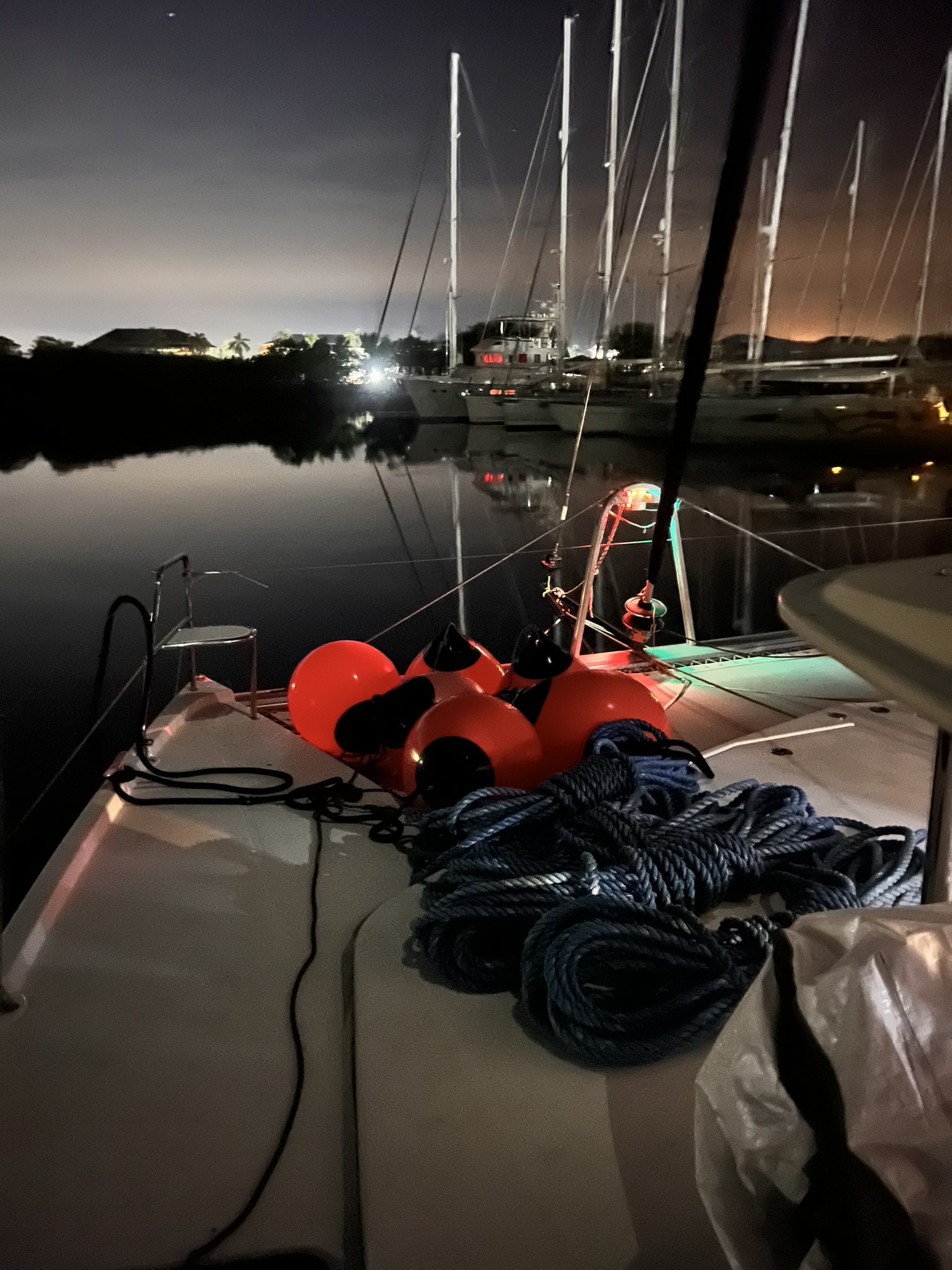
We slept badly, unsurprisingly, but were up in time to welcome back Irina and Igor at 4:30 am and show them their cabin and then quickly whip up a different breakfast from what I was making everyone else – Igor wanted porridge, not eggs and bacon, steel cut will be fine. With a little salt, thank you. (Thank god for the Instant Pot.) But we were off the dock and on our way at 4:45 and crept out the narrow causeway between docks to the bay. In the black of the night the glare of lights – from passing ships, from the canal operational center, from the tugs and other smaller boats – was intense, and we strained to pick out channel markers and landmarks. Guty was extremely helpful – a lawyer for the canal, he’d started line handling well before he graduated from university, never mind law school, and continued to do it a weekend or two a month now to save extra money for his wedding next year. He knew exactly where to find the boat delivering our canal advisor, and when Luis jumped aboard our transit really started.
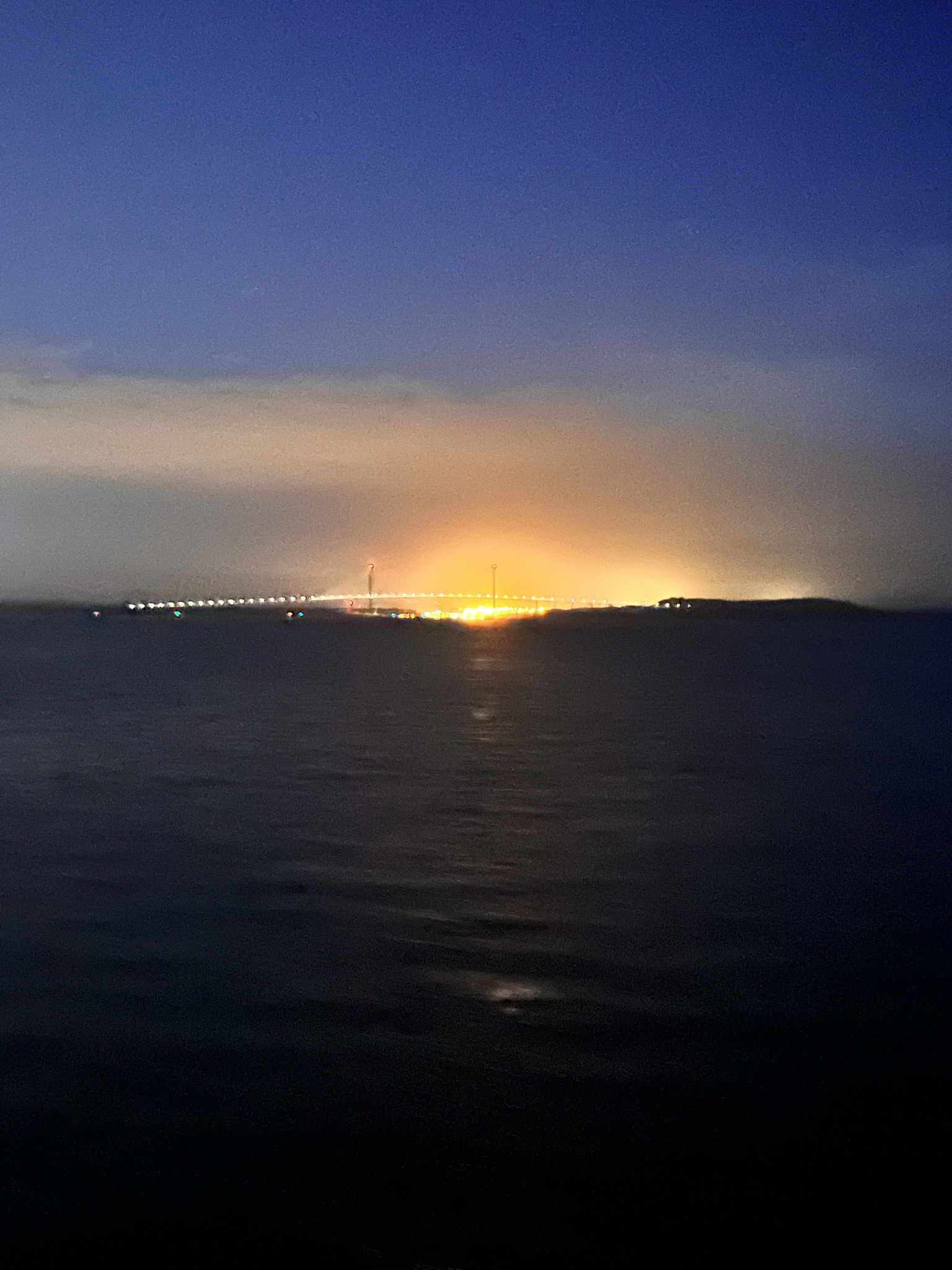
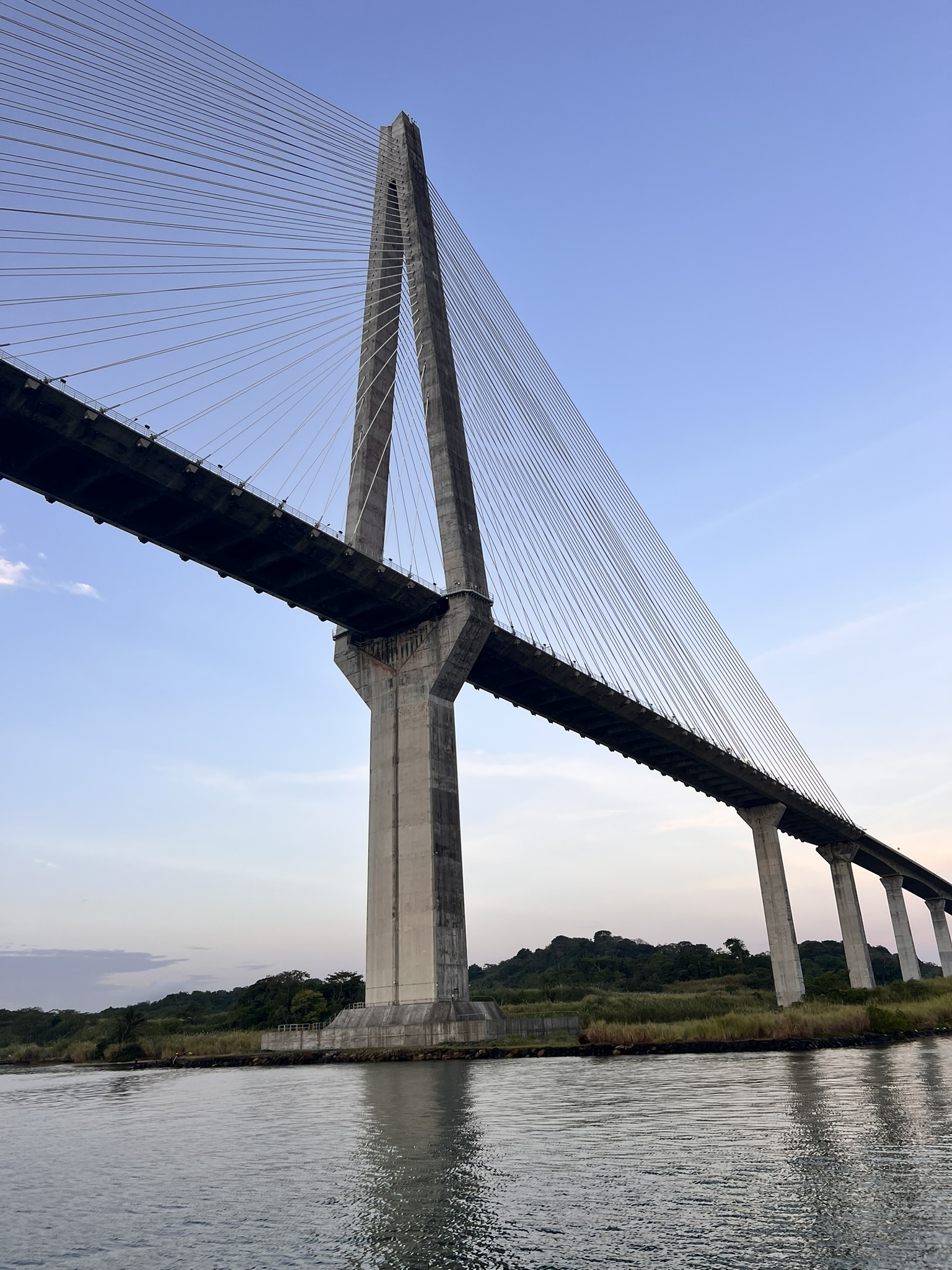
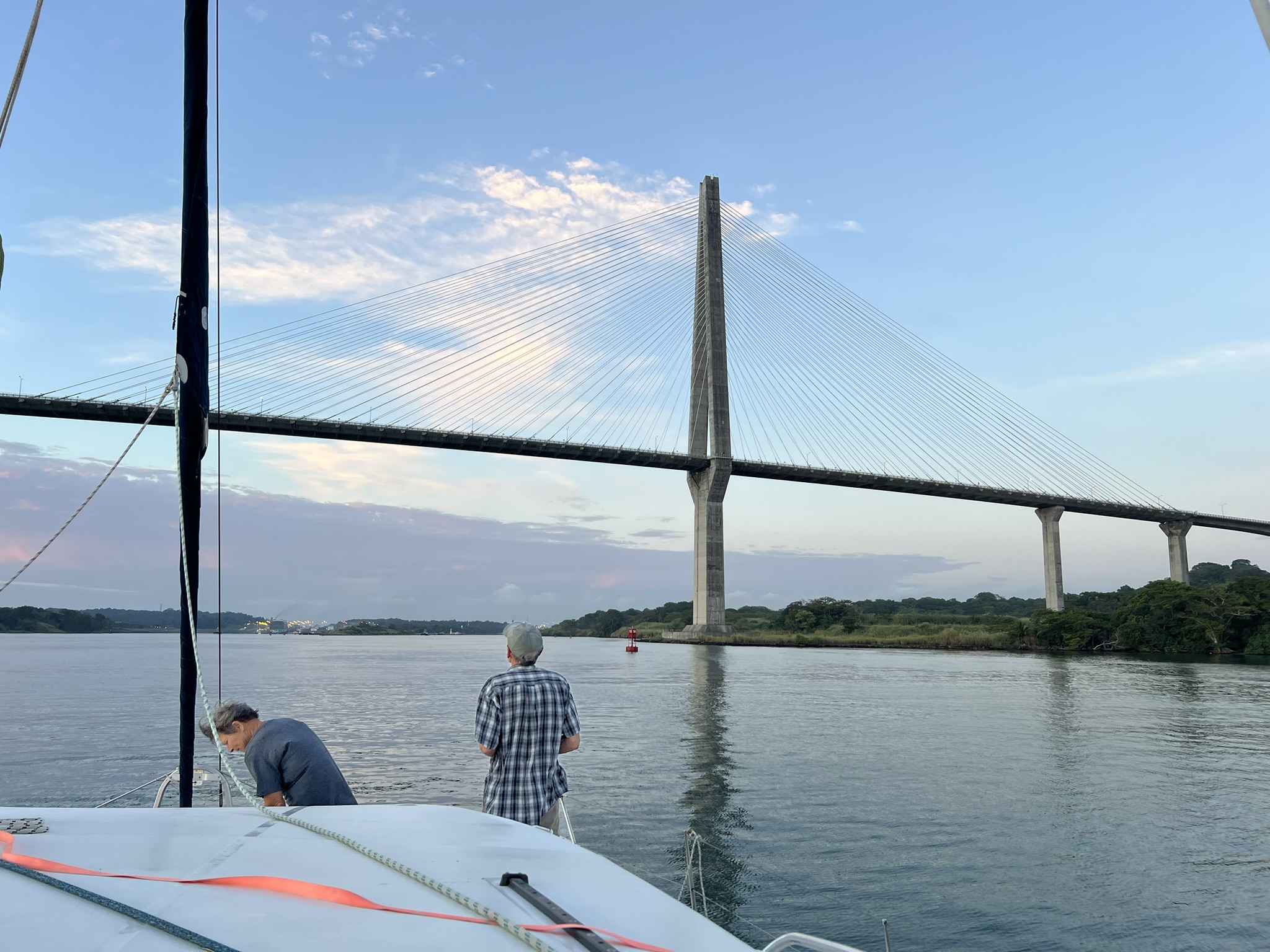
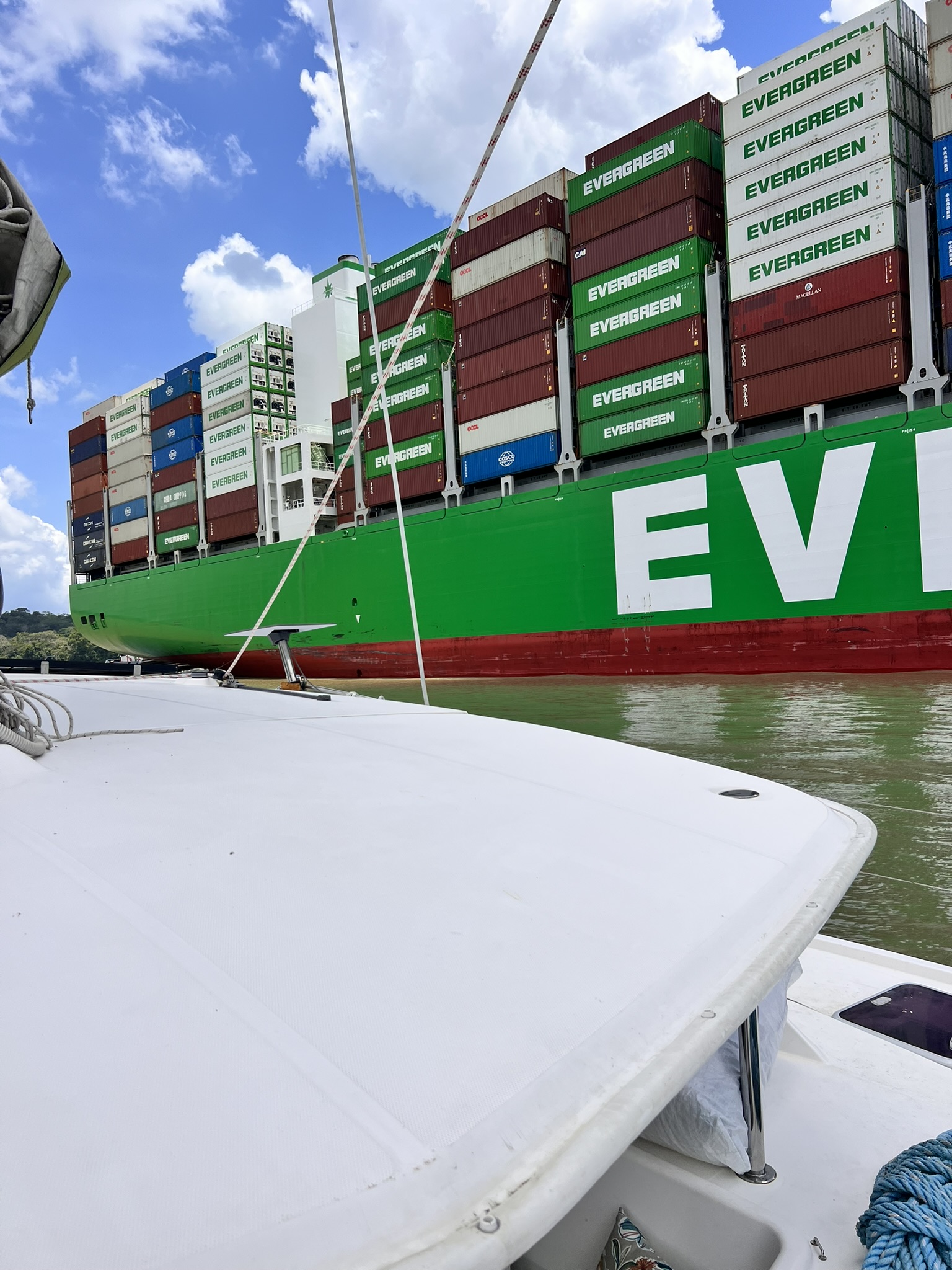
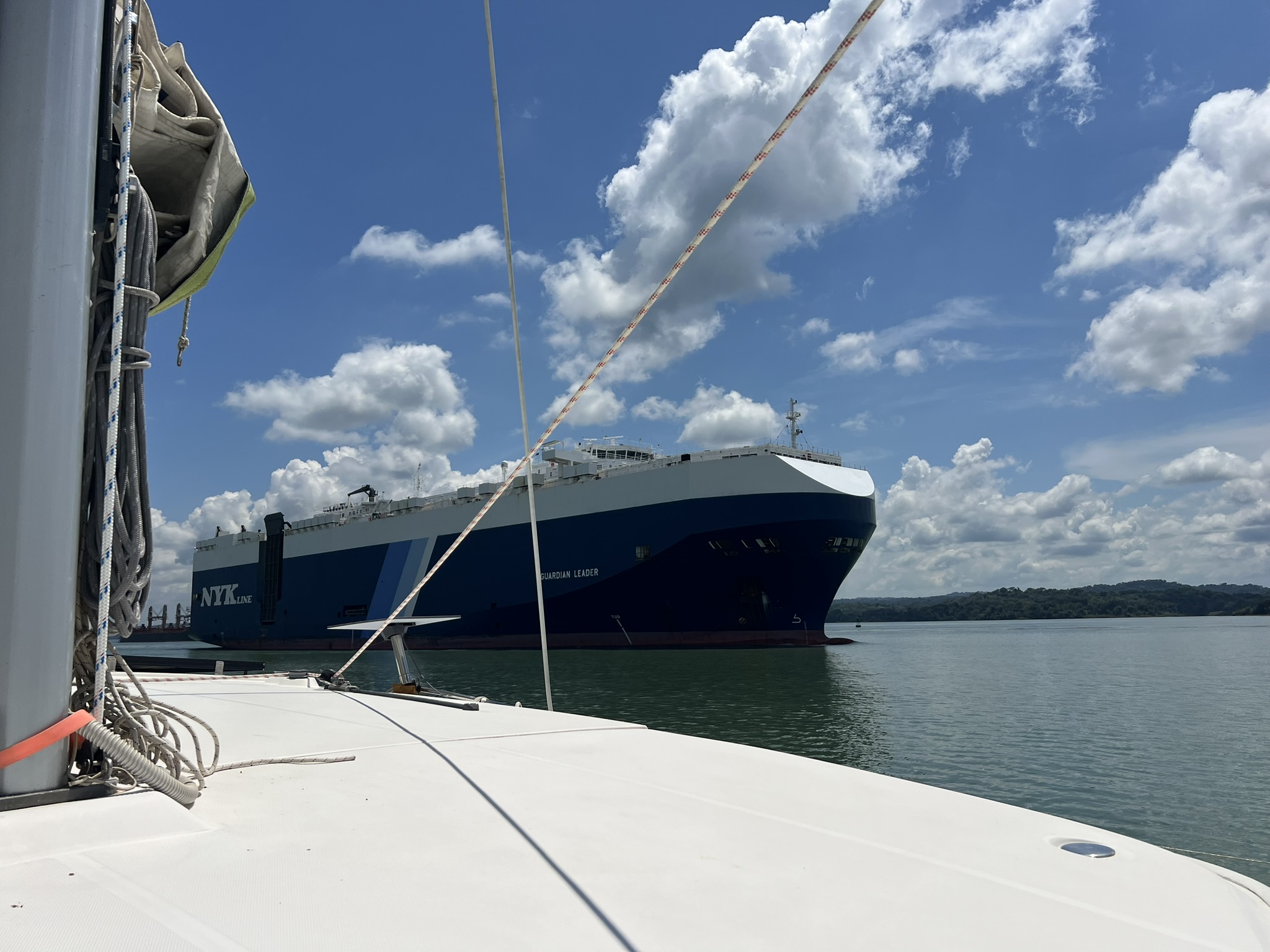
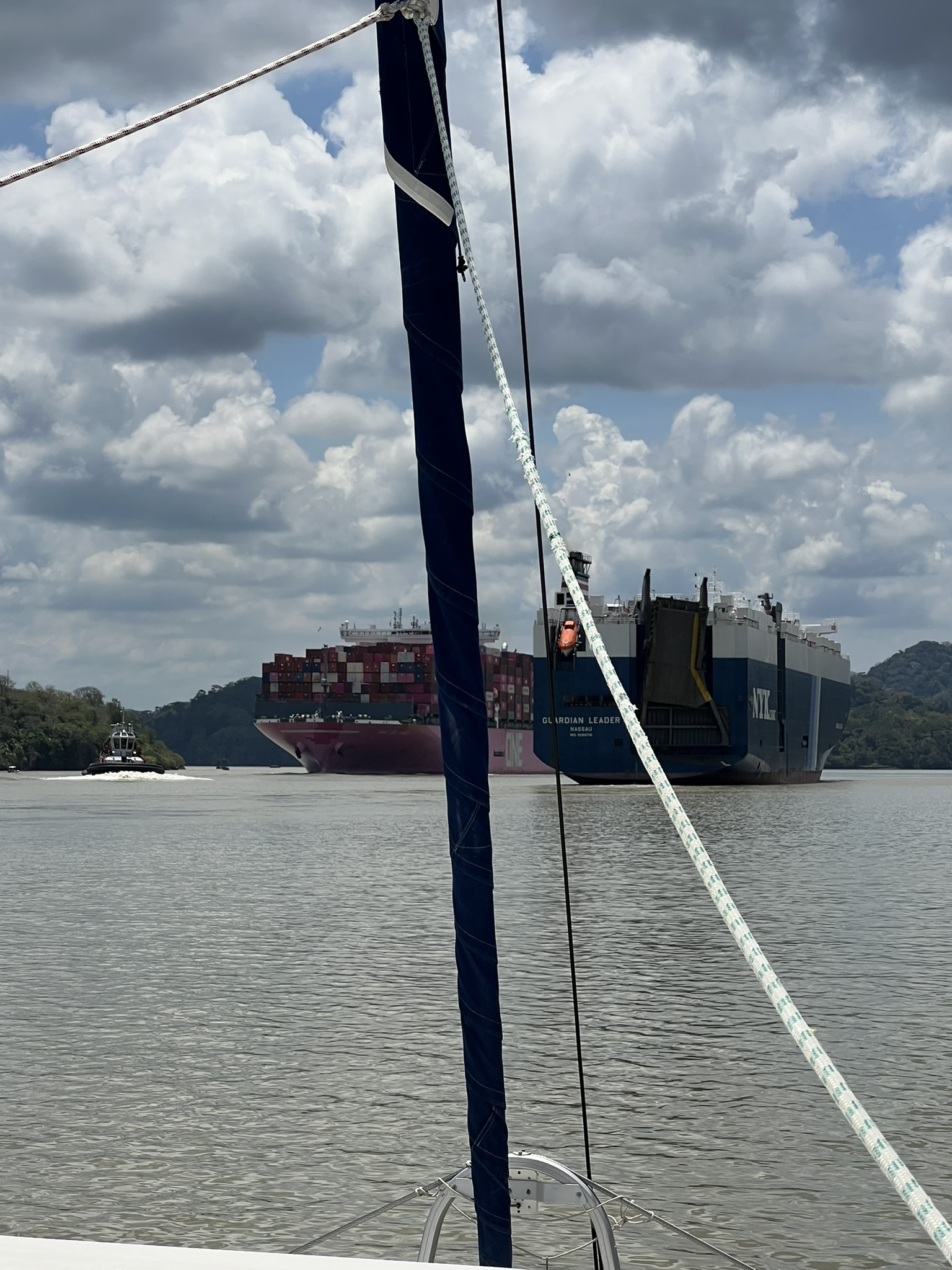
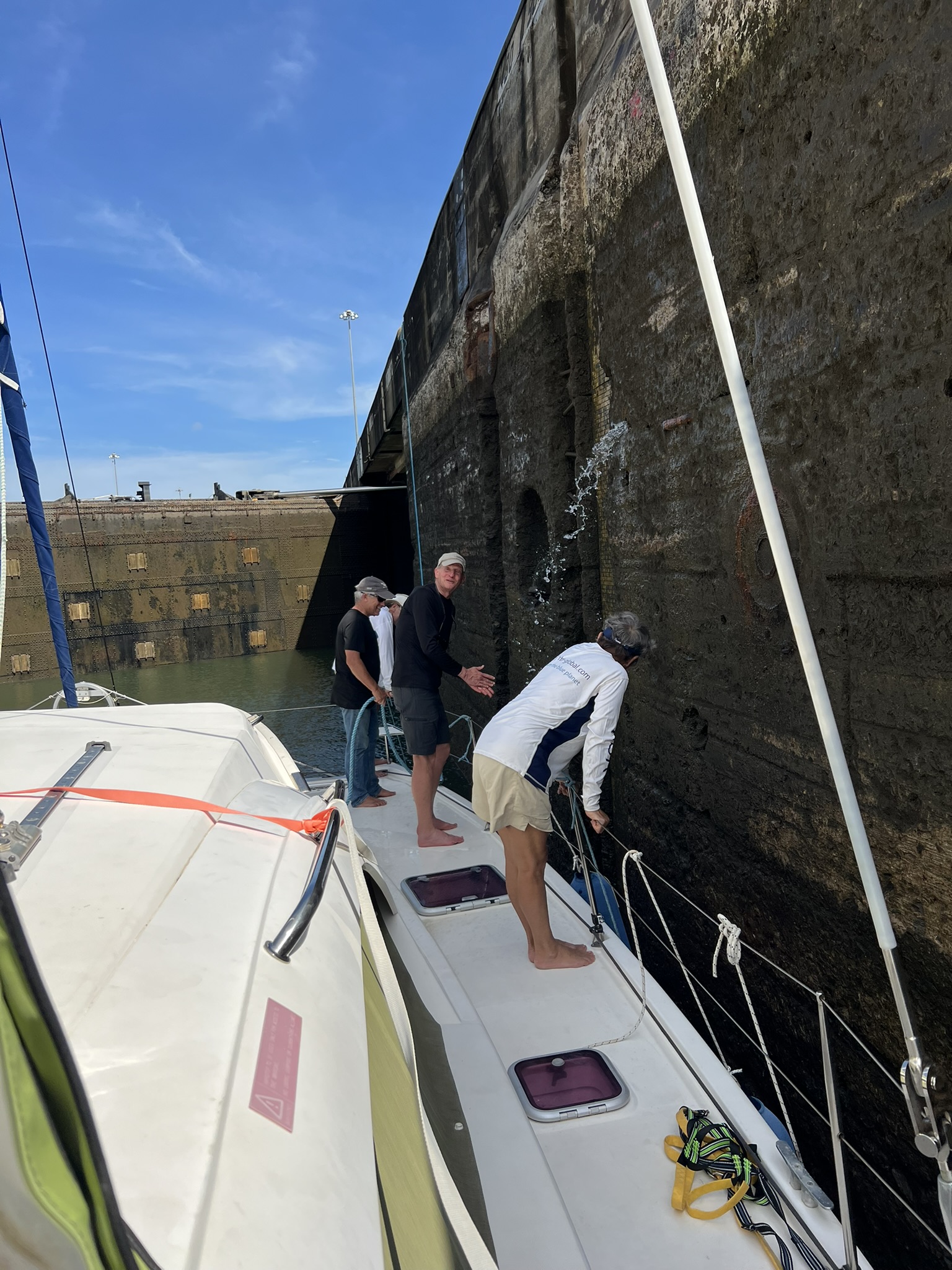
The sun was just tipping the horizon when we went under the Puente Atlántico, a bridge we’d driven over many times by then and loved for its remarkable view of the canal on one side and the Caribbean Sea on the other. Luis informed us we were not going to be rafted to any other sailboats at any of the locks, and because we were going through by ourselves, we needed to sign a damage waiver for being next to the canal wall. Uhhh, okkkk. That didn’t inspire confidence, but the alternative – very long, very heavy lines to both sides as we tried to remain precisely in the middle of the canal – seemed unfeasible. It was the right choice. By 7 am we were approaching the first chamber of the Gatún locks, Guty was explaining the line handlers’ roles, and Luis was telling me to expect a large amount of turbulence from the gigantic ship in front of us. He wasn’t kidding. At one point on our way in we were turned almost 180 degrees by the huge eddy kicked up when the Guardian Leader nudged itself further into the chamber, and that was despite high rpms on both our engines and some huge hauls on the wheel. Soon though Peter and the line handlers on deck were catching the tethers thrown down to us by handlers wayyy above on the canal wall, who used these to retrieve our lines and anchor them to enormous cleats up above. The idea was that as the water filled the lock, our line handlers would consistently tighten up our lines against those anchors while the fenders protected the side of the boat from the wall itself. Theoretically. Let’s just say that first lock might have been a little bit of a shit show. But no harm was done in the end, and we all had a clearer sense of the job after that one. And the conviction Peter and Guty would be doing all the line handling. Both Luis and Guty assured us that going up was more difficult than going down, and we could only hope that was the case.
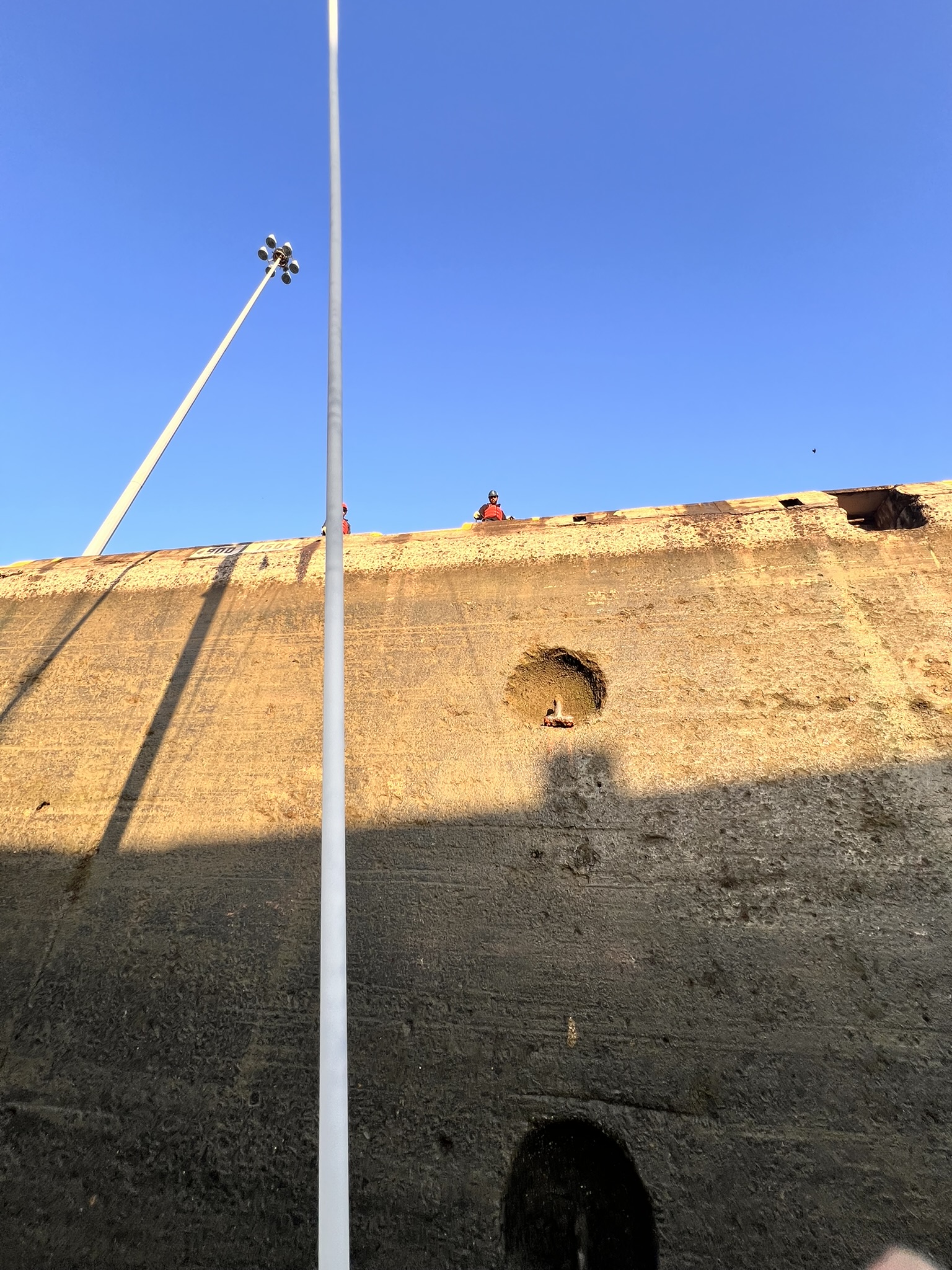
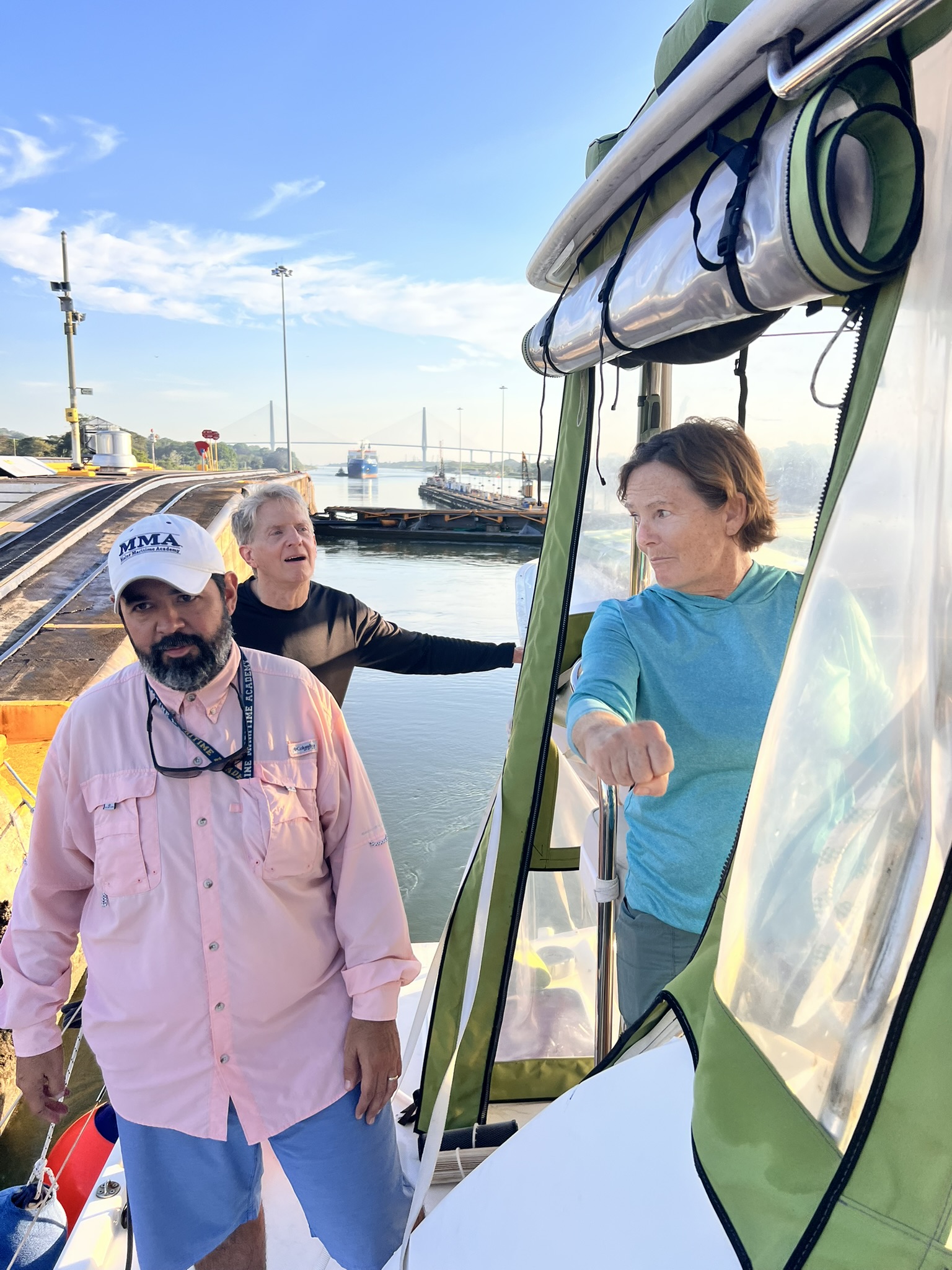
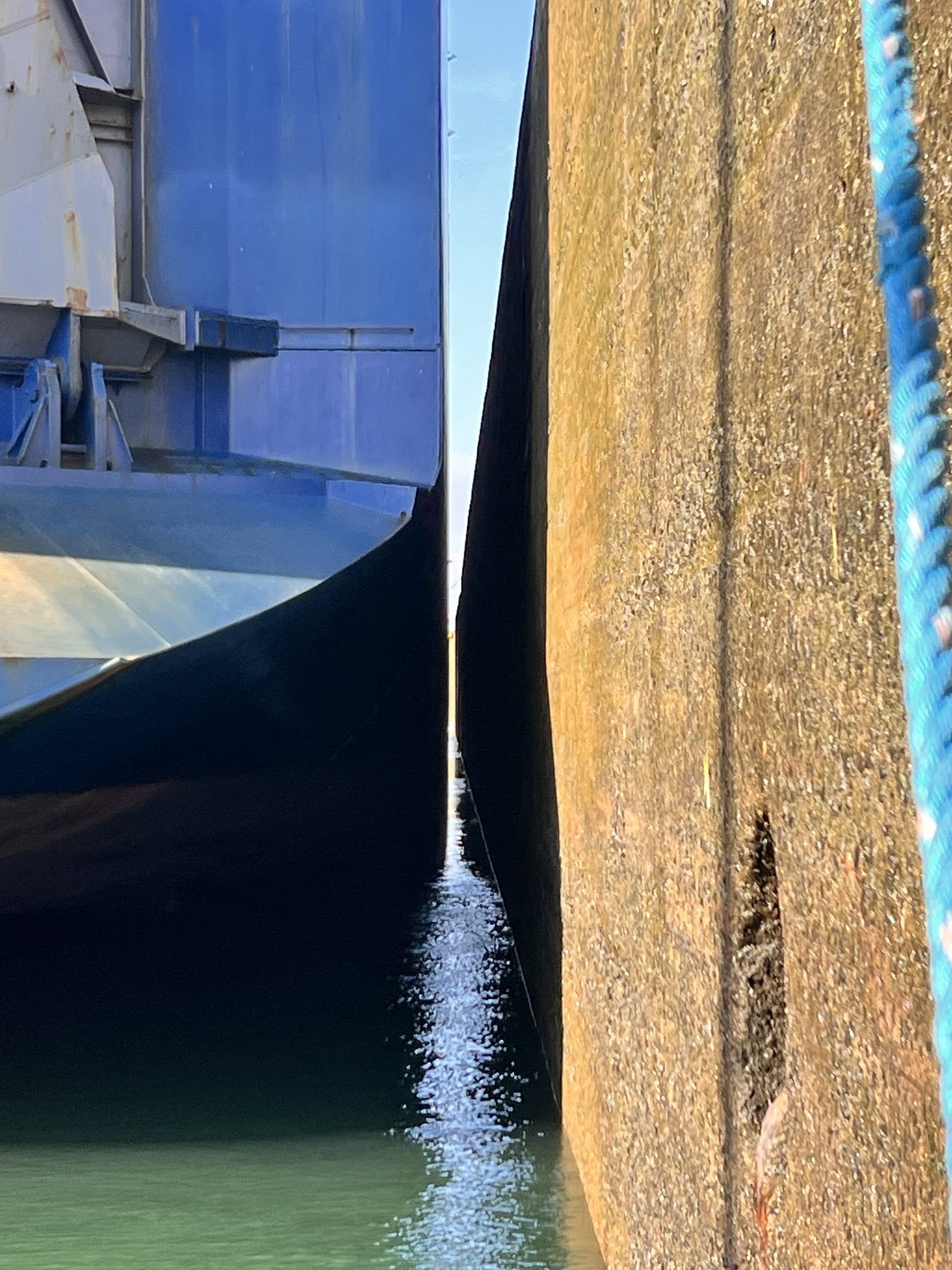
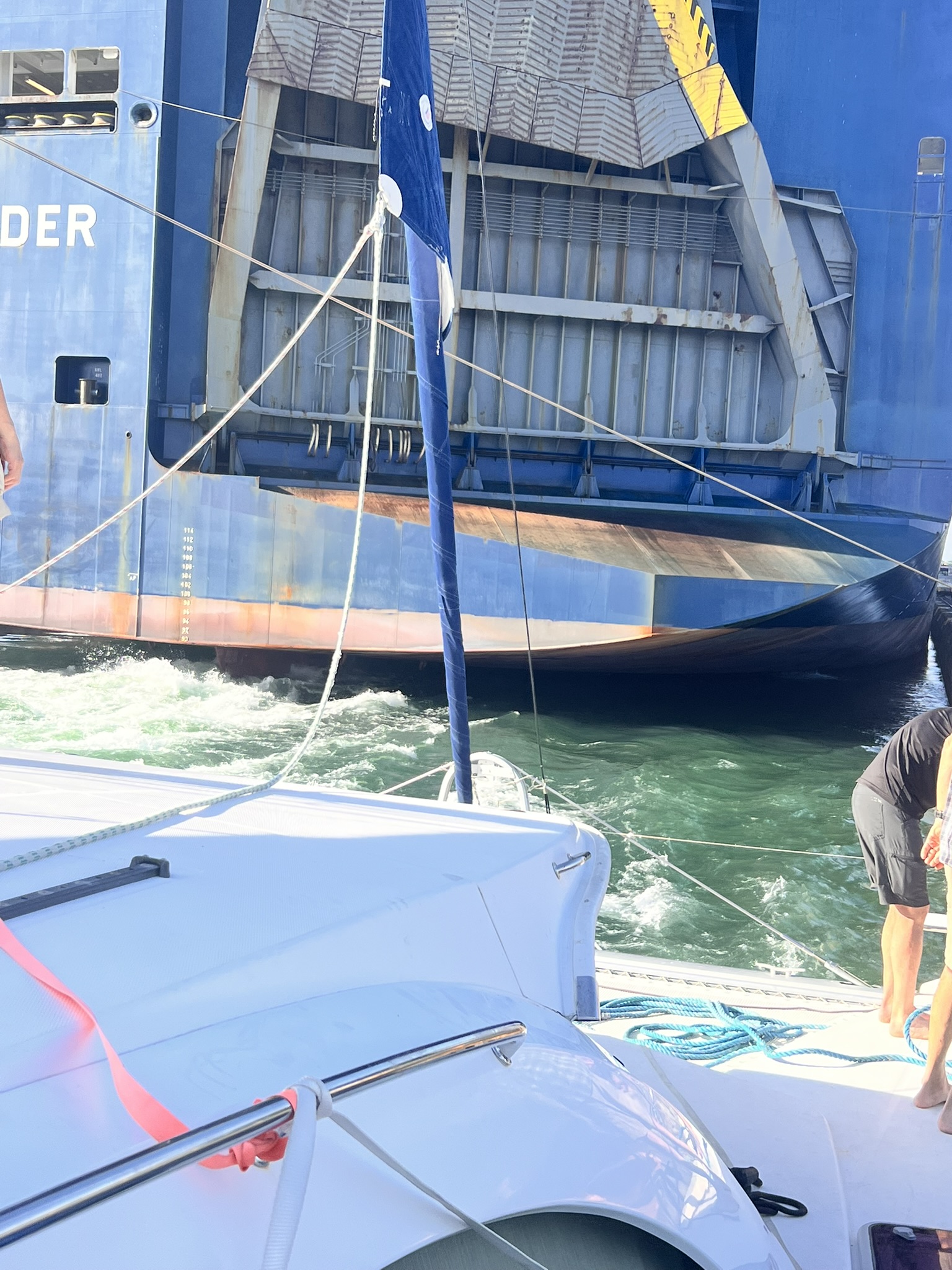
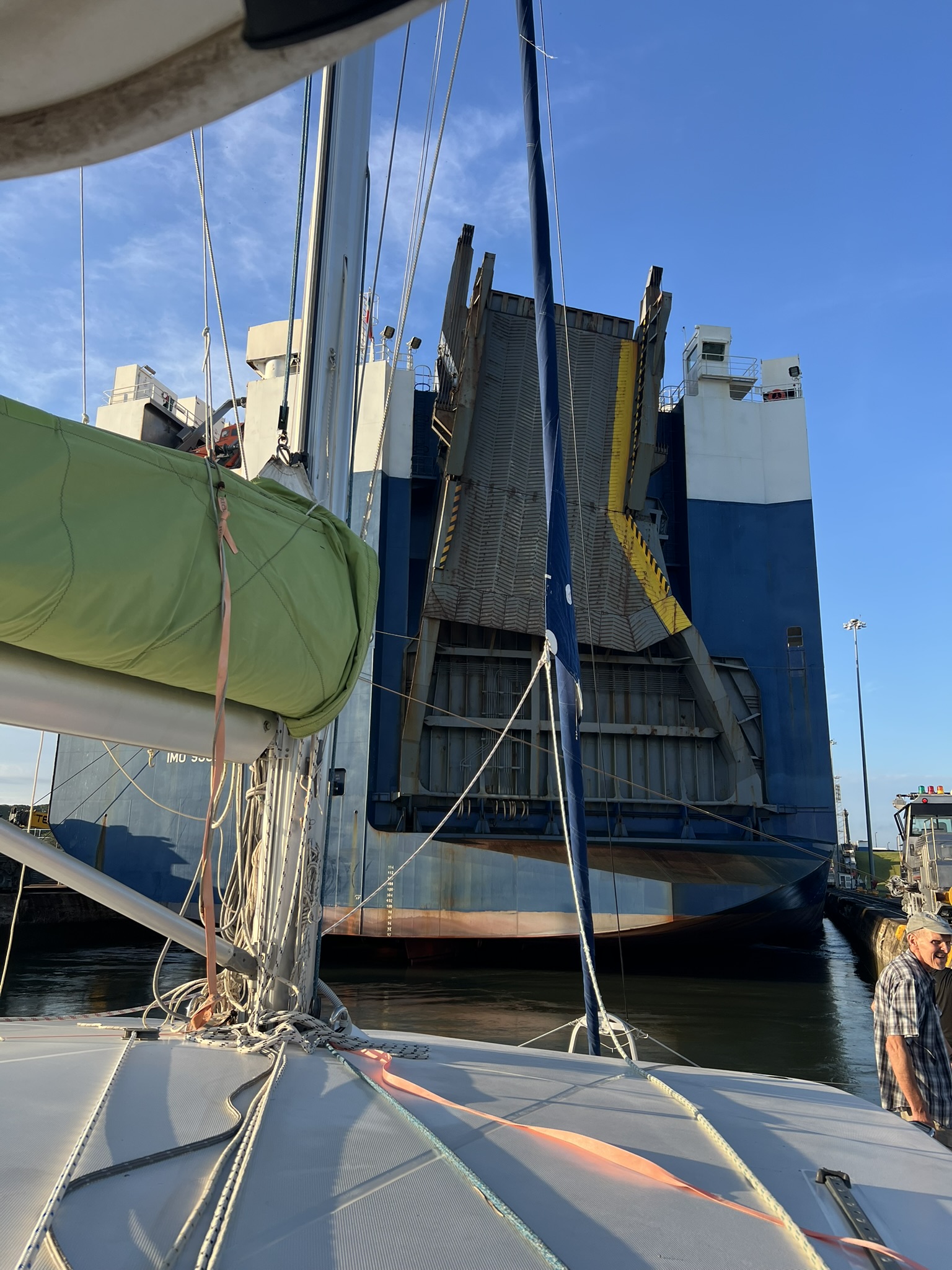
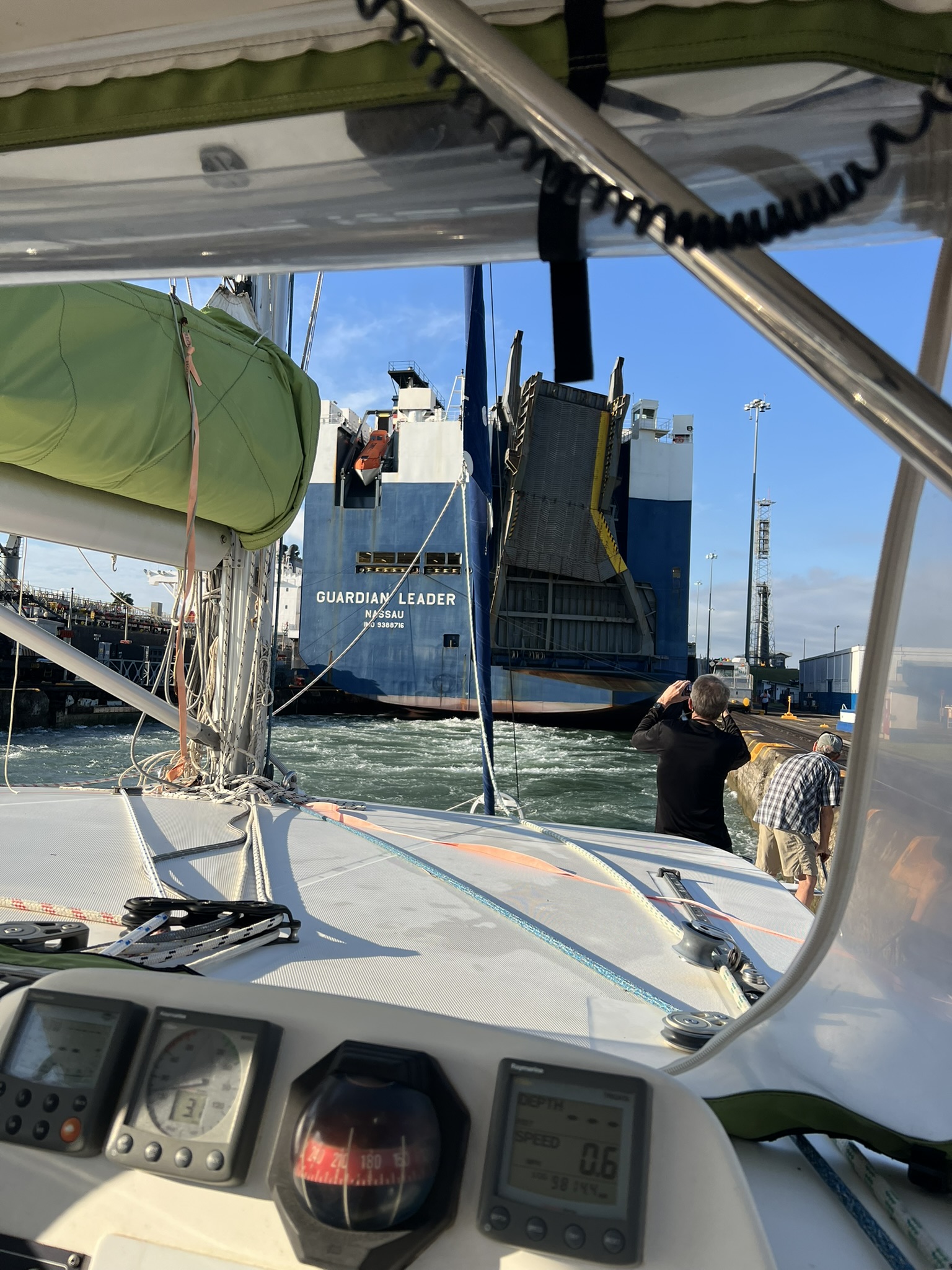
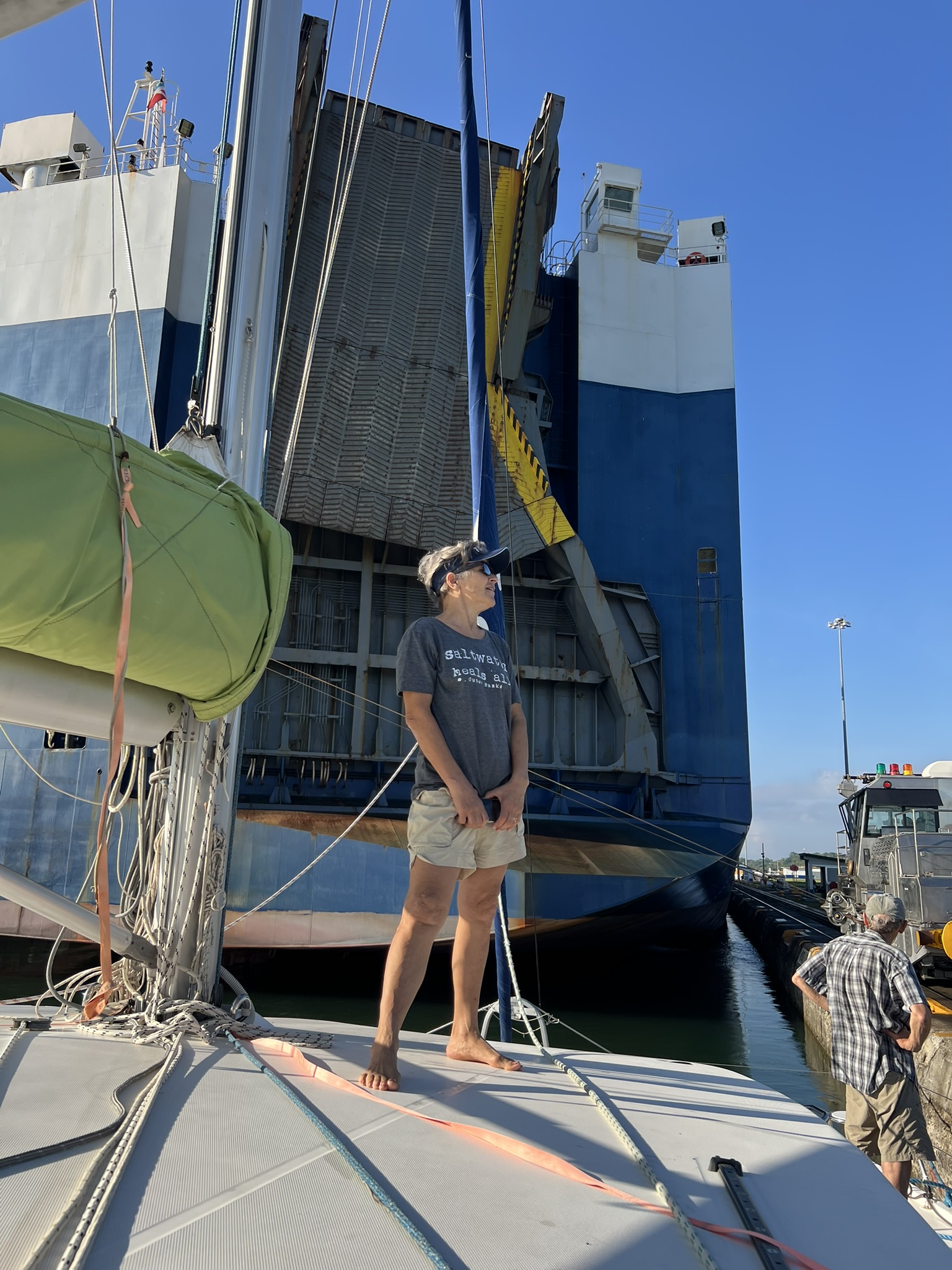
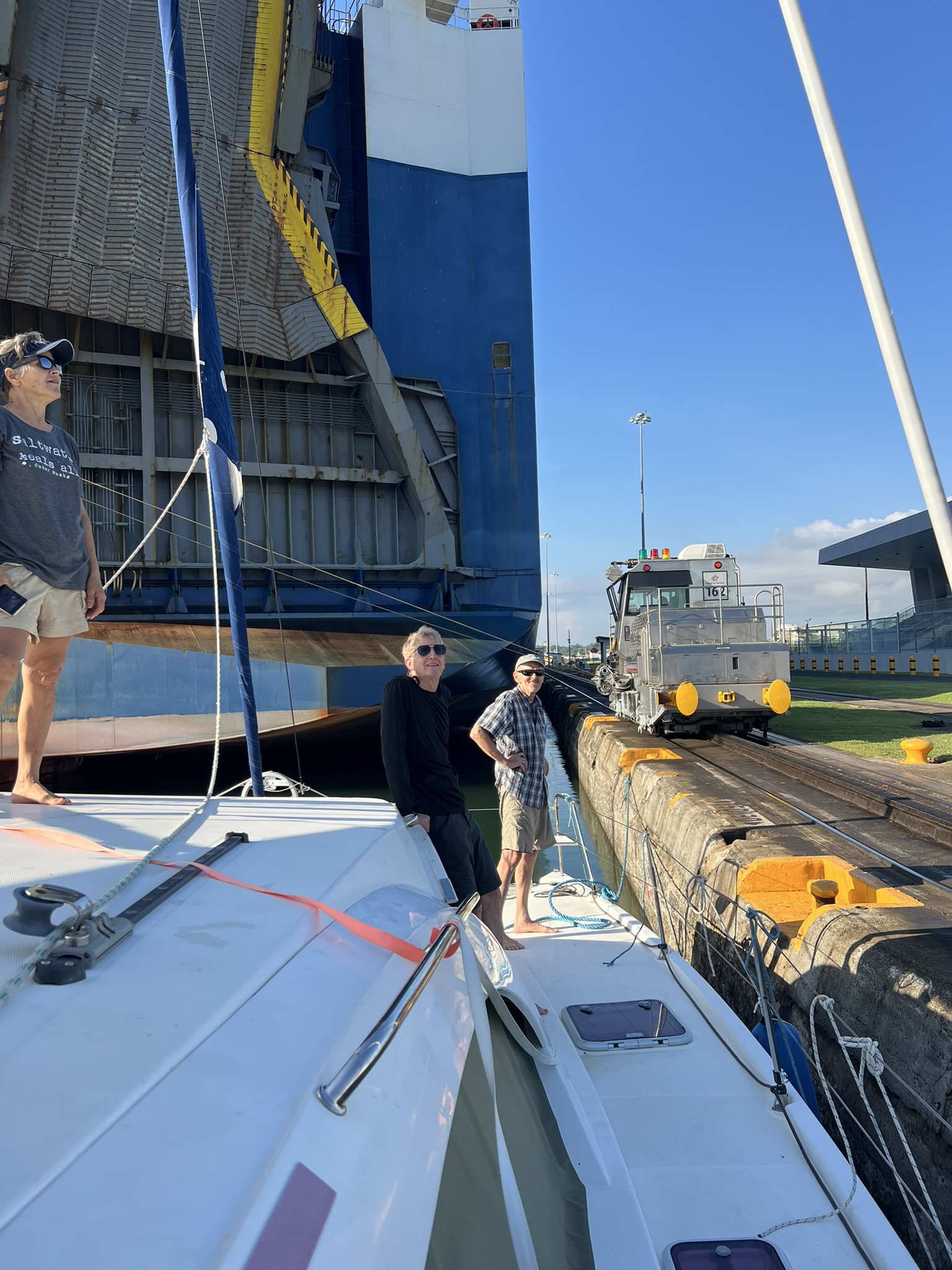
While waiting for the chamber gate to open again we all had a few minutes to marvel at the engineering around us, the sheer enormity of the ship right in front of us, and our own tiny irrelevance, and then to wince at the massive amount of fresh water that was poured out the lock gates when they opened to the next chamber. There are no pumps in the Panama Canal. Nothing moves water from the lake into the locks or out again other than simple gravity, and that means that every time a ship goes through a lock, tens of thousands of gallons of water from Gatun Lake are lost to the Atlantic Ocean. (Or, on the other side, to the Pacific Ocean.) Is it any wonder that the lake’s water levels are becoming dangerously low? The new locks at Agua Clara, built to accommodate the much larger “NeoPanamax” ships of our era, use even more. “Steps are being taken” and “plans are being made” (for example the canal authority recently tightened the displacement limits for all boats). But their options are limited and it’s hard to imagine the whole operation being sustainable in the long run, or even another ten to twenty years.
Luis gave us a fascinating history lesson as we moved into the lake to begin our traverse and pointed out the “security projects” along the way – those little precautions put in place during the construction and since then to ensure that the canal isn’t vulnerable to efforts to, erm, disrupt it. His knowledge about the canal seemed endless. His father had worked for the canal, and his father before that had been one of the Panamanian foremen during construction. Luis had started as a tugboat hand, then a captain, was now in charge of all the tugs, all the training for the tugs’ hands, including captains, and all the procurement for the fleet of tugs. He occasionally takes on advising again if there’s an unexpected scheduling gap – we were so lucky!
About 15 minutes into our traverse of the lake, the port engine overheated. Oh goodie.
Remember that thing about needing to average 6 knots or more? Yeah….. Peter opened the engine compartment and started the wait for the engine to cool enough to work on. Luis picked a spot wayyyy down the lake and told me that if we didn’t reach that spot by a particular time (about an hour and a half), he would have to call the break-down into the canal authority and we would have to spend the night on the lake. Even for our wee vessel, timing our passage through the Culebra Cut – a bottleneck where the Panamax and Neopanamax ships couldn’t pass at the same time – was crucial, and the authority, which viewed pleasure boats such as ours pests at best, didn’t want any such fleas getting into their well-oiled machine. Each of those ships pays hundreds of thousands of dollars – millions of dollars for the largest – to transit the canal, and our relatively paltry fee wasn’t enough to merit anything resembling special treatment. I nodded and decided not to mention it to Peter.
He knew anyway. We all stayed out of his way and pretended everything was fine. David helped me make lunch, while Irina and Igor settled in on the front porch and photographed giant ships as they passed us and spoke quietly in Ukrainian, presumably about whether they were going to get stuck out here for an extra night. Peter meanwhile diagnosed the problem, pulled out the stops and replaced the impeller in record time, and we were just approaching the point Luis said we needed to be when he came up to the helm and flipped the starter for the port engine. We were off at full speed again!
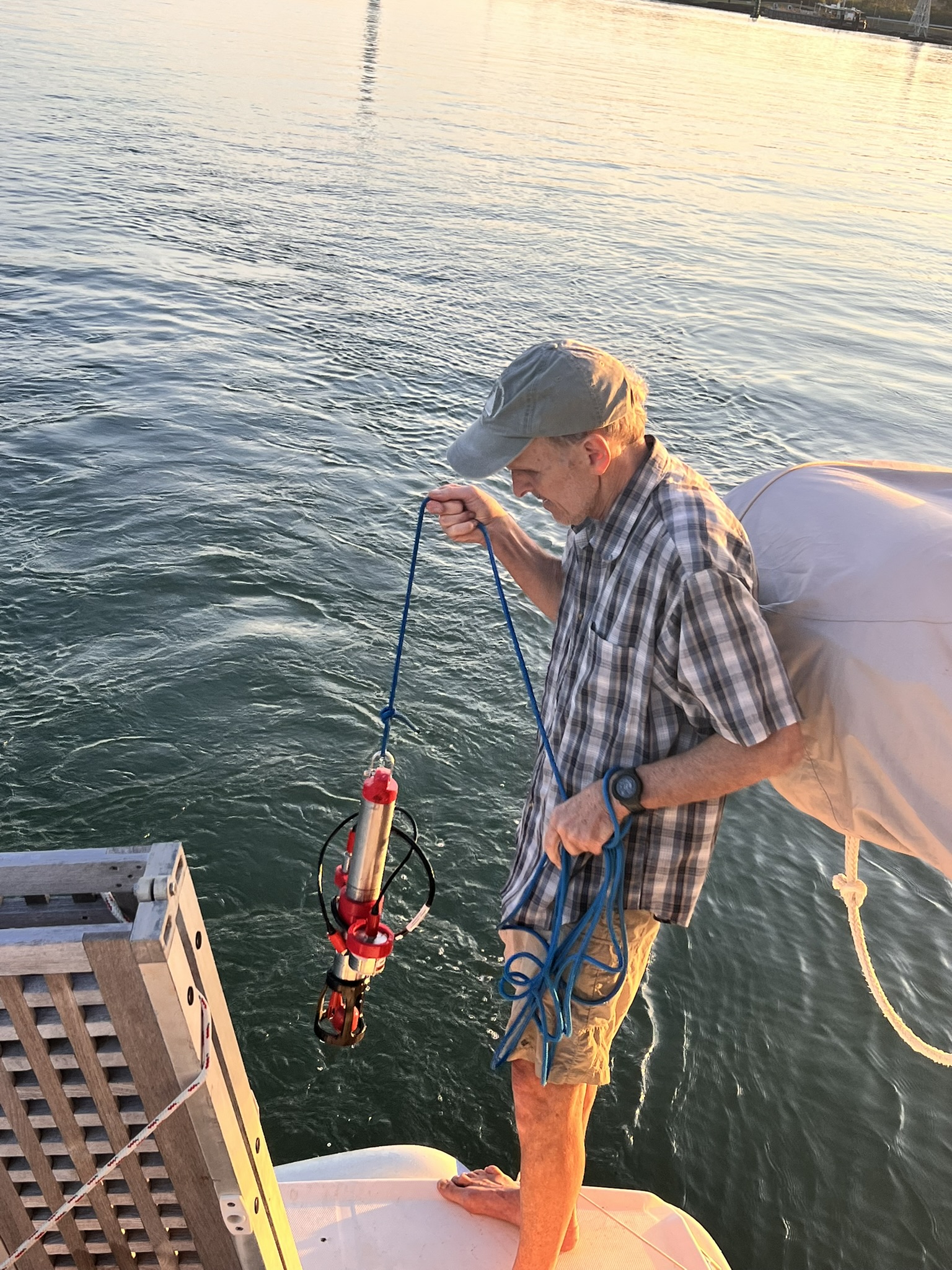
Irina and Igor are oceanographers, and take water samples everywhere they go.
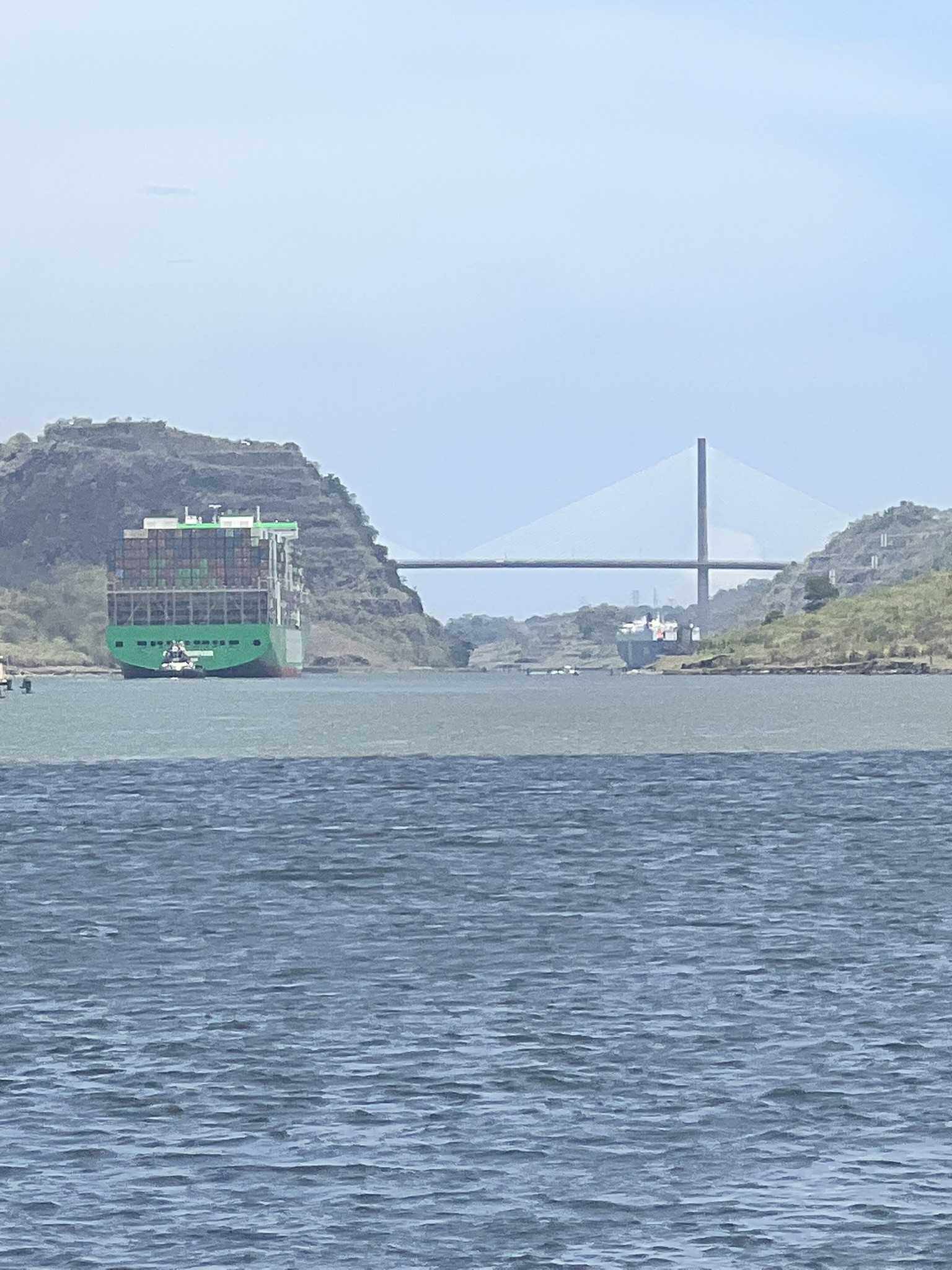
The rest of the lake passed quickly, we got through Culebra Cut on time, under the Centennial Bridge, and were quickly approaching the Pedro Miguel locks. It was time to start going down again, and Guty and Luis were right – it was easier than going up. These two chambers passed quickly – we were on our own again, so snugged up against the wall and marveling again at the immensity of the ship with us in the chambers behind us. It crept in closer and closer, and without more than a foot on either side separating it from the walls it loomed behind us larger and larger. We dropped out of the Pedro Miguel locks without incident, and headed with growing excitment to the Miraflores locks, just an hour or two down the canal.
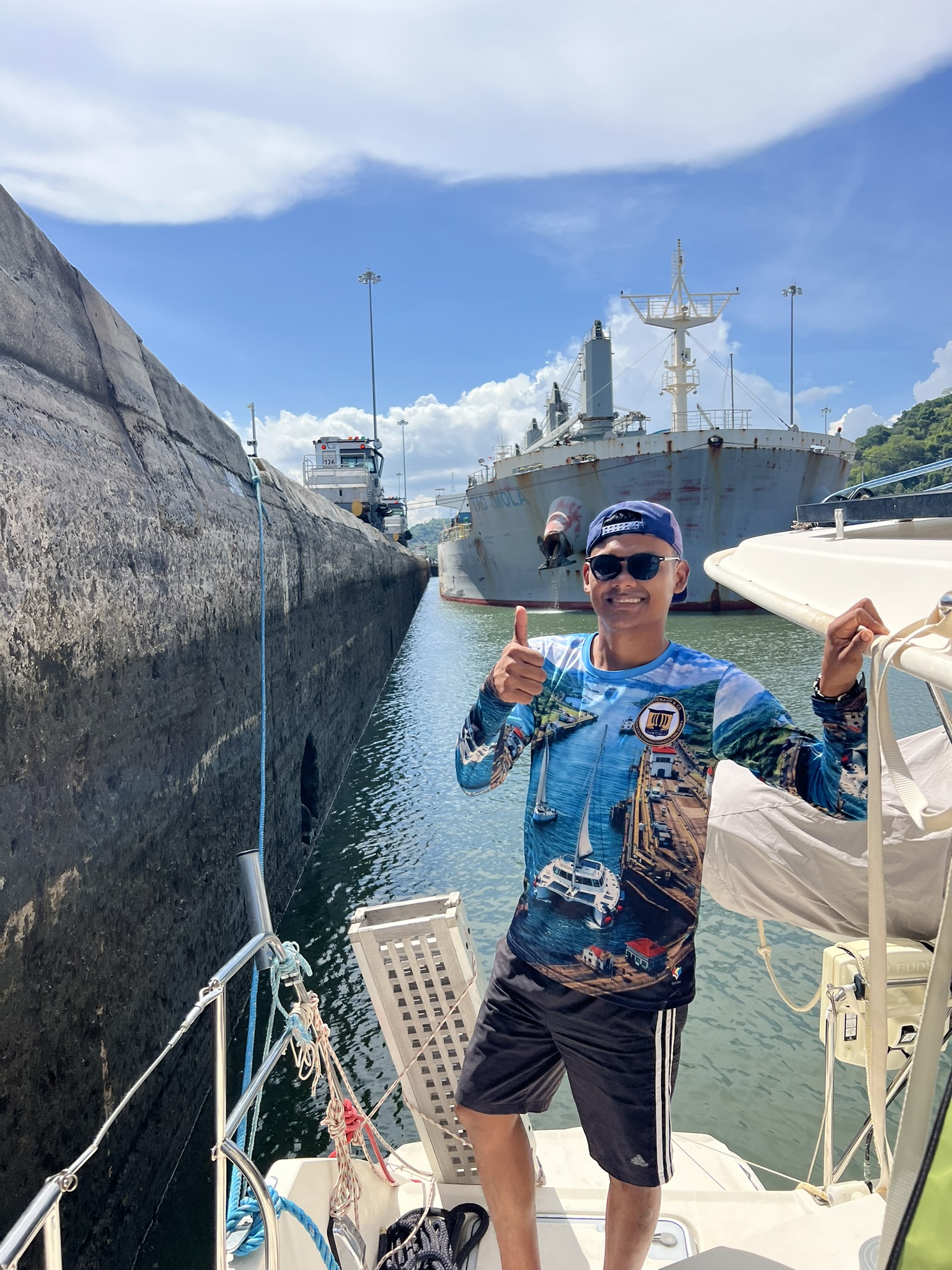
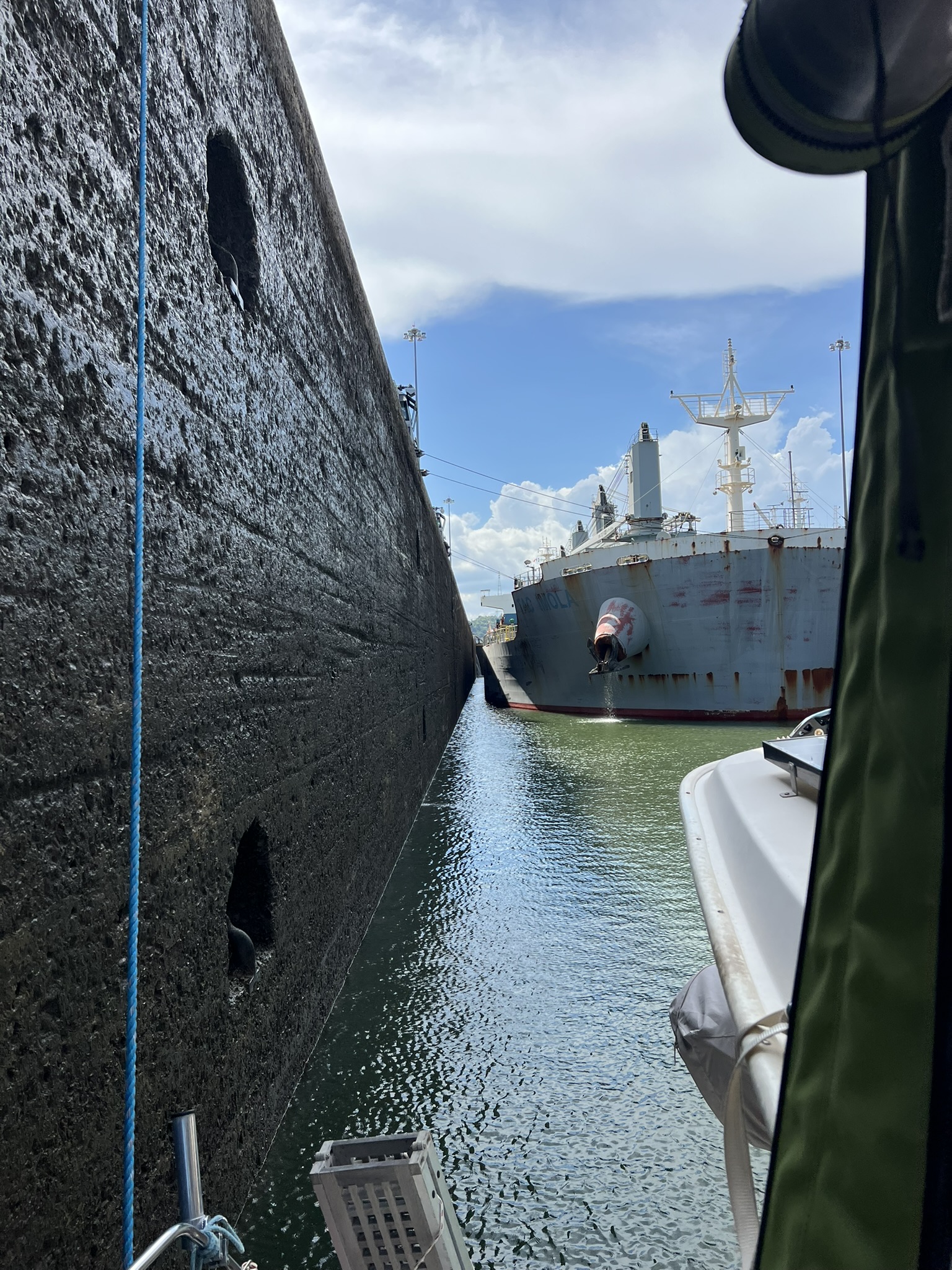
We cooled our heels for a bit in a waiting area ahead of the last lock, which gave my siblings ample time to tune in to the canal cam at Miraflores. By the time we were in the first chamber there they were all online and at Luis’ urging we ran out onto the trampoline and started waving our arms and hollering at the camera. To our immense surprise, the local peanut gallery responded. There were probably a hundred fifty people crowded into the viewing platform across the way – these were the locks closest to Panama City after all, and tourist itineraries frequently include a visit here to see all the excitement. But they were over next to the Atlantic-bound locks – we thought we were well out of their view! Apparently our antics were entertaining enough to draw their attention. Their delight buoyed us further, and though it’s hard to see us in the stills from the canal cam, we’re there, and we’re having a ball. It was all the more fun to know we had family all over living the moment with us in real time too.

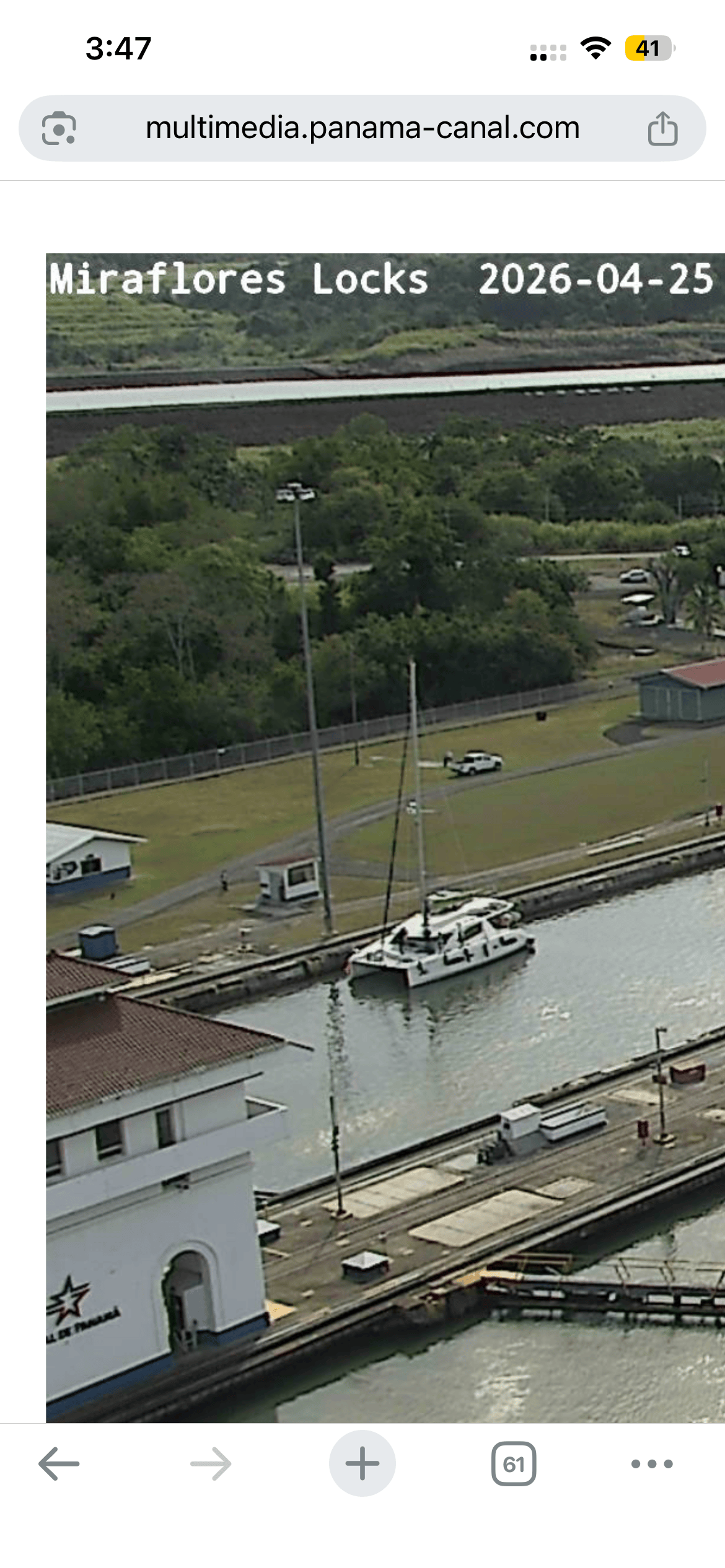

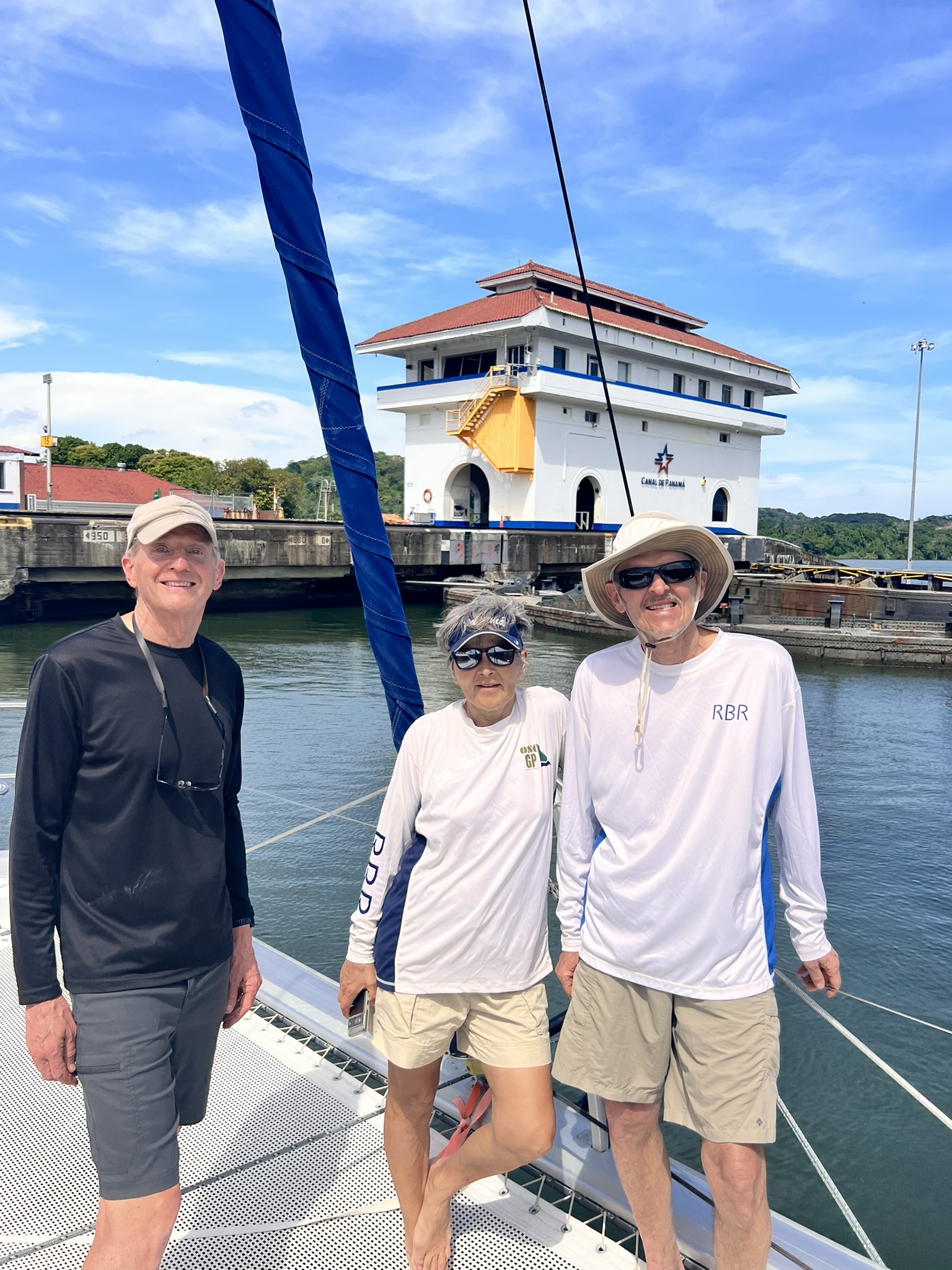
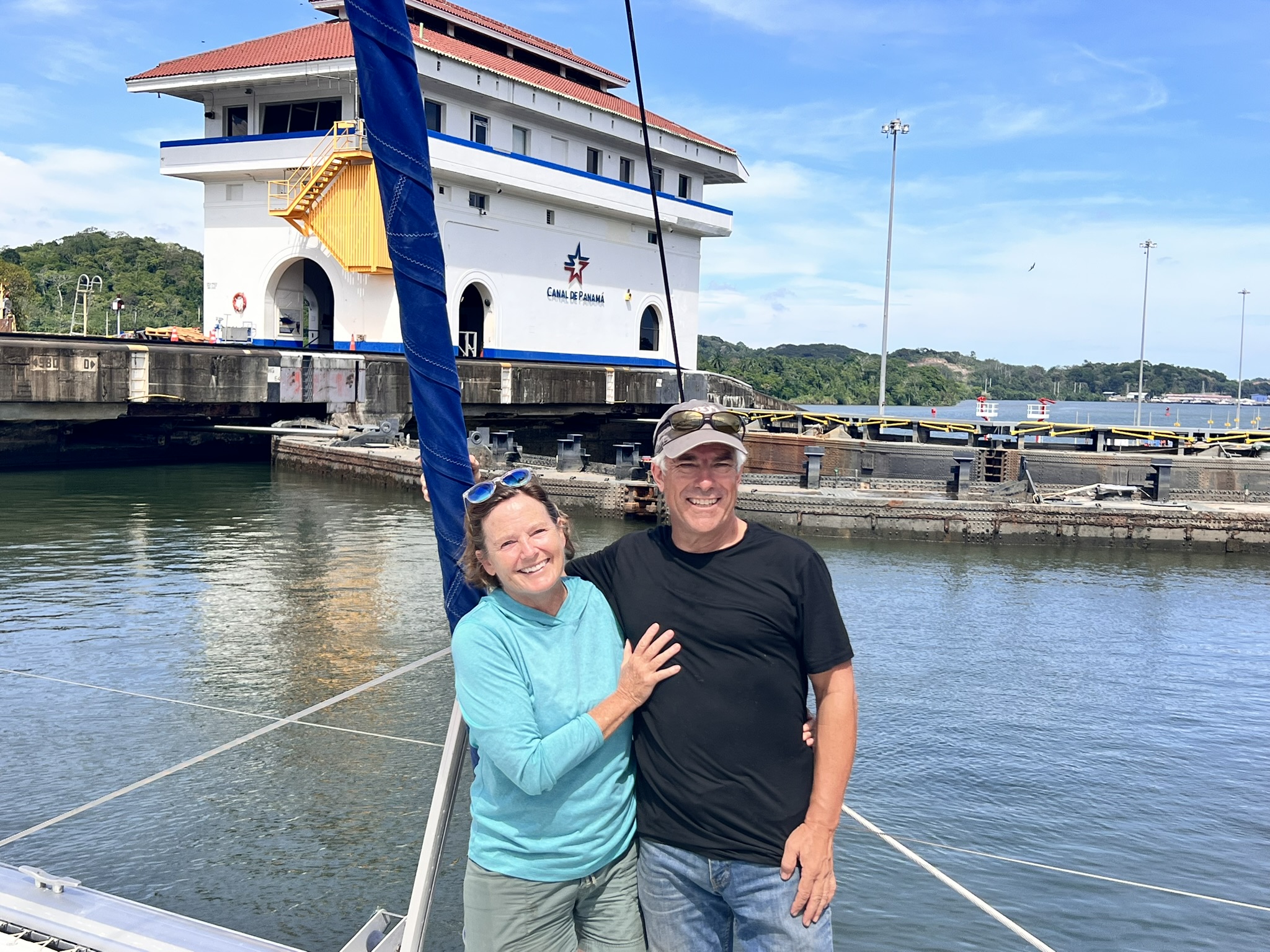
And then we were in the Pacific. Three years, five months and ten days after moving on to the boat in Montenegro, we passed the second of three major milestones we’d planned in this increasingly epic journey. We knocked off the Atlantic in 2024, the Panama Canal in 2026, and our sights were set on crossing the Pacific in just a few short weeks.
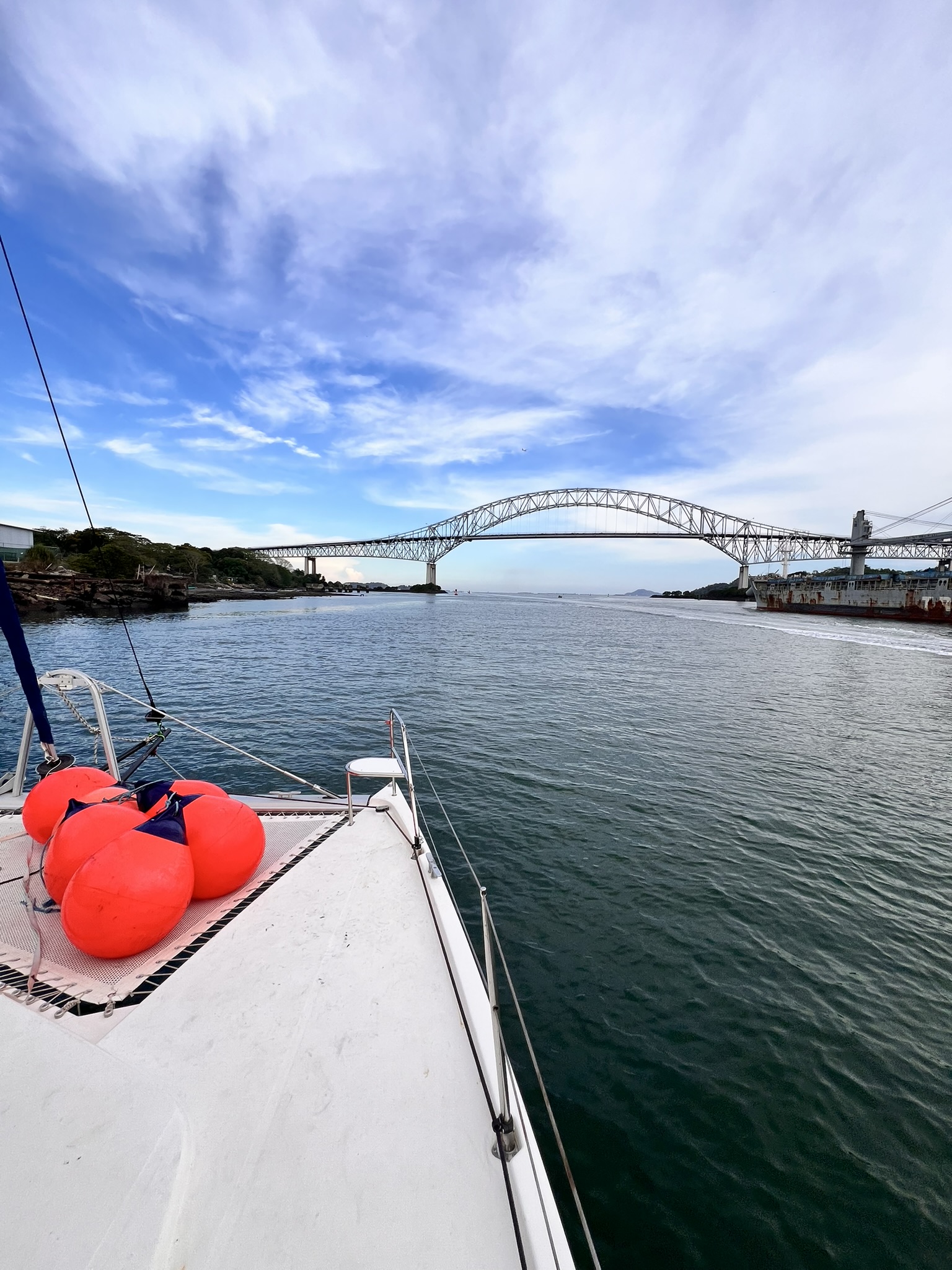
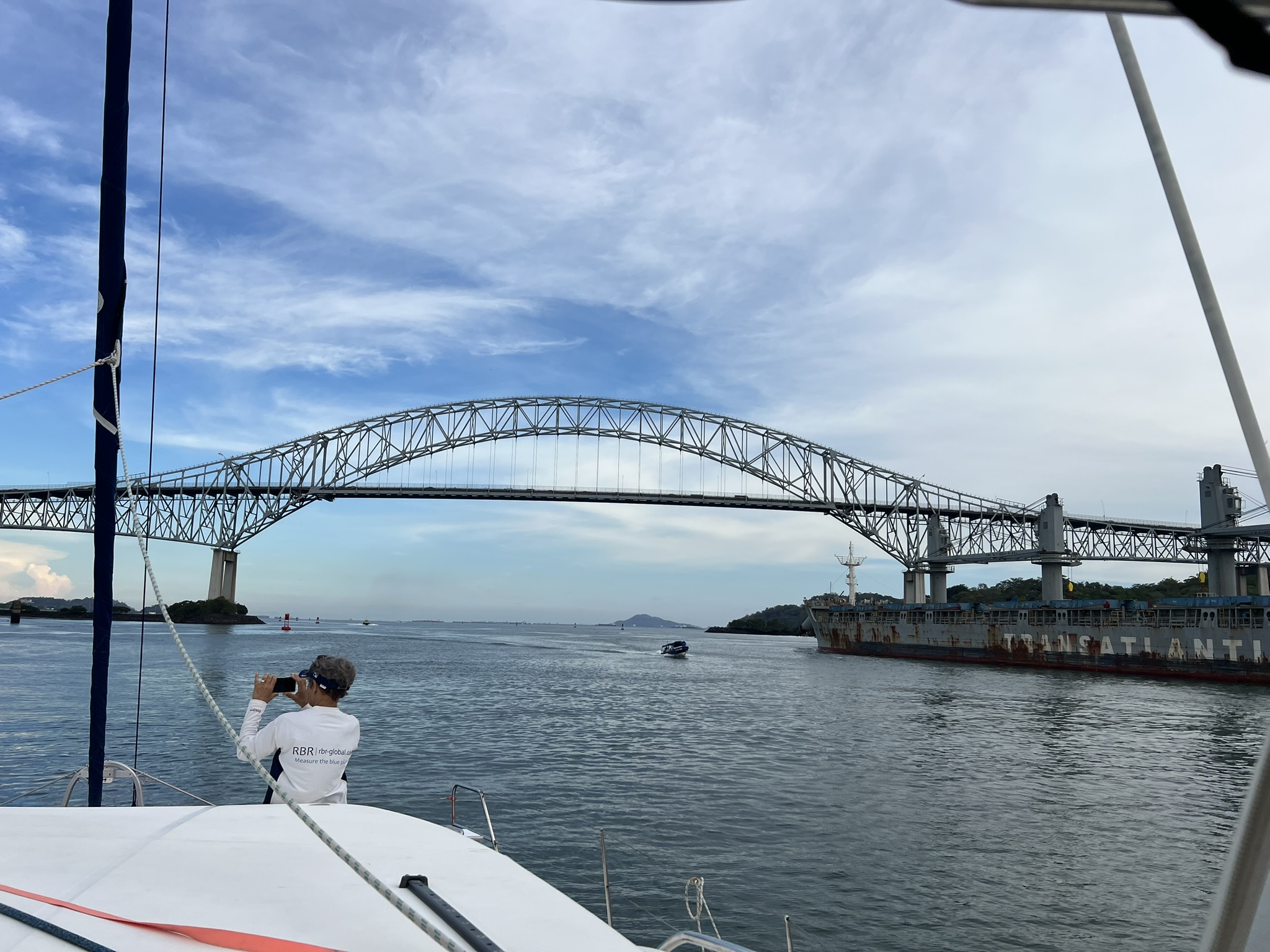
After dropping Luis with another pilot boat and passing under the Bridge of the Americas we made our way to the anchorage outside La Playita marina. It was late afternoon, and David was anxious to get to his hotel, and Guty was chomping at the bit to get to his ride back to Colón and his fiancée. Igor and Irina were spending the night on the boat and then catching an Uber back to their boat at Shelter Bay in the morning. By the time Peter dropped the guys at the marina and returned to the boat, I had dinner waiting and a bottle of prosecco open. He just needed to check on the bilge pump on the starboard side – the light had been on long enough to be warm to the touch, and he now had a minute to investigate it.
Occasionally, very occasionally, Peter reminds me that he not only has a healthy temper, but he is also capable of cursing fluently, loudly, and repeatedly for a very long time. On opening the bilge, he knew instantly that there was a serious problem with the plumbing for the new refrigerator compressor. Water sloshed in the bilge and spewed from the pump’s pipes, which is what happens when the pipes to the pump are reconnected with electrical tape instead of hose clamps. The bilge pump was tirelessly pumping water in to cool the compressor, then “out” of the boat – but only as far as back as into the bilge again.
Ricardo.
An hour or so later Peter rejoined us for dinner, and we managed to move away from the subject of the compressor and how soon Ricardo was going to be coming to fix the problems he’d created to reflections on the day and the experience of transiting the canal. We’d all found it a challenging day, but one we would want to repeat again, willingly. With all the sailboats transiting throughout the year, it wouldn’t be difficult to find one in search of experienced volunteers. I mentally added that to my list of things to do in Panama while waiting for Peter to reach the Marquesas.
Igor woke us at 3:00 the next morning. They’d awoken to the sounds of rushing water in the bilge again, and Peter again had to first mitigate then try to fix the issue – another pipe, another geyser, but this time a pipe was gushing water along the electrical panel (bad enough on its own), and again, flooding the bilge. We were very lucky to have guests in that cabin who knew enough to know something was very wrong and wake us. We have yet to articulate what the outcome might have been if they hadn’t been there, and we’d have continued sleeping through the night, but undoubtedly it would have involved not only an entirely new electrical system for the boat – and only if it had managed to stay afloat.
After Igor and Irina left the next morning, it was all we could do not to just knock back a shot of tequila and call it a day. We managed to be relatively productive though and among other things confirmed that Ricardo would indeed be coming the next morning to fix the mess he’d created.
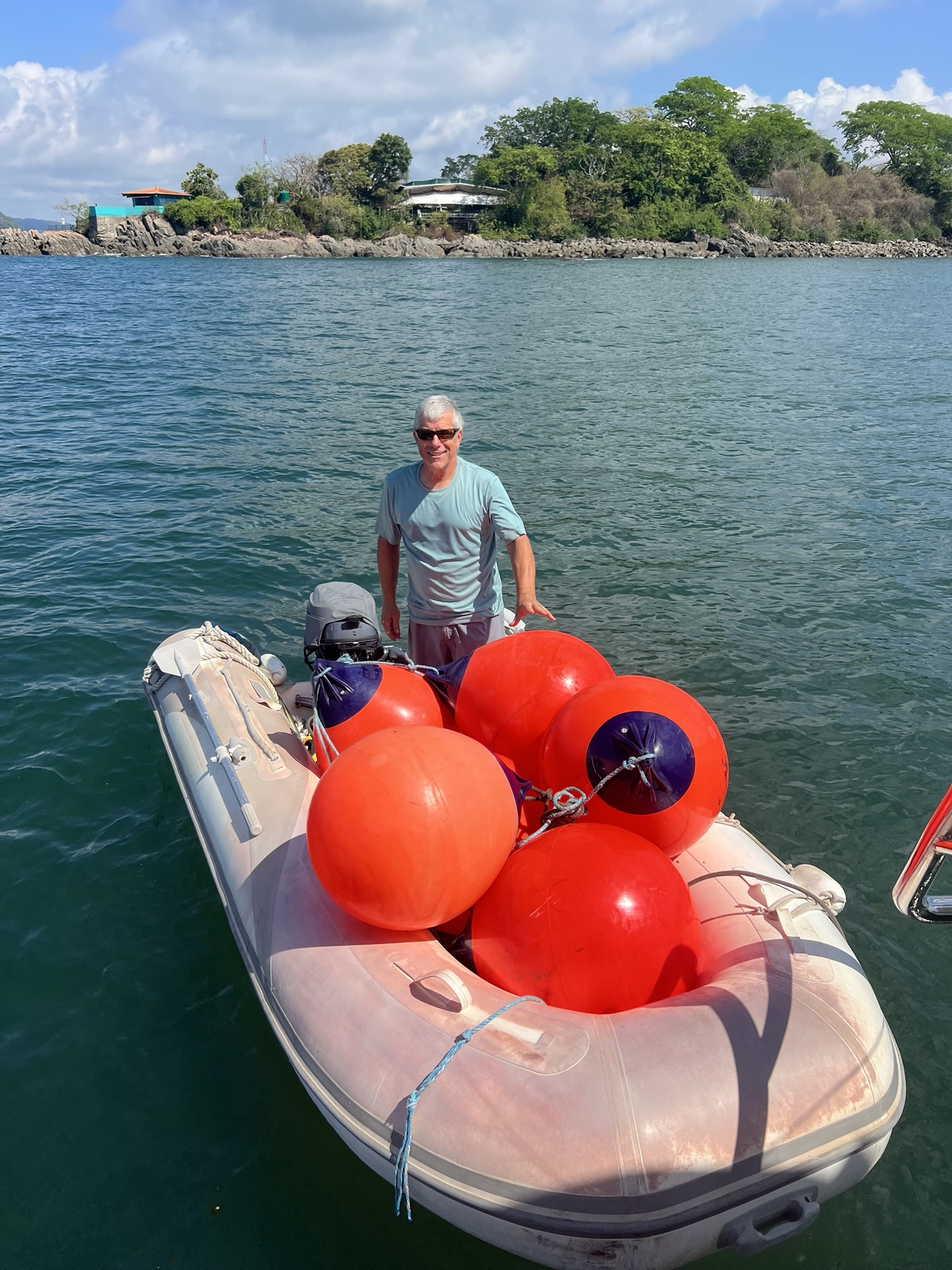
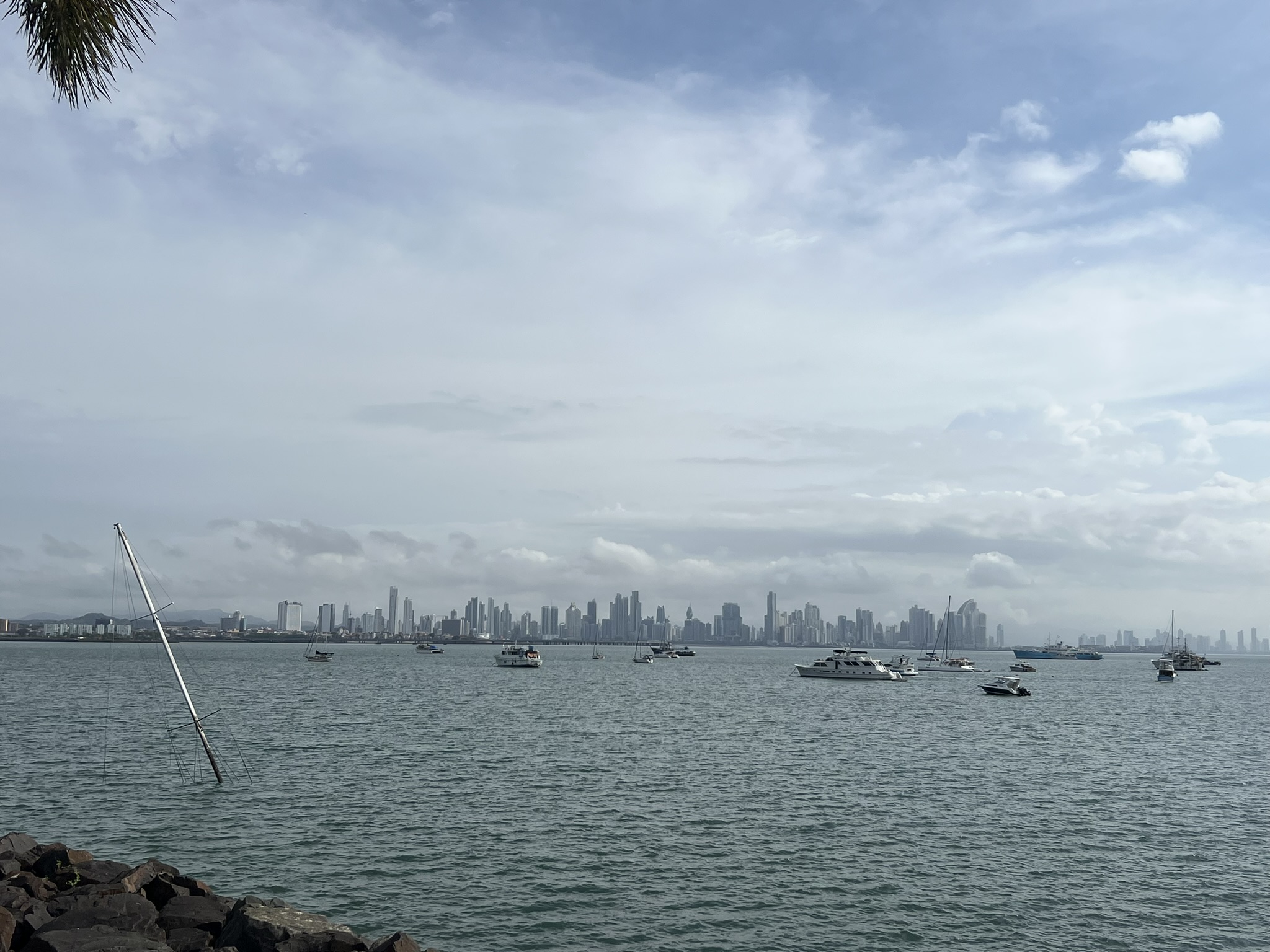
Peter spent a couple of hours with him when he arrived, gave him a master class on basic plumbing, and described exactly how each connection should be finished and why u-bends in copper tubing are a bad idea, and lots of other tips, tricks and lessons that he should have known since refrigerator repair school. Unfortunately, however, Ricardo probably didn’t absorb as much of it as he might have if he weren’t casting up his accounts every few minutes. Apparently, we were well adapted to the swell’s effects, but poor Ricardo definitely was not. But the fridge was cold, ice was freezing again, and we’d long since paid him well for the work. It was time to move on to the next maintenance issue.
Except that we still hadn’t gotten back the extra money we had paid him. Peter originally wired Ricardo payment for the installation of the compressor. He told Peter the bank hadn’t received it, then said the bank had received it but wouldn’t release it to him, so we needed to give him cash. Since he was “good with God” and would “never cheat anyone,” we paid him in cash as well and waited for Ricardo’s bank to return the funds to us. Five months and countless texts later Peter finally told him we were going to have to turn the matter over to our lawyer in Panama. Stay tuned.
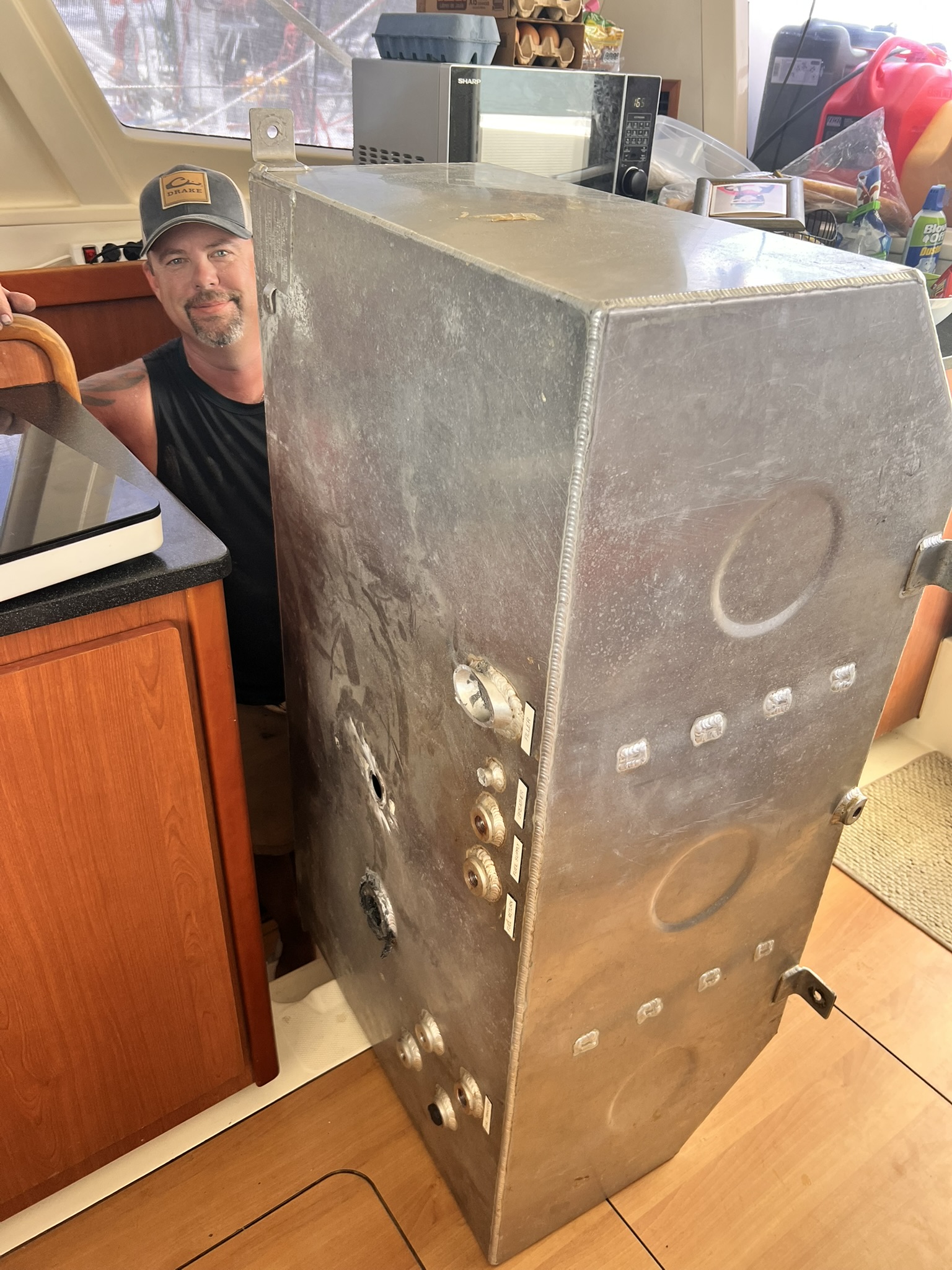
Corey the aluminium welder was next. He brought down the new diesel tank one day, and after he and Peter took out the old, leaky tank and fitted in the new one, he realized he might have mismeasured a couple of the hose fittings. He took it out again and back to his workshop for the minor adjustments, then returned a few days later and got down to the business of final installation. That all this in and out required ripping apart our bunk and taking the door off our cabin was secondary, and it was with relief bordering on elation that we reassembled our bed for the last time and rehung the door. We had our new tank!
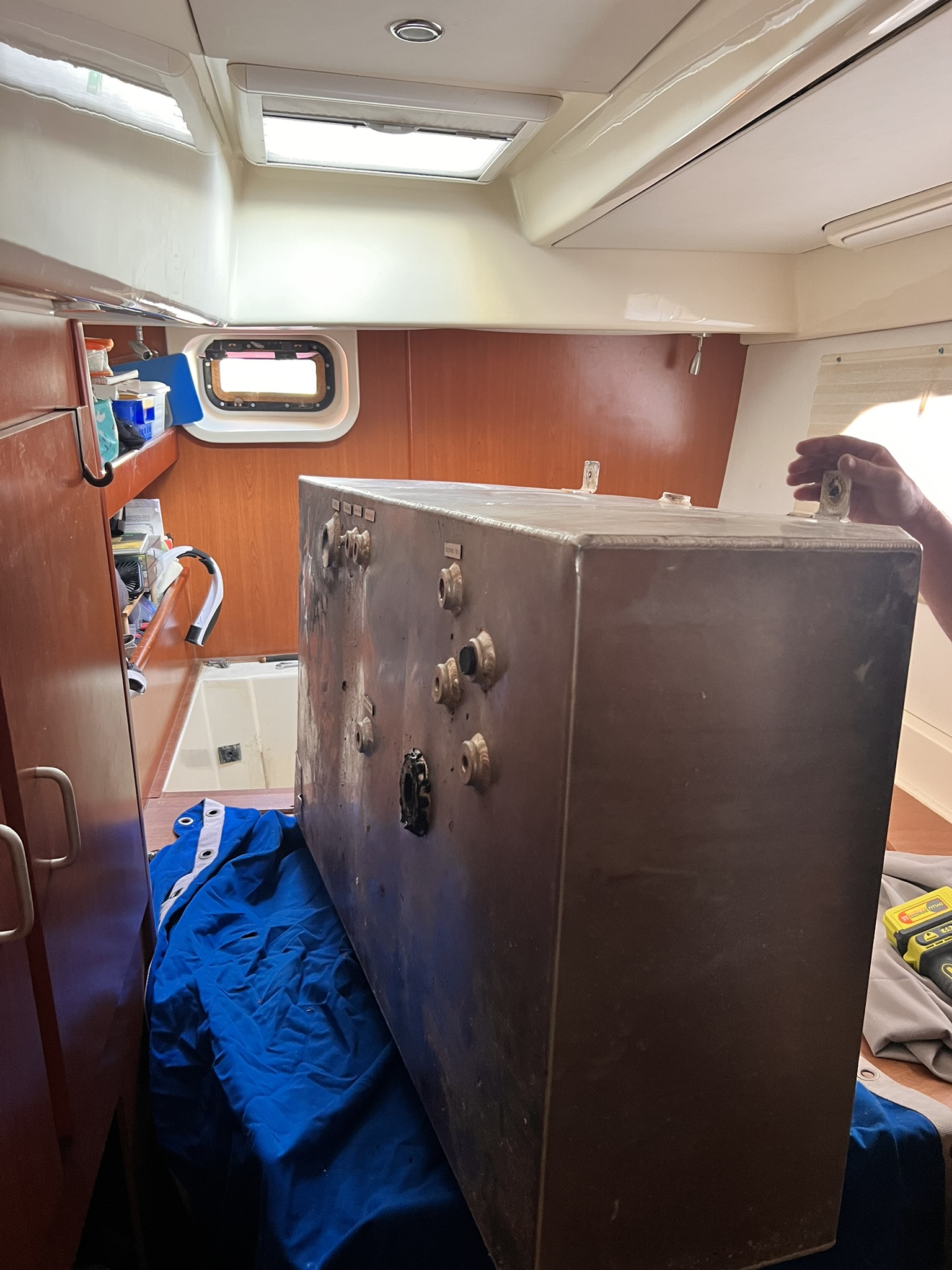
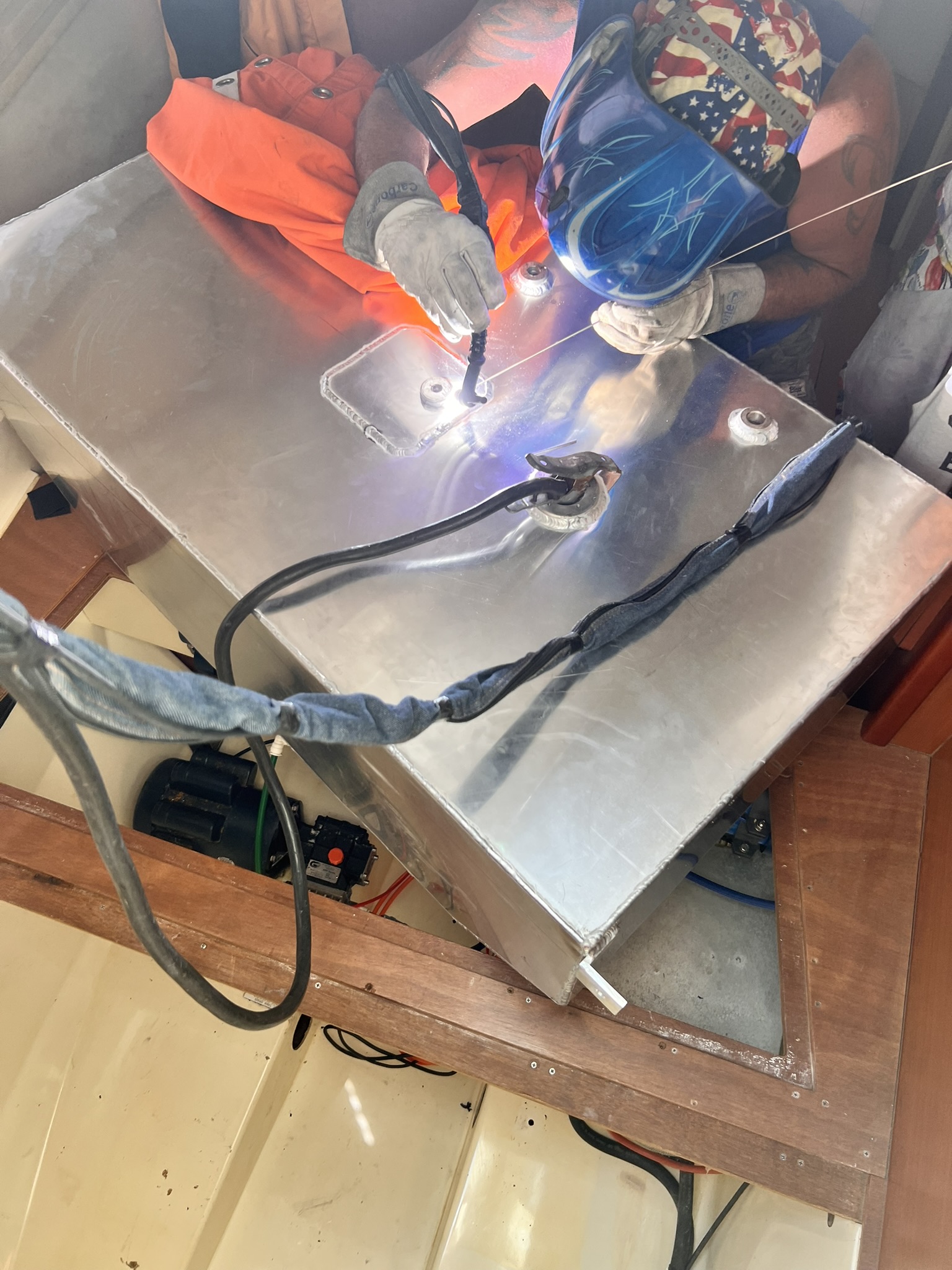
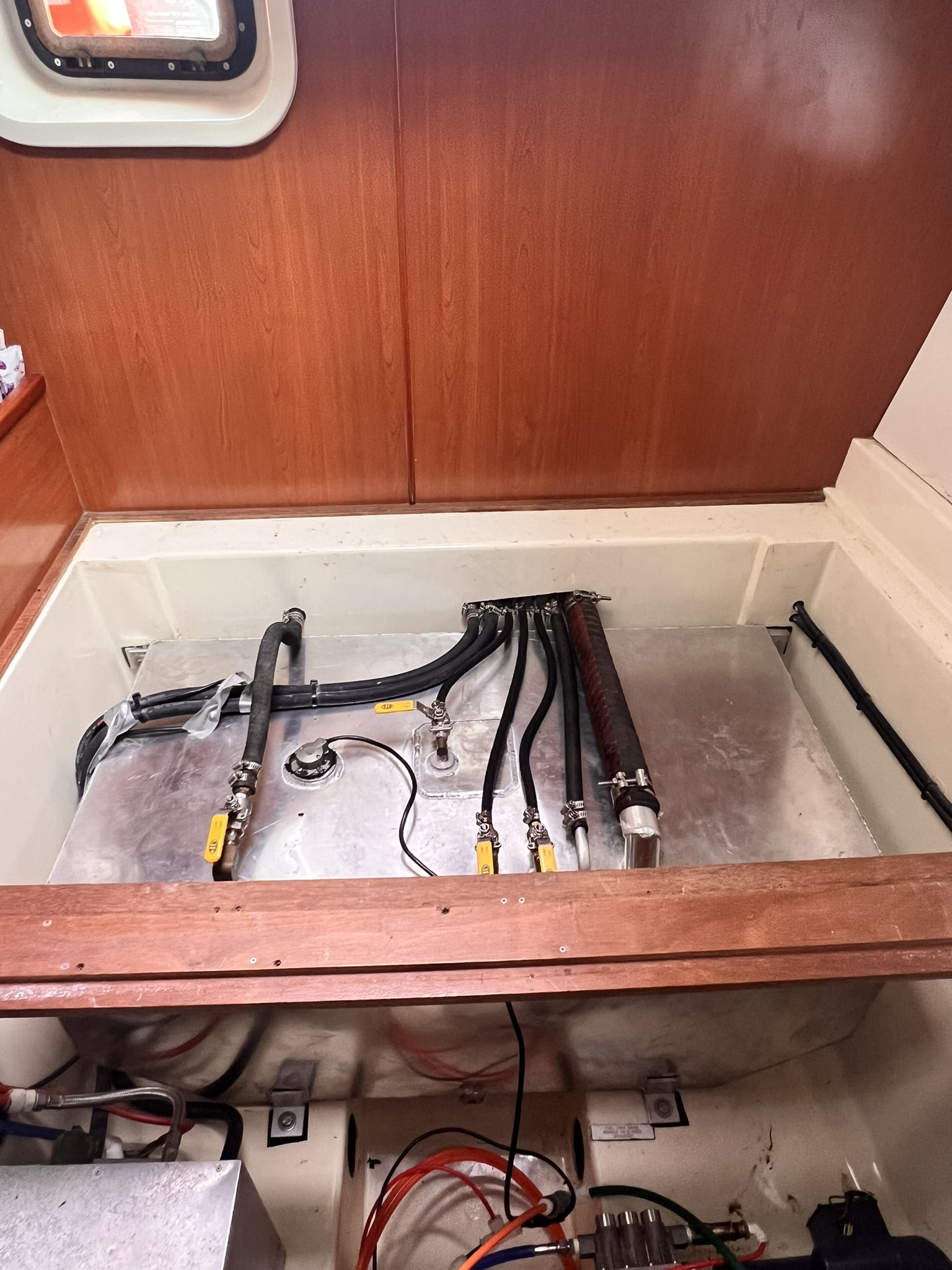
April was a very long month. A lot happened. We were tired and overwhelmed by the amount of work we still had in front of us to get Peter and the boat finally ready to cross. Crew for the crossing was volunteering on a transit and then meeting us at La Playita the following week, I had mountains of provisioning to do, and at the last minute news came through from the French embassy that our long stay visas for French Polynesia had finally come through. I immediately packed our passports into the outer – zipped! – pocket of my purse and got an Uber to the embassy.
Agh – traffic! Thinking I knew exactly where I was in Casco Viejo and where I needed to go to get to the embassy, I hopped out of the Uber early and set out. Within a few blocks however, I was completely turned around and had to reach into my purse’s outer pocket for my phone and its reliable maps app. Ok, set again. Nope – check the phone again. Ooops – demonstration in this plaza, and very raucous protestors. Reroute. Nope, road closed for construction, reroute again. I finally reached the embassy, sweating and ready for a few minutes in their A/C, but when I reached back into the outer pocket of my purse, the only passport there was Peter’s.
Call Uber. Nope, not in the Uber. Retrace steps. Nope, no passport lying on the sidewalk – not a surprise, but certainly a disappointment. I returned to the embassy in tears to drop off Peter’s passport, and the attaché kindly told me to get myself a new one at the American embassy and come back as quickly as possible.
Unfortunately, she said, they would have to send my application back to Tahiti, since their visas are tied to passport numbers, not names. Six to eight more weeks.
Up Next: May 2026 – Should we stay or should we go?