
Nous aimons la Guadeloupe!
Even if we could manage a new wing for the parasail, we certainly were not going to get it shipped to us in less than a couple of months. So, we left Le Marin and headed north, spending the last night of carnival in St. Pierre, then crossing to Dominica the next day. We were saving Dominica for the return trip, and the anchorage offshore from Roseau was just a stop on our way to Guadeloupe. Our first stop in Guadeloupe was Grand Îlet, one of the islands in the Les Saintes cluster, the day after that. (The larger islands in Les Saintes are Bas Terre, Terre de Haut, Ilêt Cabrit, and Grand Îlet.) We anchored in a beautiful, empty inlet of that empty island. Peaceful, but for the crash of the surf on the pebble beach.
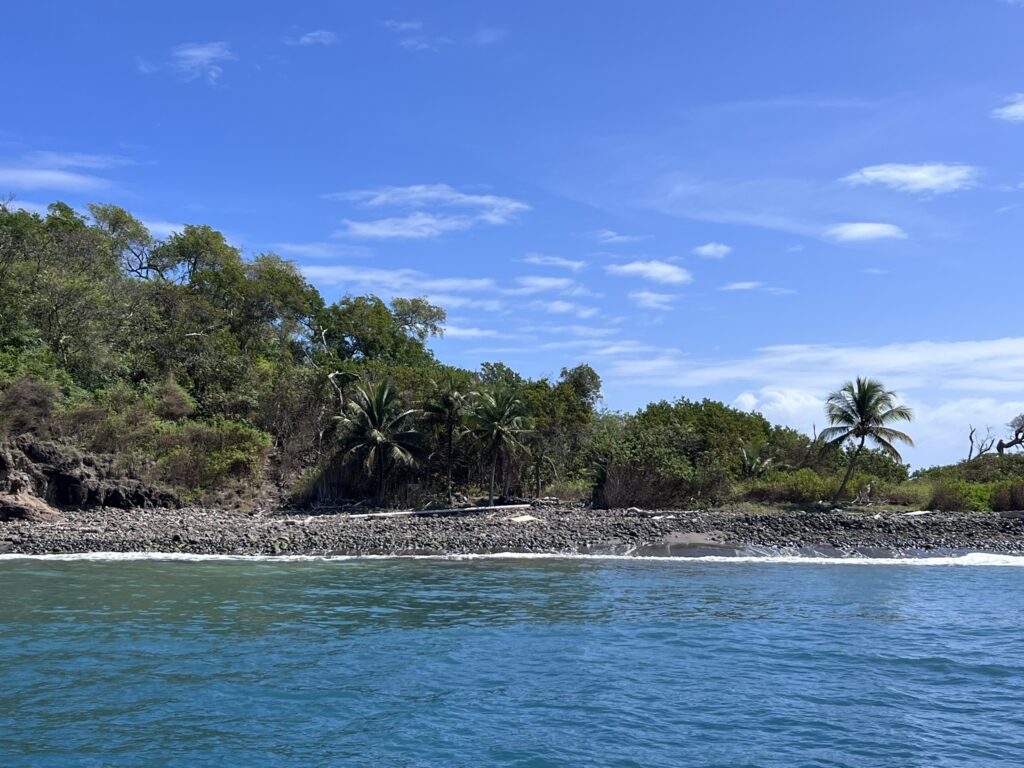
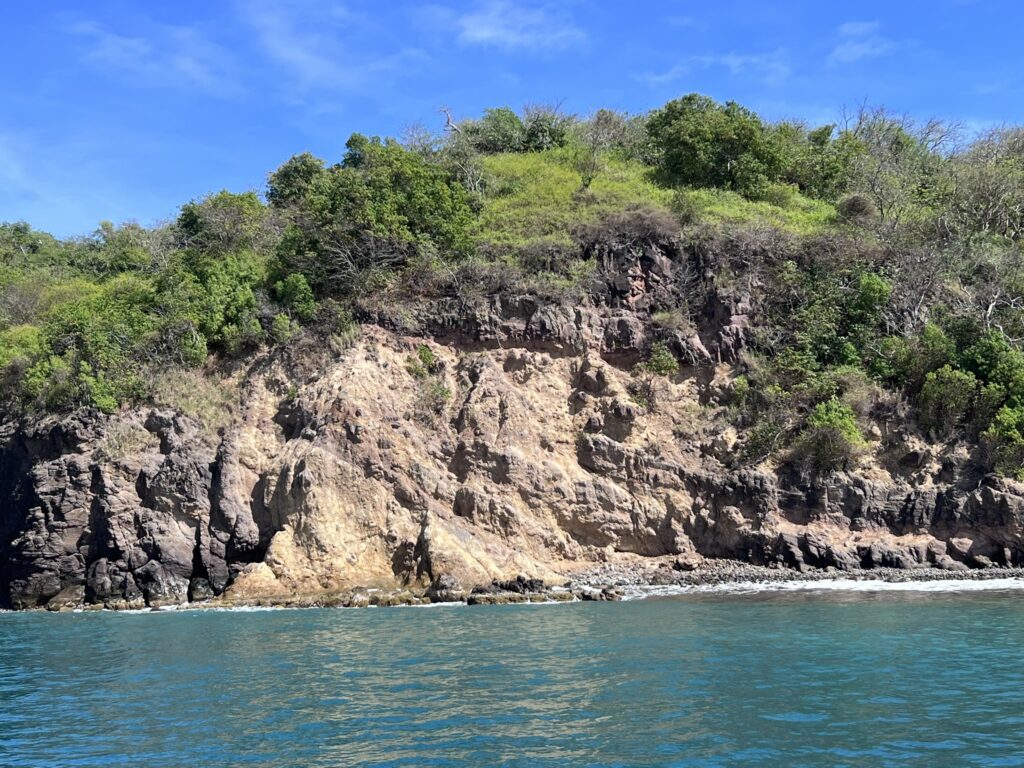
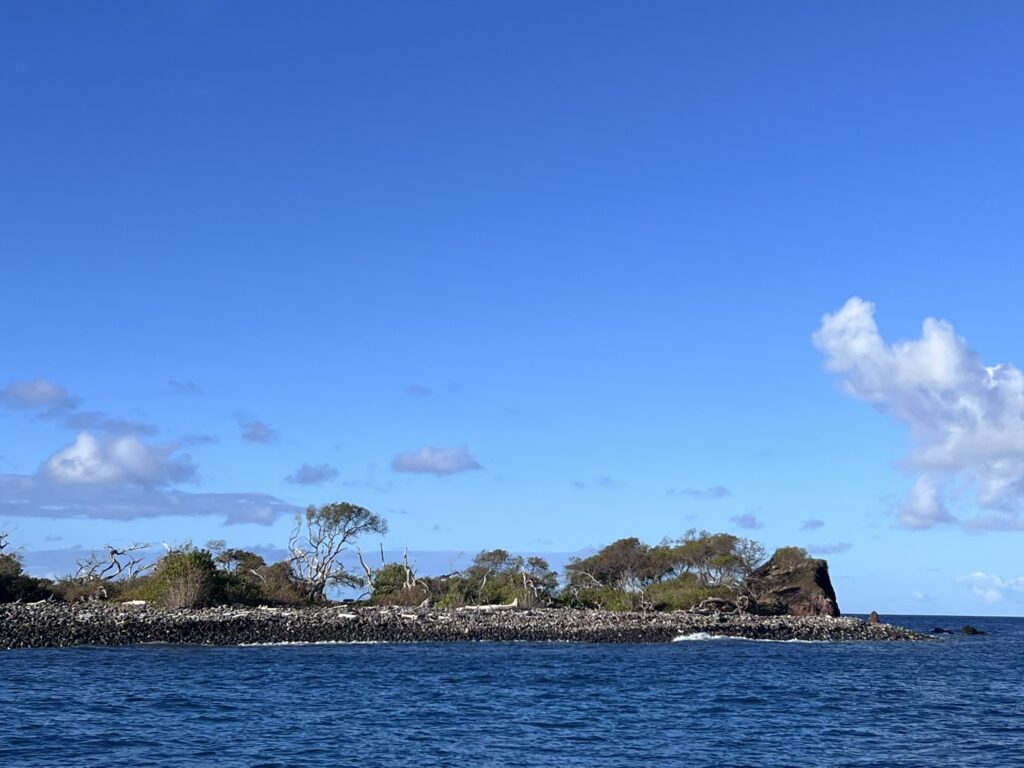
Our snorkeling in the inlet on Grand Ilêt was underwhelming – until we reached the far side and found a vast forest of fan coral, sweeping gently back and forth in the current. It started just off the rocky headland and spread out and down – as far into the depths as we could see. It was a carpet of movement, mostly purples, with some pinkish ones thrown in for even more interest.
We motored for half an hour to Terre de Haut the next morning, and took a long walk along the village, the beach, and out along the coast, stretching our legs and working our way back to rum punches at a small hotel on the opposite side of the bay. We were impressed by the contrast of Guadeloupean (is that a thing?) rum punches to those of St. Lucia. Instead of the mouthwatering St. Lucian blend of plenty of rum and a sweet tangy fresh fruit punch, these consisted of a small glass of warm rum with a lime wedge (for Peter), and the same for me but with the addition of a spoonful or two of something that looked and tasted a lot like lemon Tang. Fortunately, we’d also ordered our usual big bottle of sparkling water, and since that came with two glasses full of ice, we were set.
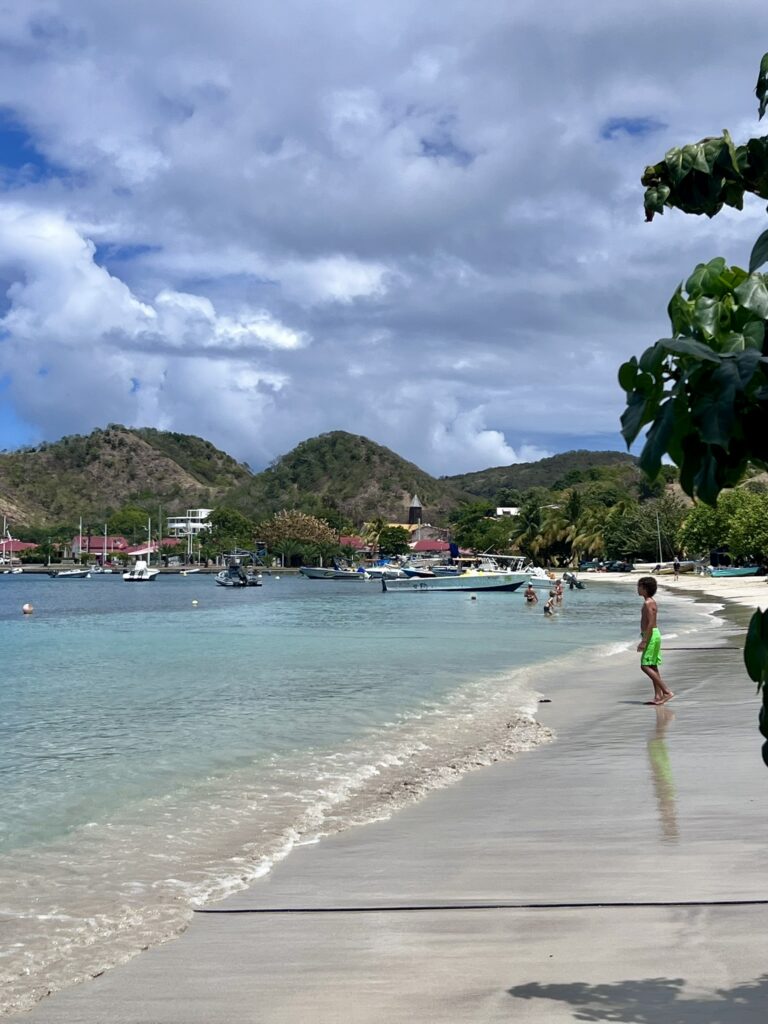
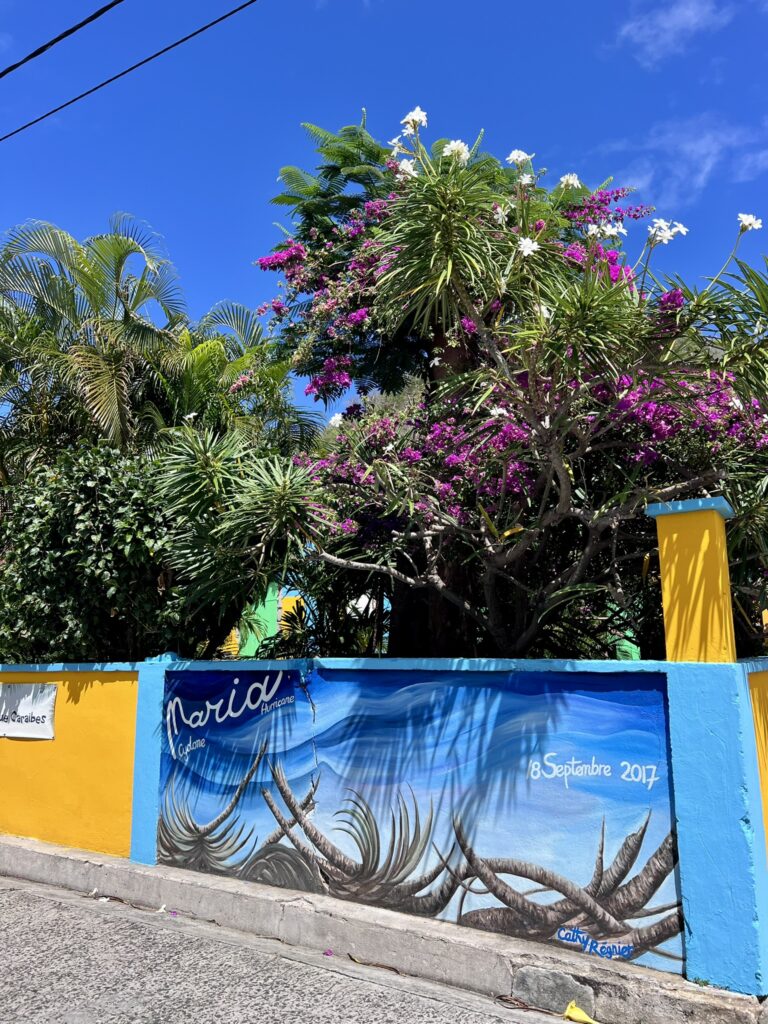
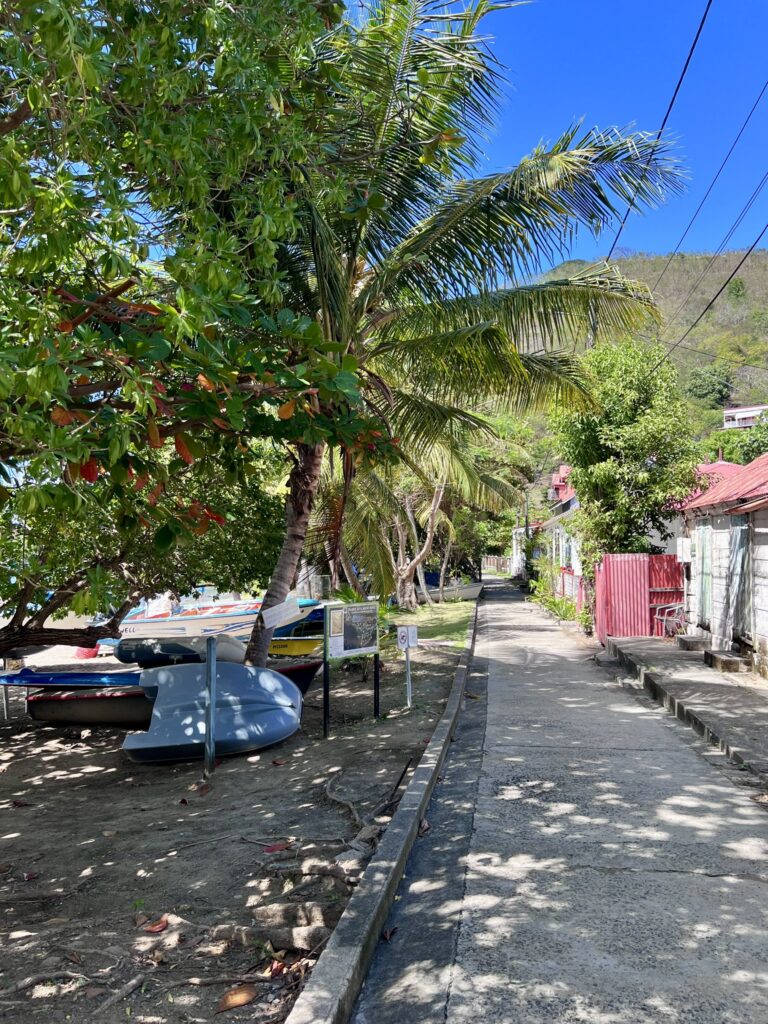
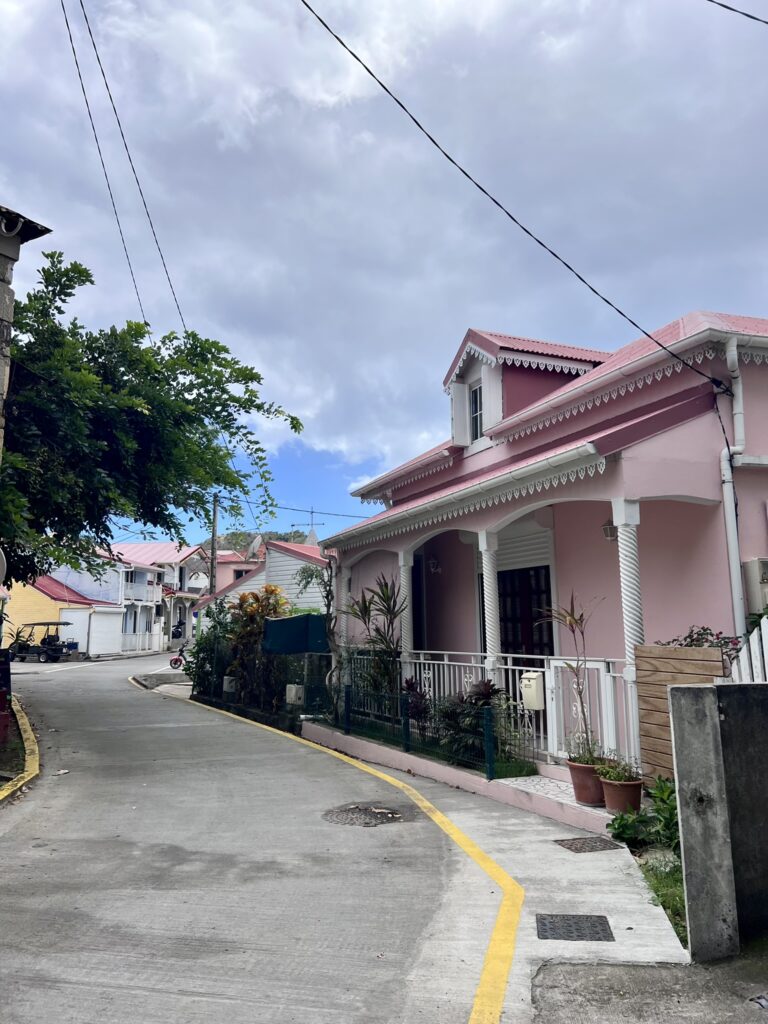
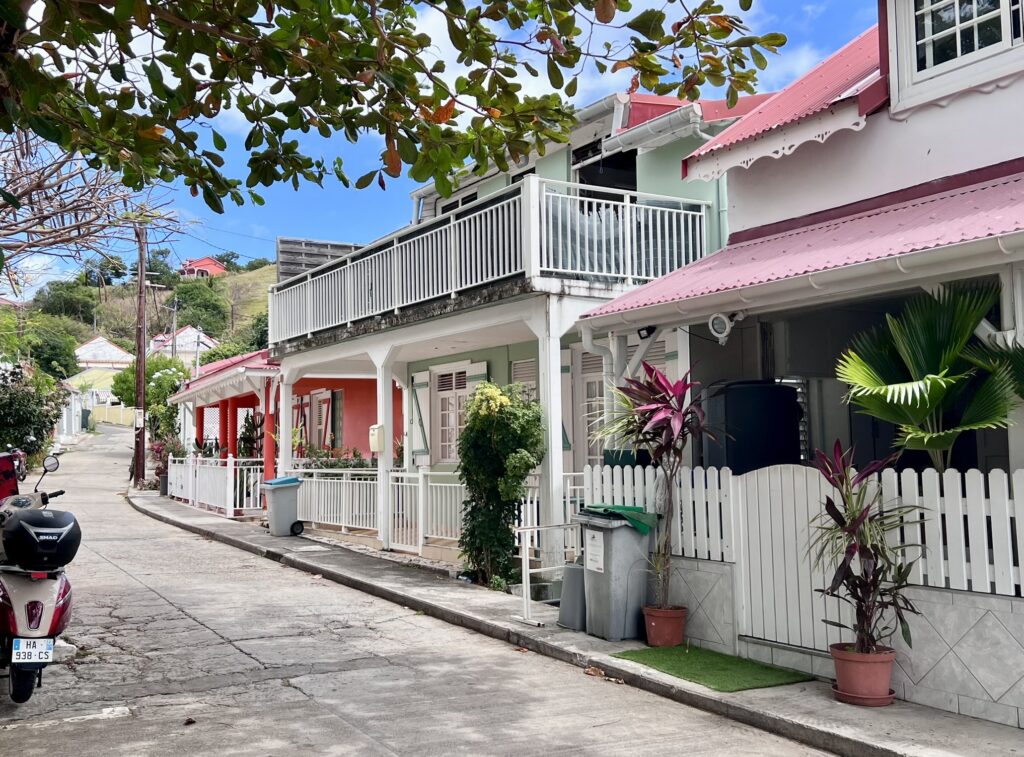
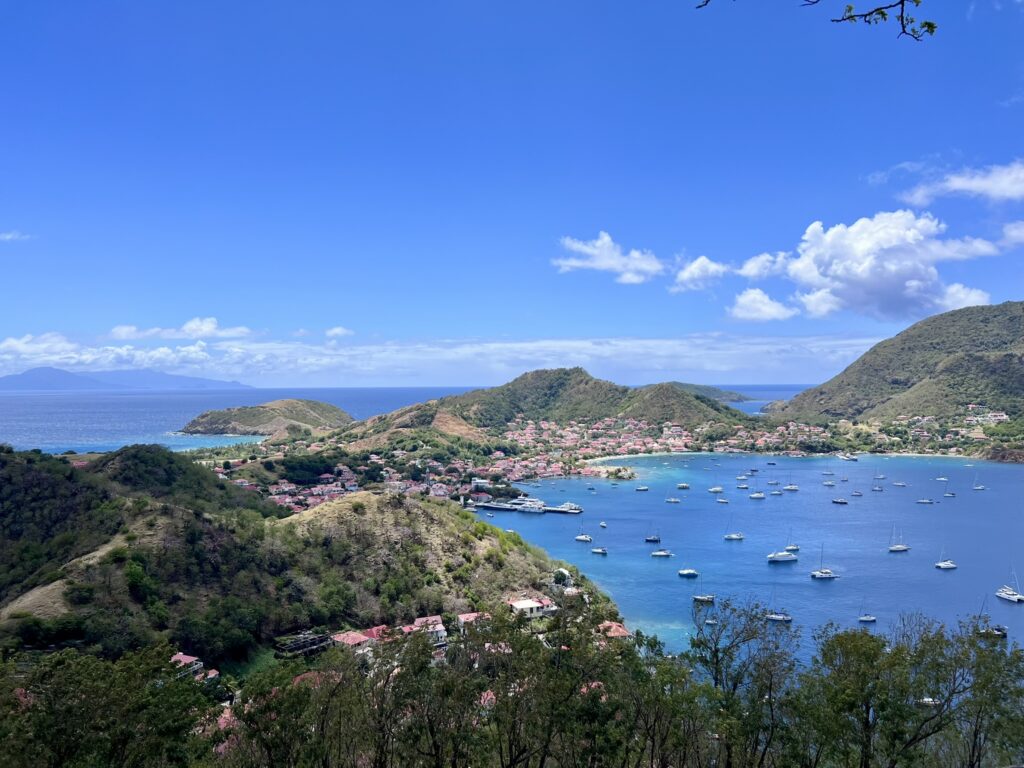
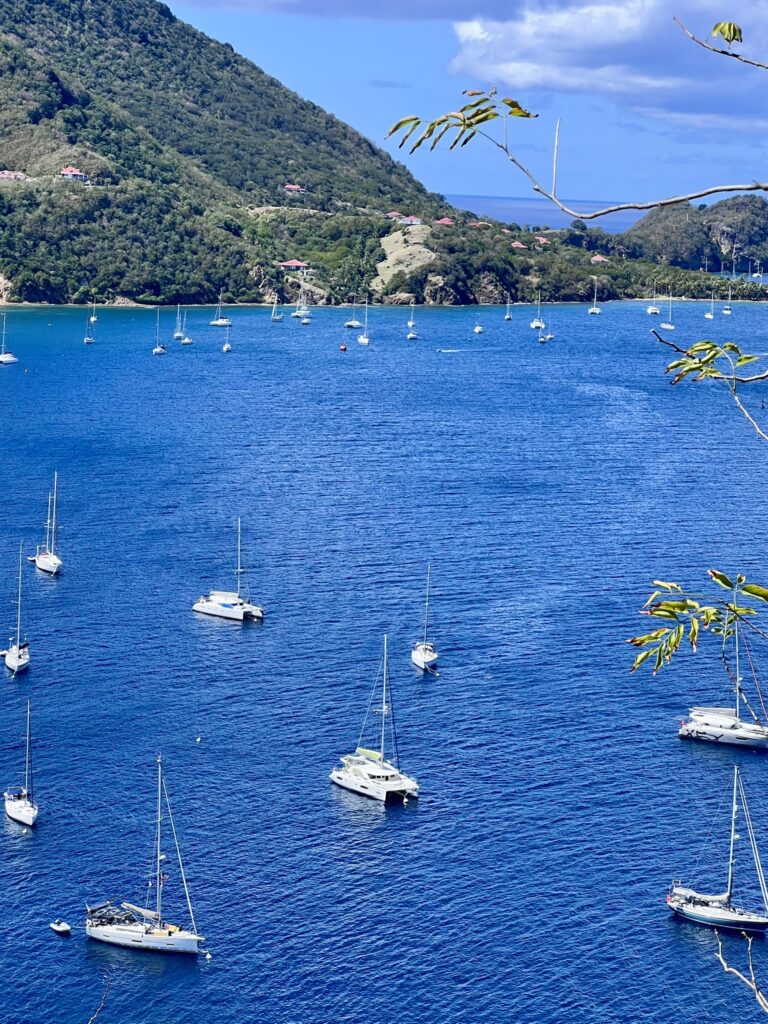
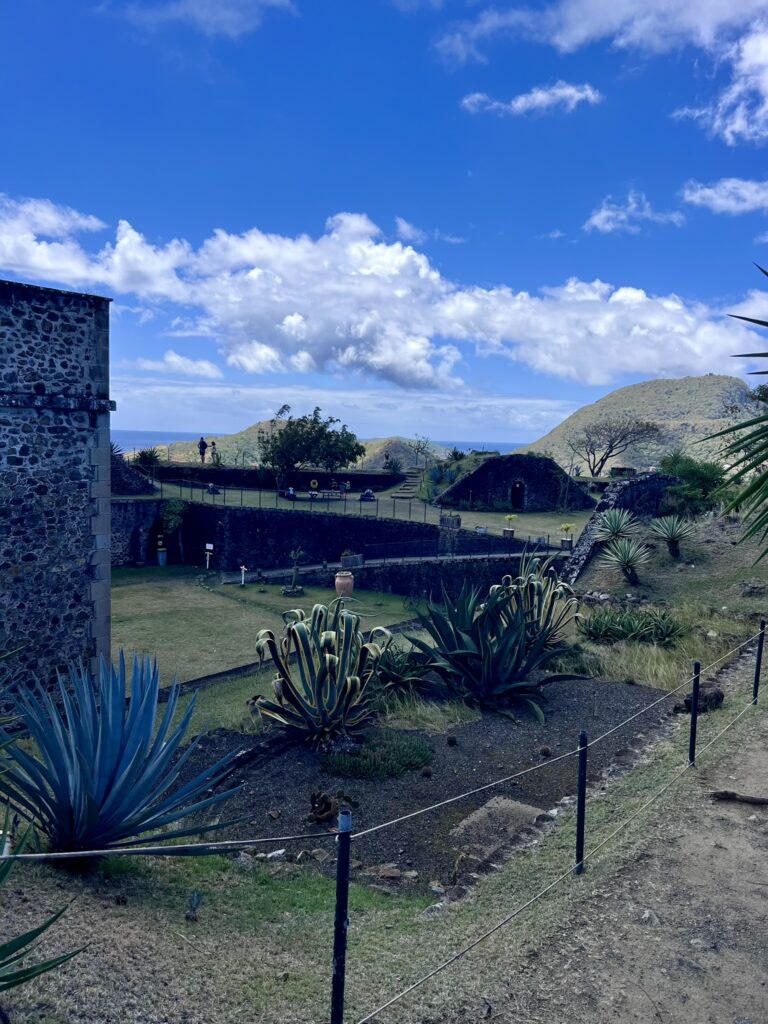
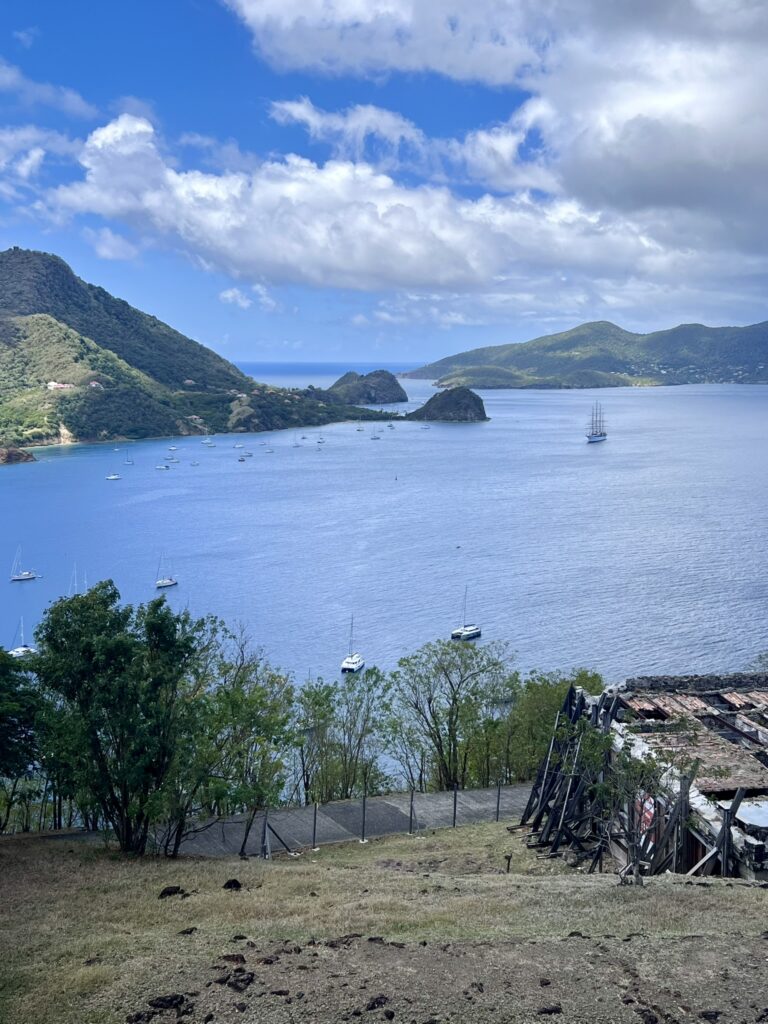
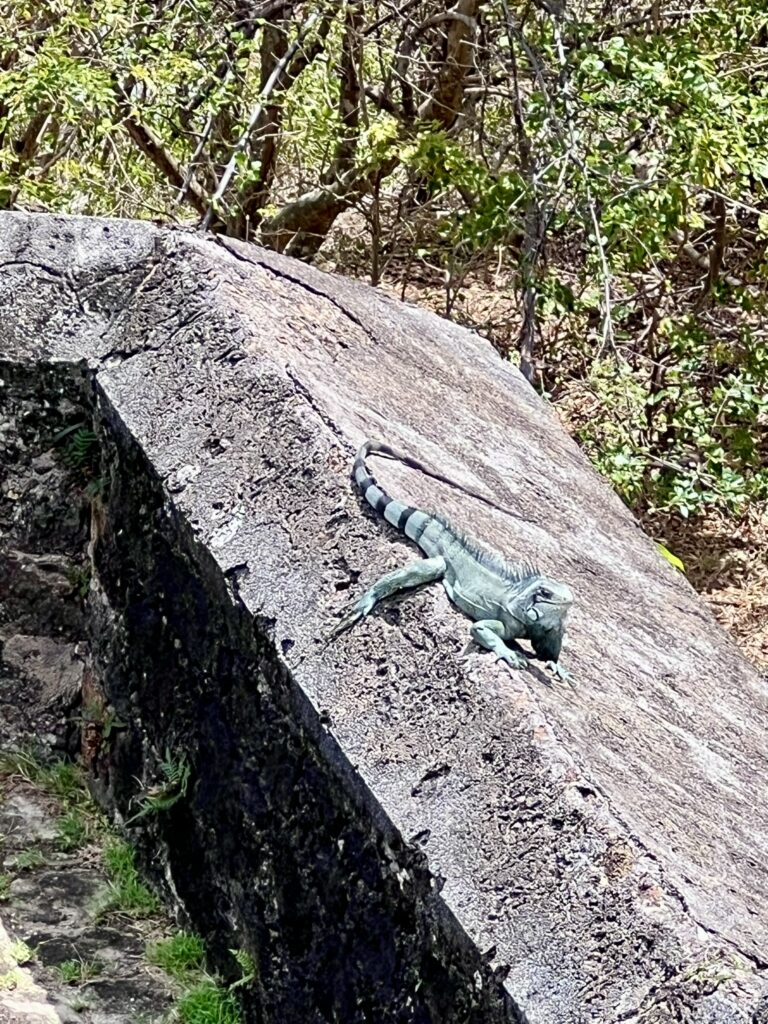
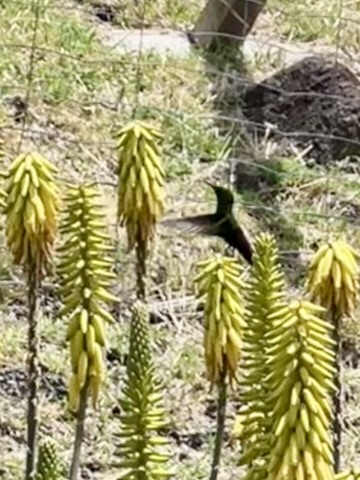
We spent a few days in Terre de Haut: it was a cute little place, not super touristy, and with almost all electric vehicles on the island it was nice to walk through the peaceful streets without the roar of combustion engines. The town is situated beneath the ruins of Fort Napoleon, which we walked up to one morning. The beauty of Fort Napoleon for me was in its landscaping, which is a conscious effort toward a botanic garden, and I added at least a dozen new plants to my Seek app. The views of the island were spectacular – the iguana was cute too.

We got together one evening with Sofie and Sven on Great Dane, friends from the ARC, and fell in love with their sweet dog, Snow. (A great dane, of course.) We’d first really met Sofie and Sven in Martinique the evening we destroyed our parasail and electric winch, when, limping into Fort de France for the night, we saw their boat in the anchorage there on noforeignland.com. I messaged Sofie to ask them to join us for a bottle of wine so we could wash away our sorrows with company, instead of on our own. Lovely people, and very good at consoling and sharing their own stories of harrowing sailing experiences!
From Terre de Haut we spent a night off Îlet Cabrit, then one in Anse Fideling, on Terre de Bas, where we dragged our anchor early the next morning and decided we’d spent enough time there. We moved just up the west coast of Terre de Bas to Anse à Dos – and found paradise. The crescent beach had a gazebo on each end with picnic tables, and almost no one there. A car or two would arrive during the day, and a group had dinner in one of the gazebos one evening, but the only relatively busy day was Saturday, when a large group occupied the gazebo closest to the end of the road and played music and danced for hours. We walked into town one afternoon and saw that there were almost no houses, never mind hotels, on the mile or so up and over the hill, and the road that leads to Anse à Dos is barely travelled. There weren’t even day boats coming to the beach, despite its beauty.
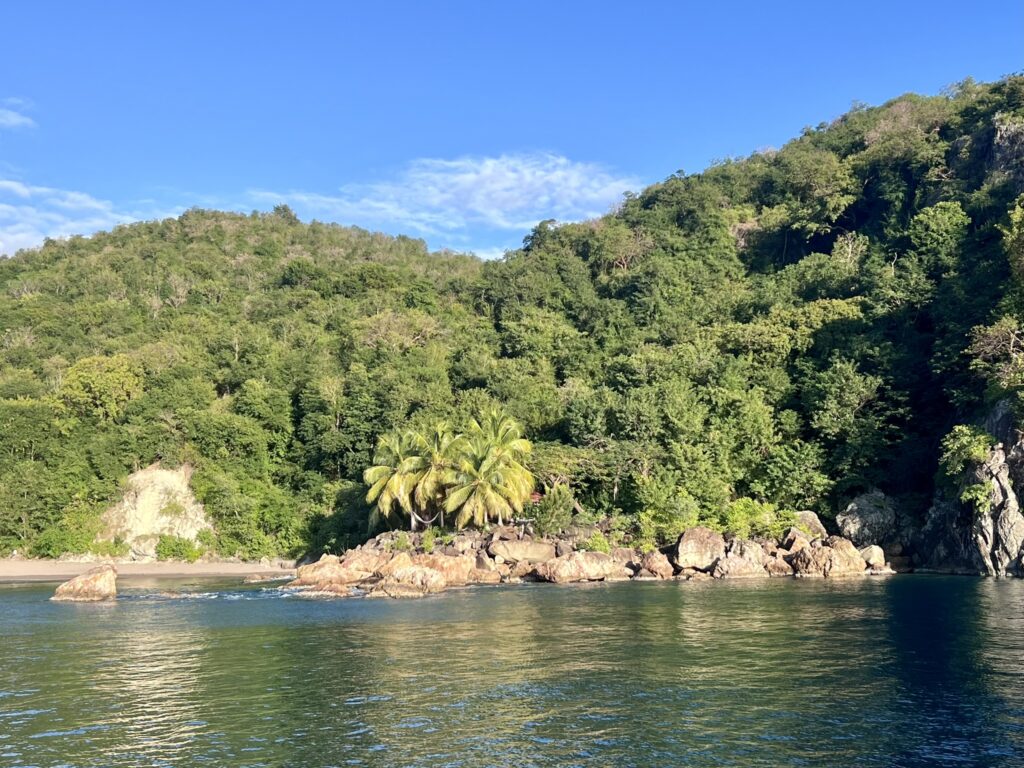
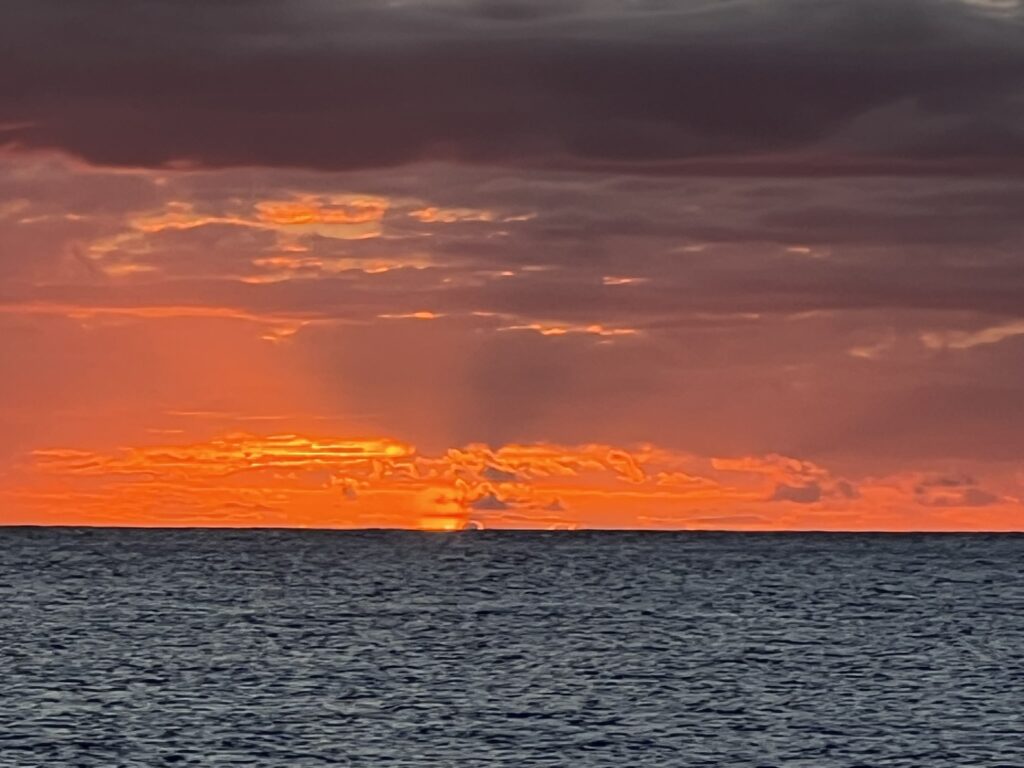
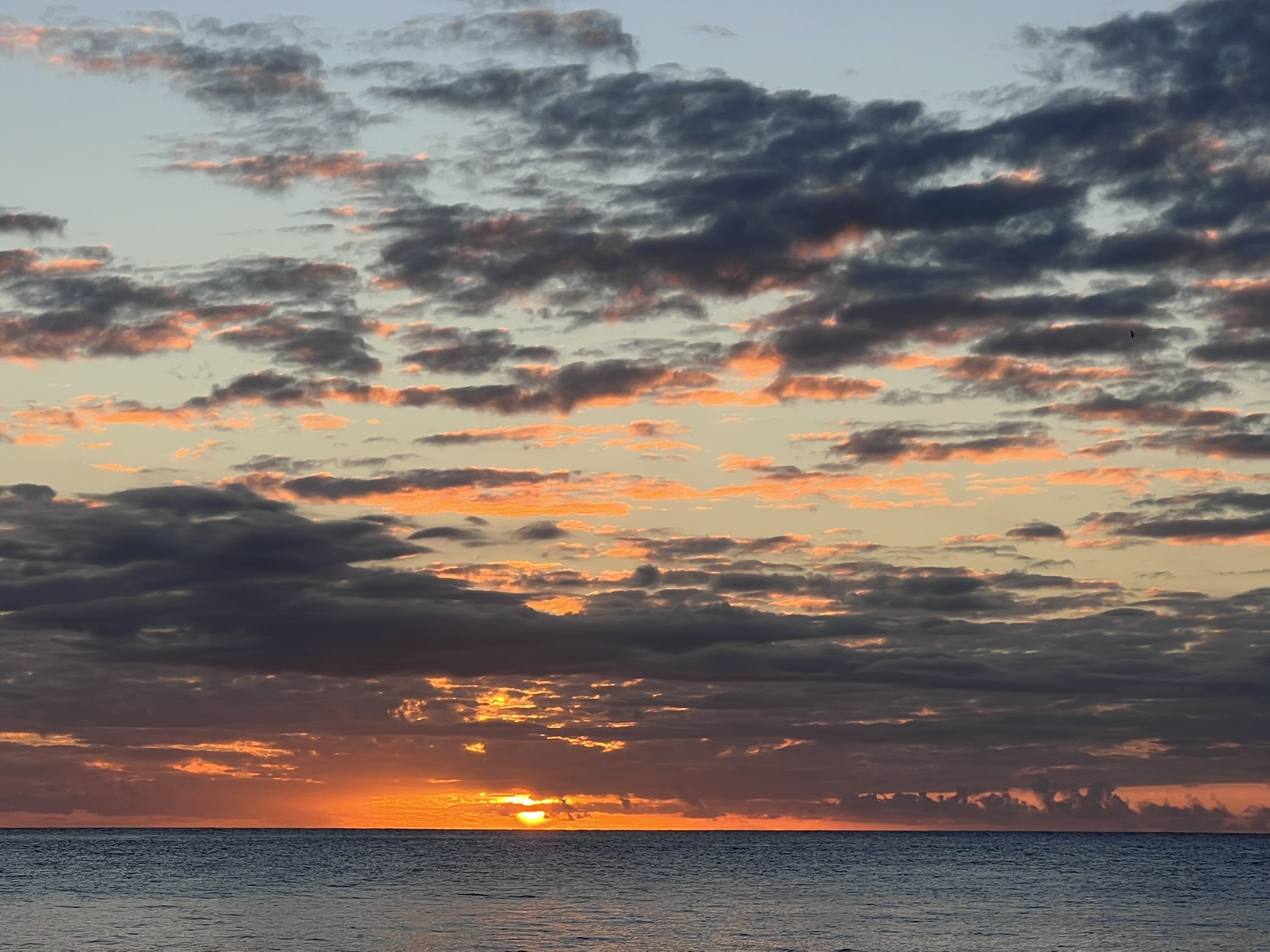
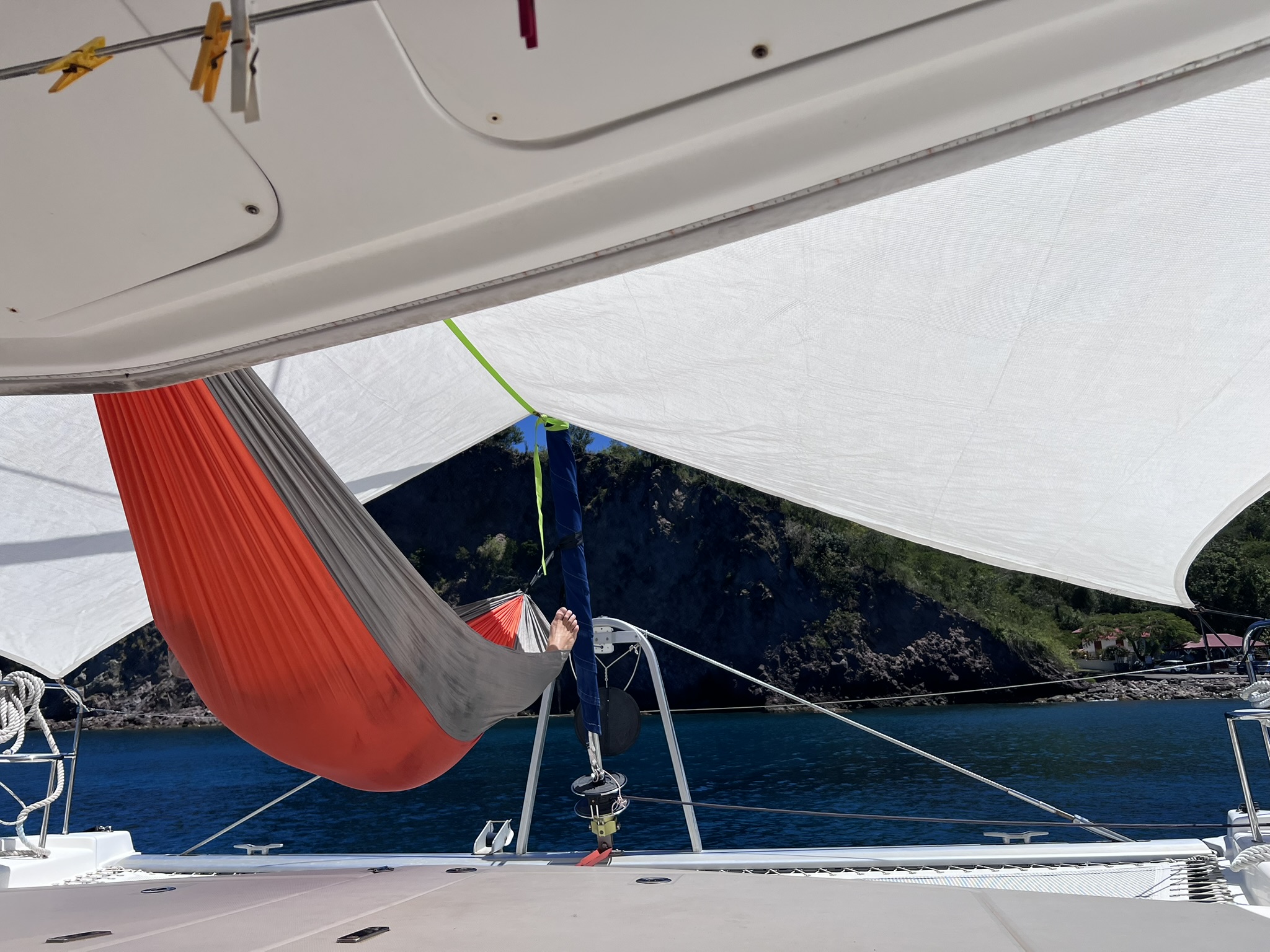

One night turned into five, and we spent our days snorkeling among the caves and inlets in the breakwater, marveling at the variety of tropical fish, including several we hadn’t seen before, and repeatedly visiting the resident hawksbill turtle. There were schools of blue tangs the size of dinner plates, darting blue damselfish, and lots of the mature, black and yellow adults. A spotted moray showed off his very impressive size since he was lying along a rock crevice rather than tucked into a hole, and swarms of miniscule fry were gnat like in their clouds. It was something new every time we went, and we had a tough time pulling ourselves away. But I needed a notary for some documents, and the only ones in Guadeloupe were in Pointe à Pitre, on Grand Terre. We lifted anchor reluctantly and pointed north again.
Pointe à Pitre circles a huge inlet with marinas, industrial zones, a museum, and cruise ship docks crowding the shores. After seven hours of motor sailing from Anse à Dos, we settled easily into an anchorage close to the old town. A cruise ship favorite, Pointe à Pitre’s old town is a main drag running into a square filled with tourist shops and a covered market selling the usual array of spices, rum tonics, baskets, and clothing. The notary was closed the next day, so we walked through the old town to a commercial street lined with shops, very reminiscent of the ermou in Mytilini. I found a fabric store with more to offer than the old JoAnn’s Fabrics (may she rest in peace) on University Ave in Denver, and spent a delightful half hour browsing and stocking up on embroidery threads. Peter satisfied his “window” shopping while I was at it – in a sports store across the street – then we walked further along to a large supermarket, where more delights awaited.
Within another day I’d accomplished my notary mission, and in that fleeting time we’d become very fond of Pointe à Pitre. Of Guadeloupe as a whole, really. Our ultimate favorite spot was Anse à Dos, where we spent another night on our return trip, but we found plenty of other excellent anchorages as well. Pigeon Island, on the west coast of Basse Terre, is home to the Cousteau marine reserve, where the snorkeling was excellent. Very crowded though, so we swam to the east side of the island, glimpsing scuba divers in the depths below us and finding equally good biodiversity and fewer people. Our stop in Deshaies, at the northwest end of Basse Terre, was just a check out, but it turned out to be another charming town with friendly, helpful people. Very hard to leave!
Antigua was a slog, a long (8 hours) slog head to wind and bashing swell, and we pulled into English Harbour as the sun was setting. English Harbour is a busy port of mostly recreational boaters in boats of all sizes, including some very, very big ones. After all we had heard of the island our expectations were high, and we were anxious to check in and start exploring. Elevated expectations can really bite you in the butt though, and we spent what turned into another week trying to avoid the chomp.
After a night anchored in Ordinance Bay of English Harbour, and with a big blow coming up from the southeast, we decided to move out of the stifling heat of the mangrove fringed bay to an outer bay of the harbor that was protected, but still plenty windy. I.e., cooler. It turned out to be one of the more frustrating anchoring exercises in our experience, one of those times when it didn’t matter how much calculating we did or where we dropped our anchor, we ended up too close to some other boat. It was over an hour and forty-five minutes of identifying a spot with the right distance in the wind and current, dropping anchor, pulling back, and waiting to see how we were going to swing compared to the boats around us. None of our attempts worked. It was a most humbling experience, especially since during that time two charter boats came into the same areas we had been trying to anchor in and hooked – with room to swing! – on their first tries. We finally dropped in deeper water at the boundary between the anchorage and the harbor channel – when we pulled back, we were just barely in front of the channel marker, but by then we were simply happy the madness was over.

After checking in that morning, we walked around Nelson’s Shipyard, well hyped but alas not up to expectations. Mostly a self-congratulatory collection of old shipyard buildings and plaques celebrating the colonizers’ success at enslaving people and building a once vibrant economy off their labor. Now it’s a tourist attraction that brings in money from mostly white boat owners and tourists. For former colonizers’ bank accounts. Is that too harsh?
We moved on to Carlysle Bay the next day – our first stop in our planned circumnavigation of the island. We stopped just outside the bay, and despite the sandy bottom we had another helluva time getting the anchor to stick. Several times we dropped and dragged over rock plates that look just like sandy bottoms…grrrr. We eventually got it, but with the experience the day before still stinging, it was more frustrating that it might have been otherwise. We snorkeled to a spot closer to shore on the assumption that it would be a good spot because dive boats intermittently anchored there. But the water was cloudy, and visibility was dismal, the reef was largely dead, and there was very little marine life to see anyway, other than a mahogany snapper (new to us) and a black fish with yellow bars on its tail that we weren’t able to identify. A very large remora was waiting for us when we got in the water, and that also dampened my desire to spend much time swimming around. Remoras look like sharks; except they have these weird suckers on top of their heads. They use the suckers to stick to the undersides of – yep, you know it – sharks, and big remoras generally stick onto big sharks. So WHERE WAS THE SHARK? No sign of him, but you know he was out there. Later that evening Peter saw a smaller remora swimming around one of the sugar scoops and tossed it the heel of a baguette. That fish went absolutely nuts on it. No sign of a shark. Hmmph.
Jolly Harbour is known for being a popular marina and gathering spot with sailors, and the next day we stopped out in its outer harbor and dinghied in to explore. We got a little mixed up on the way in and a couple of American expats cursed us out for having a (very) small wake as we went down the canal in front of their condos (“HEY, GET OFF MY LAWN!”). That led us to rename it Nasty Harbour, though Peter thought Karen Harbour fit too. Little was open in the marina (in high season!), and once we had deposited our bag of garbage in a well-hidden bin, we vowed to find an open restaurant for lunch. Fortunately, the only one was Indian cuisine – something we hadn’t eaten since Cartagena, Spain – and we wolfed down tikka masala and korma, rice, chutney, raita, and naan. We managed to waddle from there to the closest supermarket, but despite a tempting array of rarely seen imported food we didn’t do much actual shopping – the prices were astronomical.
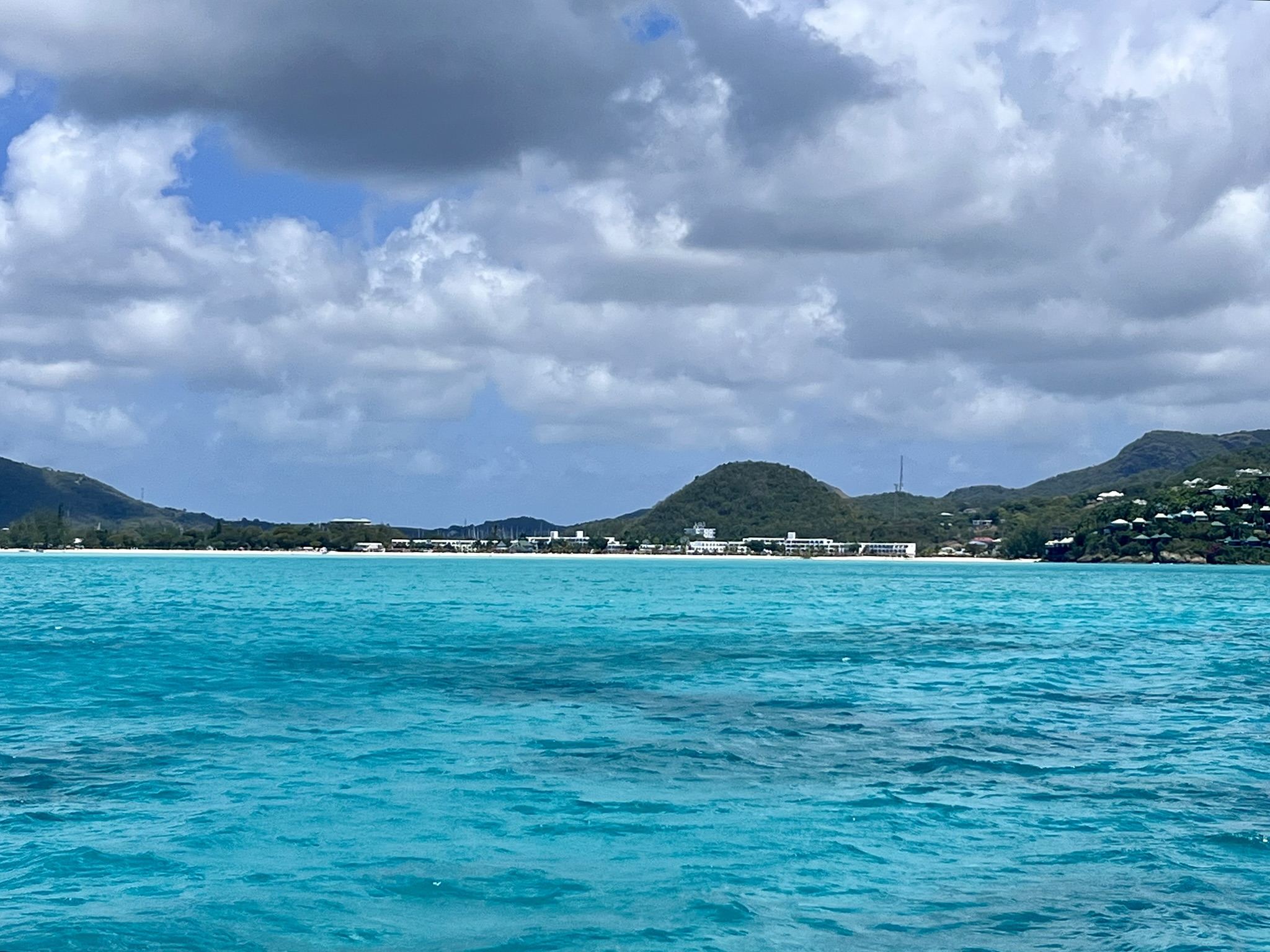
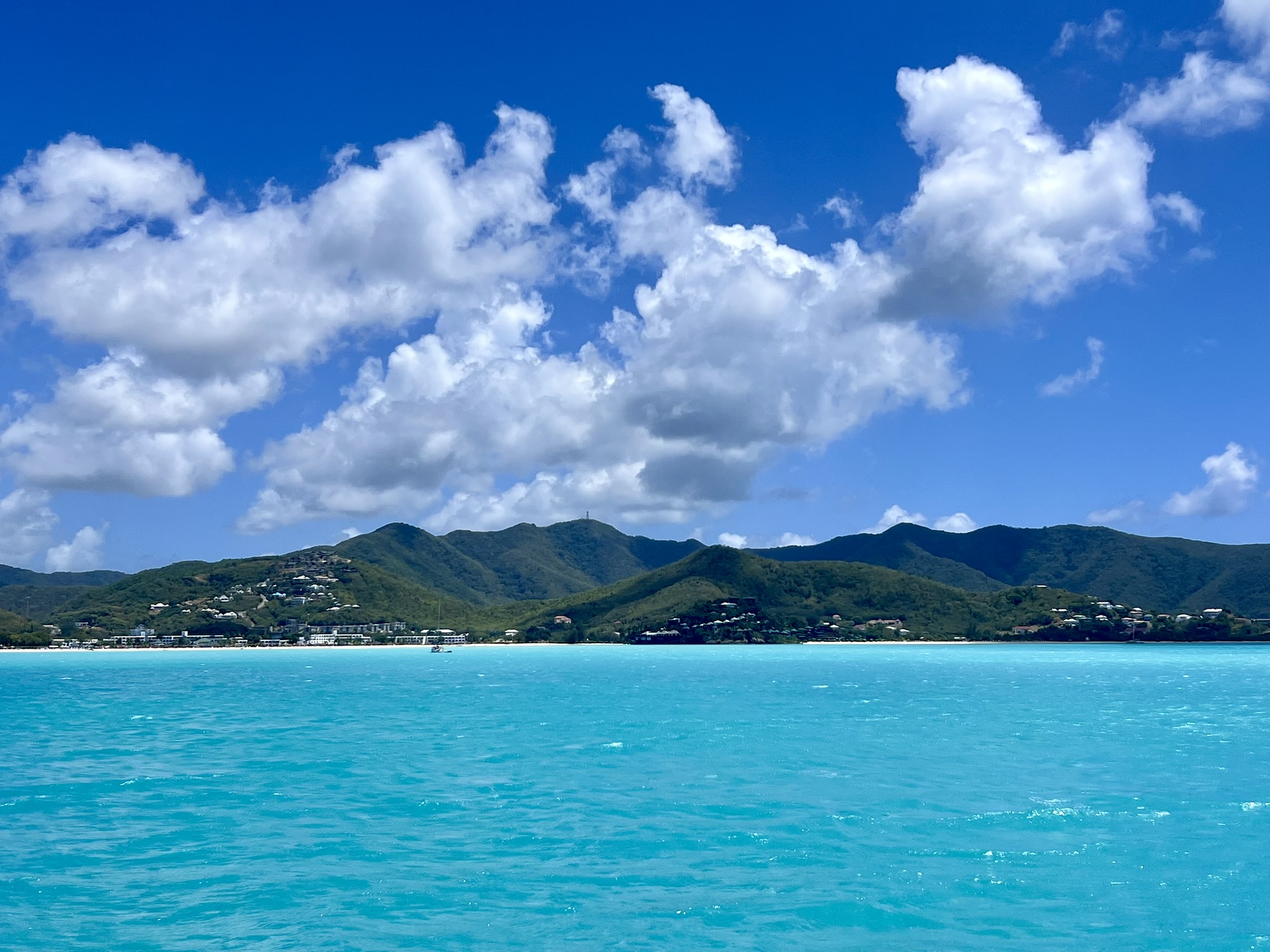
We got back to the boat with plenty of time to get to an anchorage farther up the west coast of the island, and were delighted to see it was a gorgeous spot with a white sand crescent beach and beautiful turquoise water. And our old friend the Black Pearl was anchored further out! But then anchoring was, again, a bitch. After dropping multiple times all over the anchorage we managed to hook in about 5’ of water under the hulls at the north end of the beach. Peter hopped in to make sure the anchor was dug in, but the water was so cloudy he couldn’t see it – in 5’ of water! This was all becoming a pattern….
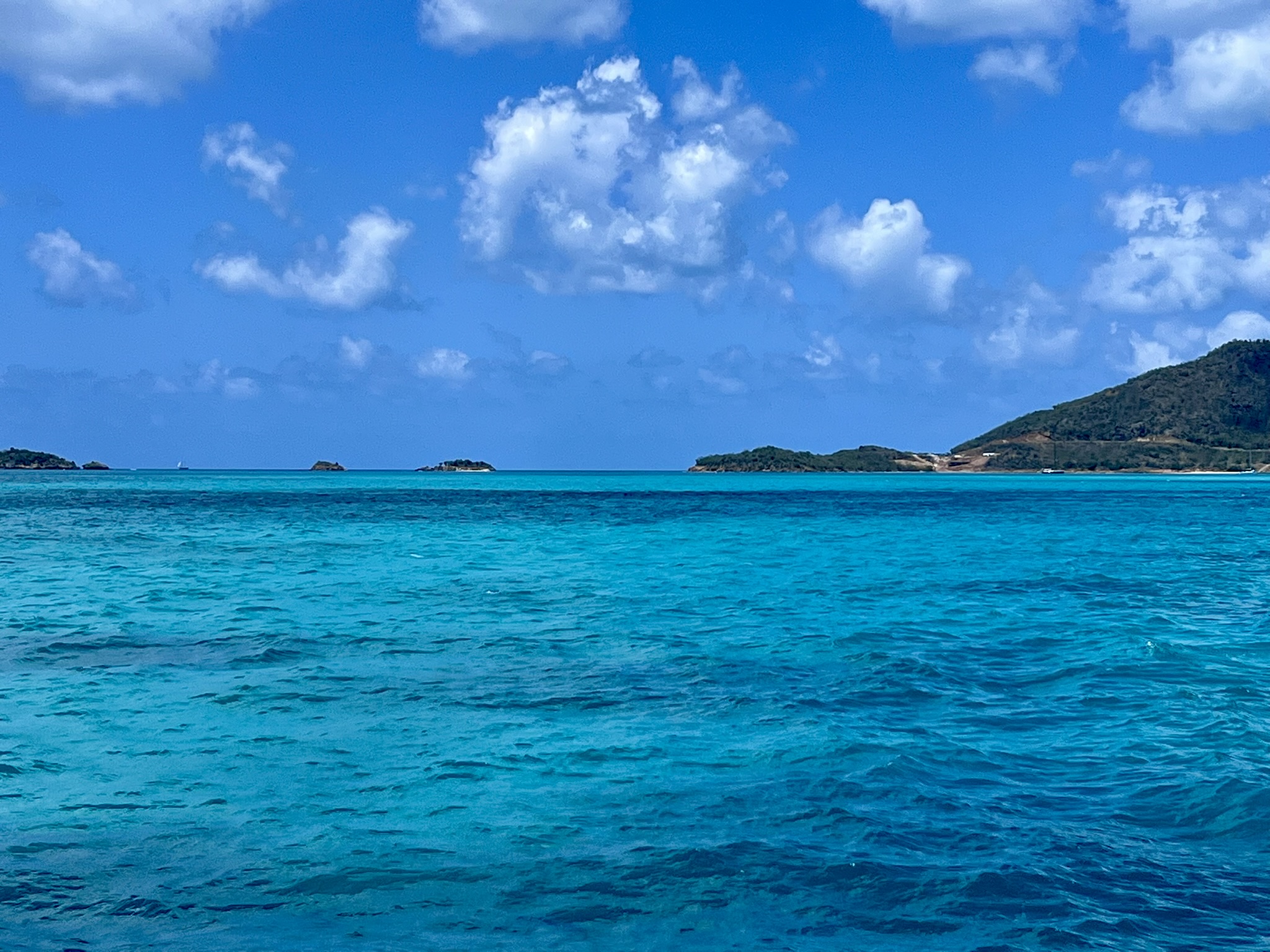

Soon after I noticed the anchor chain was making that thunking noise it makes when we haven’t let out enough chain for the bridle, and it ends up jerking over the track from the windlass. We let out more before heading to bed, but it worsened over night as the wind came way up, and I got up early and let out another 10 meters of chain. It continued. Huge, boat jarring thunks. So, Peter let out another 10 meters. It kept thunking. At that point he got his snorkel gear and did some diving. He had never seen anything like it (despite similar debacles in Kyparissia and San Vito lo Capo). The anchor was upside down and the roll bar was wedged into a rock. In addition, all that chain we’d let out had gotten wrapped around a different rock. Total shit show. We managed to pick up the extra chain as we skirted that rock, then the anchor neatly lifted off the other rock – it was only wedged, not stuck. We were soooo lucky.
Having lifted it successfully we decided to move a bit further up the coast to Deep Bay. It was a good call – we found better holding (on the first try!) and did not budge an inch despite 30 kt winds. Those continued through that day and all through the next, along with torrential rain (so at least it was a good boat wash day!) We knew we had to keep moving though – we needed to be back in Rodney Bay, St. Lucia, in exactly two weeks, and I wanted my Dominica time – so the following day we picked up early and had a jaunty motor to Rabbit Island on the northeast coast, zigzagging around coral shoals and then tucking in between Rabbit and another island for protection. Sophie from Great Dane had recommended Rabbit Island for seeing manta and spotted eagle rays, but on our first out we didn’t see either. There was little to see, in fact. The water was cloudy – downright milky, and murky –and a silty, mucky layer covered the bottom and all the dead coral. There were occasional fish, but it was otherwise empty. On the other hand, we saw our first red-beaked tropic birds there: the males have beautiful long white streamers for tails, and they skreeked constantly. I spent hours on the trampoline stargazing that night, and Peter delighted in skinny dipping the next morning, chirping about how it felt like we were back in Greece. Yep. Kinda did. There were great benefits to being so remote, even if we didn’t see any rays.
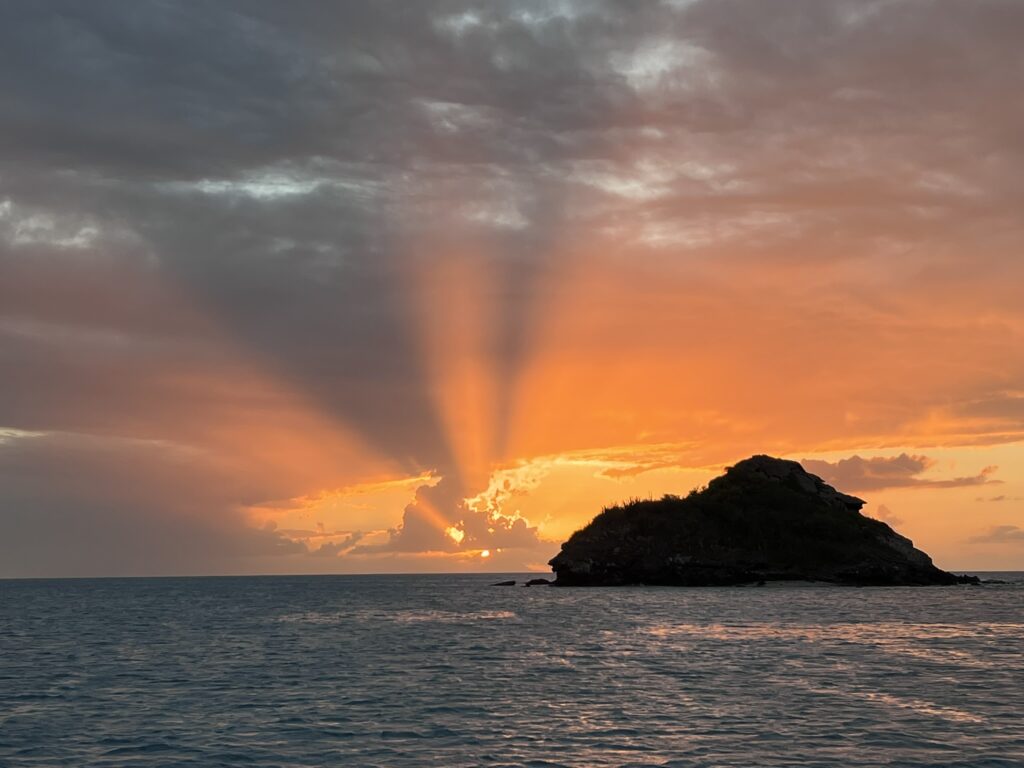
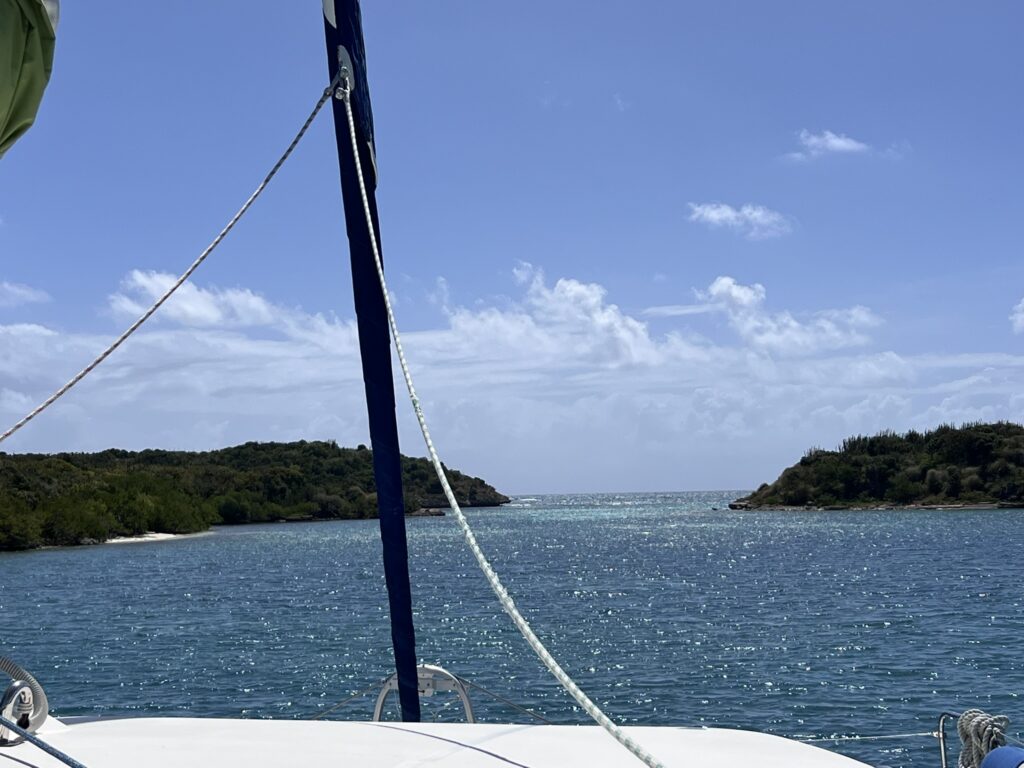
We moved over to Lee Cove that morning, and despite protection from the swell the winds flogged us all day. We snorkeled more there, hoping for better conditions, but again, the water was murky, the coral was dead, and there were very few fish. It was becoming obvious that Antigua’s gorgeous fine white sand was responsible for the coating of muck on the bottom, and the terrible visibility in the water. It is not a place for snorkeling, it’s a place for lying on gorgeous, fine white sand beaches and occasionally dipping into the water for a cool down.

We were getting a little tired of it all. (I know. Really??) But we love to snorkel and observe the environment under our hulls, and the dearth of life down there and our inability to see any of it was starting to get a little depressing. And then we got to Rickett’s Harbour on Green Island, just off the southeast coast. In one outing, we saw multiple turtles and two spotted eagle rays! The visibility was crap, but we were thrilled.
After checking out of Antigua early the next morning in English Harbour, we turned south again to Guadeloupe’s Basse Terre island and what turned out to be a very rough crossing. Much stronger winds than forecast, and a ridiculous series of sail and motor combinations – not enough reefs, need to raise more sail, motors on, motors off, genoa in, genoa out, and when a squall hit midafternoon, we weren’t reefed at all. By the time we got the genoa in though it had largely passed us by. We got to Plage Paul Thomas at about 5 pm, anchored easily, and sat right down to gin and tonics and Cracker Barrel mac & cheese (saved precisely for days like these). We were exhausted, but relieved to be back in Guadeloupe, even if for just a day.
It turned out to be three days. We tried to get to Les Saintes the next but were getting spanked in the open between there and Basse Terre – high wind, high waves, and barely breaking 3 kts. So, we called it, turned around and anchored off Riviere Sens on the southwestern end of Basse Terre. We provisioned and got the stamps in the passports there the next morning and started out on a direct course to Dominica. And the wind and waves were even worse than the previous afternoon. It took three hours just to cross between Basse Terre and Terre de Bas. Peter was in meetings in his office down below, and I was at the helm just hanging on. A nasty squall hit in the middle of that crossing – 38-42 kt winds and whipping rain – and right after that the port engine started making verrrrry strange noises. I turned it off and got Peter – who by this time was completely green with seasickness – and he determined that the engine block had come loose and might need to be replaced. We were down to one engine and could barely make headway. I called it and pulled into Anse à Dos for the night.
Despite the terrible conditions on the crossing, the surf was low in Anse à Dos and the visibility was great, and we were thoroughly revived by our snorkeling there again. It was wonderful to be back in a familiar place, and we saw much bigger fish in the breakwater than we had before. There was even a ray under the boat when we got back! Antigua was ok, but we wouldn’t bother visiting again. Guadeloupe is a different story.
UP NEXT: Dominica, finally. For two days. And back to St. Lucia – again!
One response to “March 2025”
Oh wow, some highs and lows and wonderful pics. So fascinating to hear what that side of the world is like!