
THE BIKES ARE OUT!!!
This made an enormous difference in our, especially my, quality of life in Shelter Bay. IMHO, the most appealing aspect of the marina is not its dilapidated pool, ok restaurant or fabulous margaritas, but the fact that it backs up to a huge national park that is largely unused. There’s a single, beautifully tarred road that winds delightfully over five miles up into the relative highlands of the park. Near the highest point it forks: one road then goes a little further up to the ruins of the Castillo San Lorenzo, and the other continues down to the mouth of the Río Chagres. Once our bikes were accessible, the wonders of this park were ours.
Starting the morning after Peter unearthed them from the depths under the starboard bunk, I pedaled off every day at dawn to spend a few hours in the park. At that time of day, it was largely empty of human activity – the occasional cyclist (a little later in the day there were often more, especially on weekends), a car or two, usually fishermen and women on their way to the public landing at the río, and at 7:30 the employee bus taking the guides and groundskeepers up to the Castillo for their shifts. Instead, there was constant, frenetic bird life, and frequent wildlife forays onto the road.
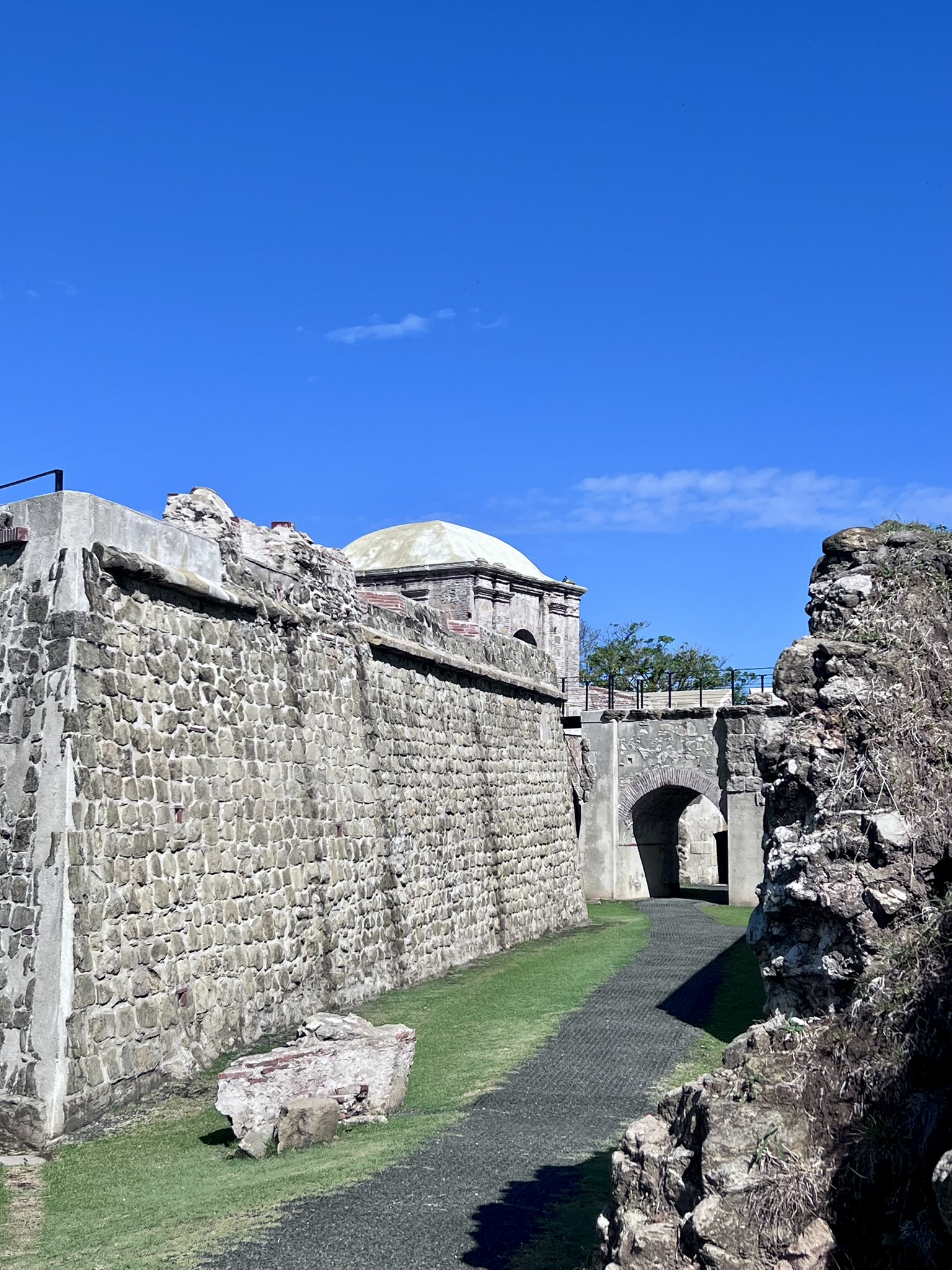
Side trip to Castillo San Lorenzo el Real del Chagres:




Since we’d arrived at Shelter Bay and I started walking in the early mornings near the marina, Merlin’s sound identification feature had become my go-to for figuring out what I was hearing. The lush density of the surrounding rainforest made it difficult to see the birds I was hearing, so it was relatively satisfying to see the calls and songs crystallize into pictures of different species with behaviors and preferred habitats I could explore. Within a few weeks I didn’t need Merlin to identify by sound a range of the more common species of birds in the park: keel-billed toucans, yellow throated toucans, crested oropendolas, several species of trogons, mealy and red-lored amazons, orange-chinned parakeets, broad billed and rufous mot mots, golden-collared manakins, river wrens, kiskadees, great tinamous, cocoa woodcreepers, and crested guan. Some were easier than others: as soon as you’ve heard either species of toucan in Panama, you will never forget what they sound like. Yellow throateds in particular are loud, shrill, and persistent. Kiskadees constantly announce their presence and all manner of opinions by repeating their names ad nauseum: “Kiska! Kiska! Kiska dee!” Oropendolas are almost onomatopoetic, sounding like very large drops of water landing sonorously on a still lake, great tinamous are 80 year olds tremulously playing very high notes on recorders, and chachalacas are a lot like their name: clacker-squawkers. It’s endlessly fascinating.


Terrible photos of a white tailed trogon, broad billed mot mot, and tri-colored heron.
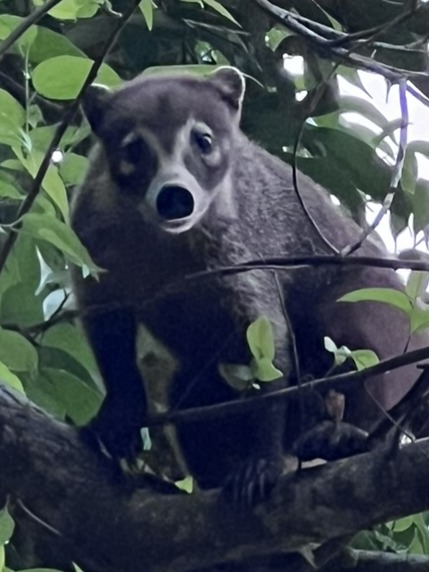
In addition to the birds, I saw a variety of wildlife on my rides, the most frequent being the ever-present coatis, who scurry across the road with their vast extended families at every opportunity. Agoutis, which look a bit like shiny dark brown piglets with longer legs, scamper along the verge before darting into the understory, and howler monkeys invariably set up their chorus whenever the spirit moved them, which was a lot. A small deer looked back briefly at me from a trail as it entered the forest, and once Peter and I were stopped on our way to the Castillo by the sudden emergence of a wild boar from the edge of the road. She streaked across in front of us – followed by at least ten piglets, except the last two, which refused to cross while we stood there, slack-jawed. For all I know there were five more behind them. Fortunately, I only saw one snake, and it was small and moving purposefully away from me. All good, once I was able to breathe again. And only one crocodile, despite their ubiquity, but that was next month.



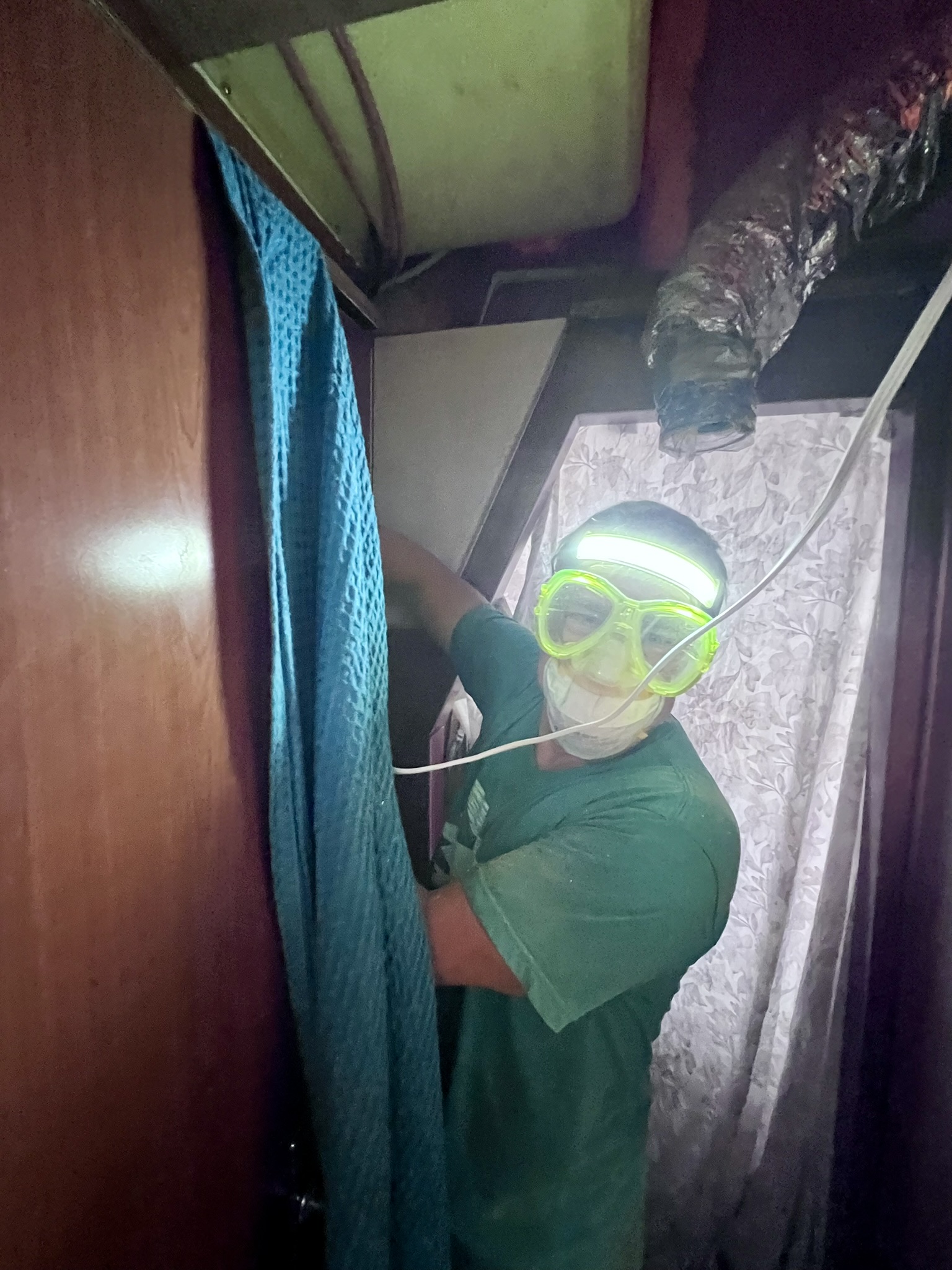
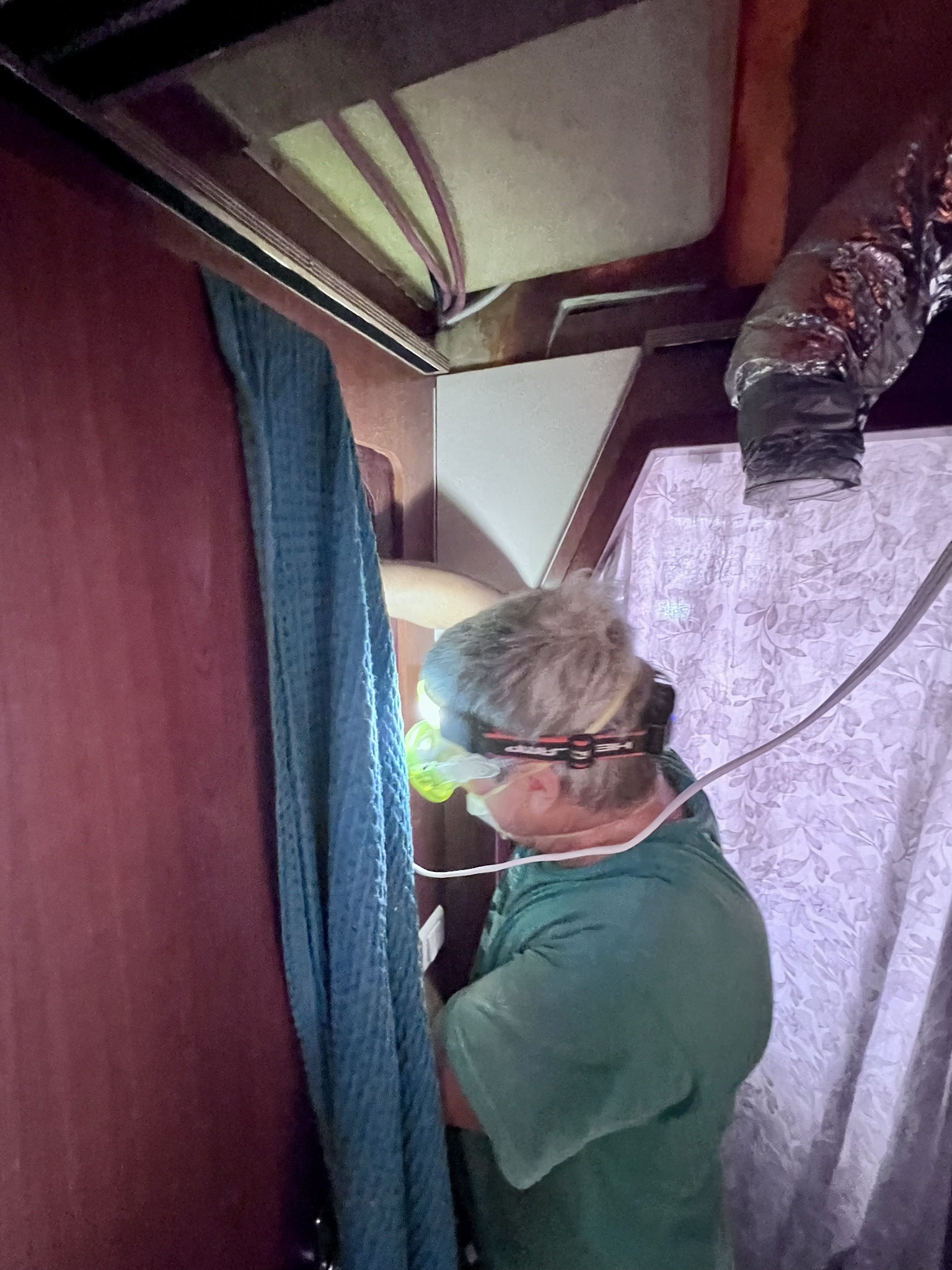
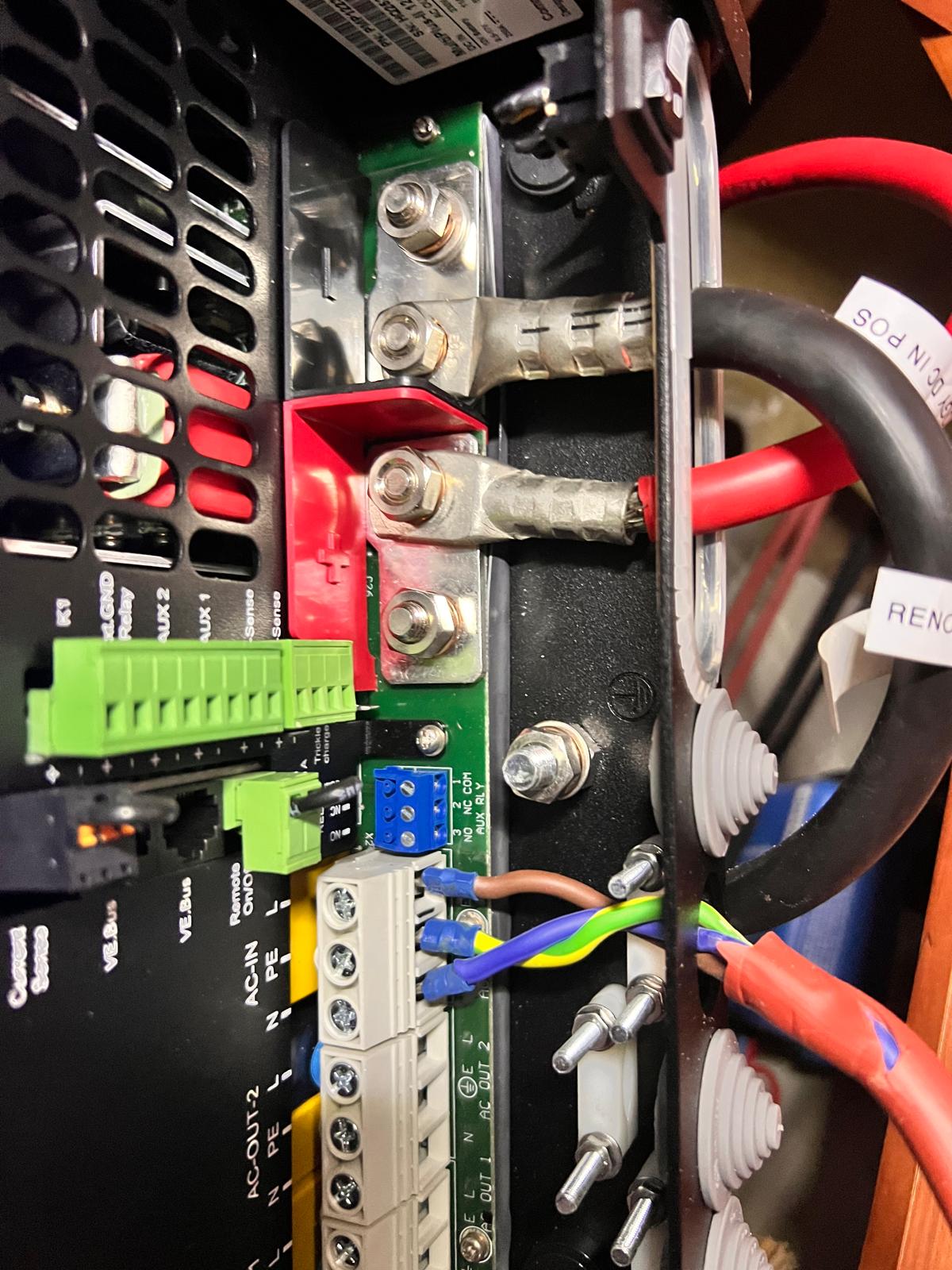
Meanwhile, back on the boat Peter continued to slave away at his “real” job, and whenever he could, he worked on the lithium battery upgrade. With the Air Cargo and More account promptly delivering anything that could be ordered and sent to its warehouse in Miami, he had four lithium batteries on their way to replace the aged and failing AGM batteries that came with the boat, as well as miles of cabling, and the fuses, busbars, inverters, and various mini-computers to run it all. Once that treasure arrived about mid-month, he was single-minded. By god, he was going to do the best job anybody had ever done on a lithium upgrade for a sailing catamaran.
And he did. The first phase of the project resulted in a new inverter that ran only 110 current, separate from the boat’s otherwise 220 wiring. This was specifically for three small appliances we had been pining for: a small Instant Pot for me, a replacement for the espresso maker that died the day after Brendall left in January, and an ice maker. Life on the boat, which had already improved due to new activity OFF the boat, was even sweeter.
Then he got really serious. Cutting fiberglass, even, and deciphering the nest of unlabeled wiring in the control panel. And the hours and hours of focused work on executing the mapped wiring, installing all the hardware, and testing connections continued for weeks, well into April. But in the end, we had a system that finally took advantage of the relatively large solar wattage we already had, stored it efficiently, and could be drawn down to only 20% capacity. It was a huge job, and he knocked it out of the park. The boat became a war zone in the meantime – we had to move piles of tools and parts every time we wanted to sit down, and had to take our offerings to the picnic area when we asked people to join us for dinner. But it was worth it.




Unfortunately, the general litany of failures and breakage and maintenance didn’t slow down during this period. Our freezer continued to randomly defrost itself, which meant every time we noticed its contents were softer than usual I had to transfer the “frozen” foods and truly perishable stuff from the fridge to the new dorm-size SetPower fridge/freezer combo that we kept cold literally just so we’d have back-up for the Vitrifigo. Peter finally caved and put a new, water-based cooling system for it in his amazon cart. Among other things we got news of the first delay on receiving the new diesel tank – we’ll have to wait another week! – and of course had no idea it would actually be over another month.
But Air Cargo and More deliveries meant we had to pop over to Panama City every 10 days or so to pick up packages from their office there. Which meant more exploring the city, and runs to nicer, larger supermarkets than those available in Colón.


On a whim one afternoon we even drove to the Parque Metropolitan, where we saw our first sloths. On their visit in January, Brendall saw one there at eye-level! We didn’t get that lucky, but we did see several, thanks entirely to the park rangers. The first was at the park entrance, and when I asked where we might see a sloth, he walked us into a nearby grove of trees where, high above, we could see two nestled into two different trees. Later on our hike I stopped another ranger who turned out to be in charge of fauna for the park. He walked a few yards and showed us another, much more accessible, sloth, and later, yet another with a baby. He also led us along a much less used trail from the Mirador back down to the parking lot and pointed out multiple birds along the way, including our first visible yellow-throated toucans. (My first guided birdwatching!) Needless to say, without all that help we would have seen none of it.


On another trip to the big city, we visited the Canal Museum, where we saw evidence of the appalling ways the US abused Panama, Panamanians, and the other Caribbean immigrant workers who built the Canal and then operated it over the course of 80+ years of American management. It’s surprising Panamanians even allow Americans into the country anymore. And it’s no wonder the Orange Toddler Devil lusts after control of the Canal – it brings in over $4 billion in revenue annually. Unfortunately, little of that trickles down to become new, or even improved schools or hospitals, or livable wages for the average Panamanian, but it definitely goes…somewhere. Like it would if the US controlled it again.
Later in the month we rode the ~10 miles over to Gatún locks to see what all the fuss was about. Gatún are the Atlantic locks, a series of three that, depending on your direction, bring vessels either up from the Caribbean Sea to the level of Gatún Lake, which runs for about 30 miles through the middle of the country to the Pacific locks, or down from lake level to the Caribbean. We’d tried getting to the observation deck a couple of weekends before, but since we hadn’t bought our tickets online before we got there, we couldn’t get in. Once in though, it was well worth the hot rides. There was a lengthy live audio commentary that described each ship as it came through and gave an astounding amount of historic and operational information. We learned a ton, and for the first time I started to understand why people get so excited about transiting.


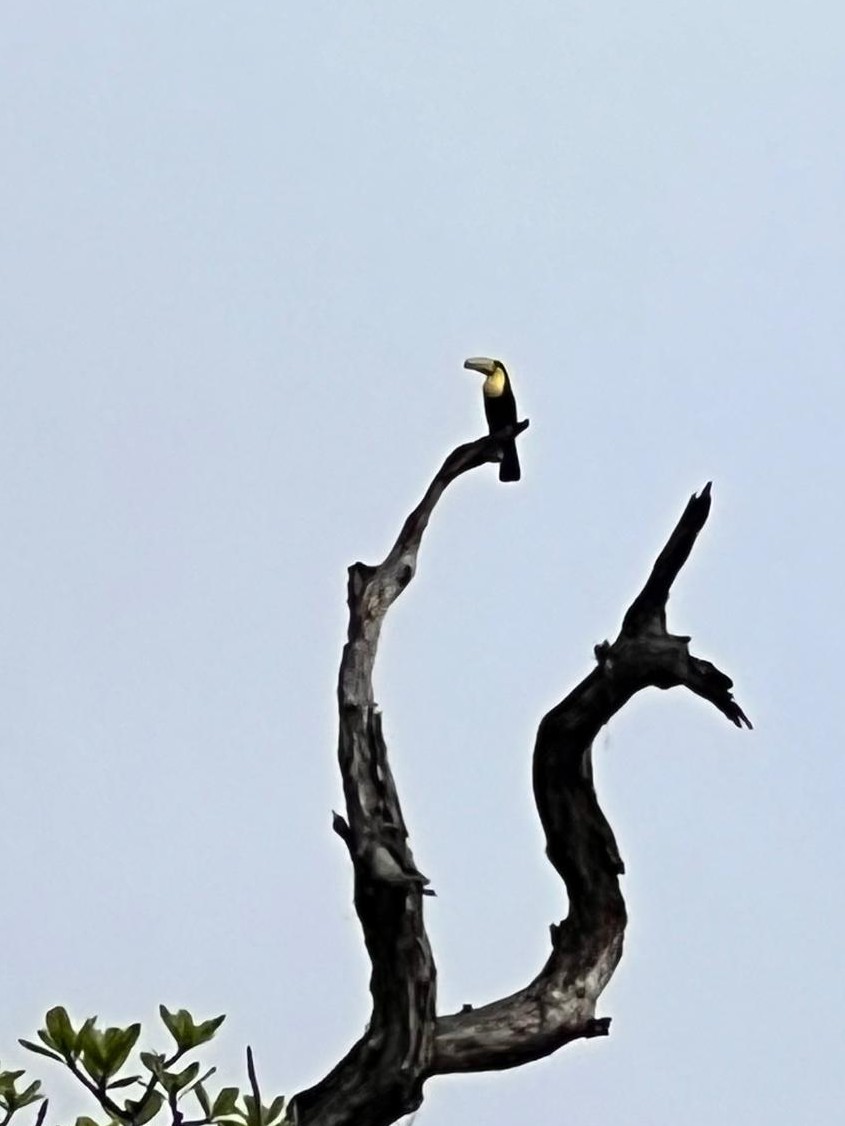
The ride also offered a buffet of toucans for drooling over – just the right kind of trees? More open vistas? Whatever, you could trip over all the yellow-throated toucans, and we saw so many keel-billed toucans (AKA Toucan Sam) along the way that we eventually didn’t even stop to watch them anymore. Those? Oh, just flying bananas. Nothing exciting.



It was about this time that Kendall sent me a link to a documentary that changed my birding forever. It’s called Listers: a Glimpse Into Extreme Birding. Two adorable 20-something stoner brothers spend a year driving a used minivan and chasing birds around the US after the elder gets high and randomly decides he wants to learn every bird in their parents’ tattered copy of the Golden field guide, Birds of North America. They take the logical (?!) next step of starting their very own Big Year. The Lower 48, one calendar year, count all the different species of birds can you see. It is hilarious, sweet, entertaining, and extremely informative. And they weren’t, in the end, dilettantes: they saw 579 different bird species and finished 23rd in the overall rankings that year. By watching Listers I learned that according to the American Birding Association, hearing a bird is a legitimate means of identifying a bird for purposes of recording it on one’s life list. As a result, my life list exploded. That was fun. It also left me with zero desire to do my own Big Year but even stronger intent to see as many as I could. Everywhere I go. In other words, I went from enthusiastic to very, very excited about birds.
By the time the end of March was closing in we were wise to the way things worked – or didn’t – at Shelter Bay and had already delayed our canal transit once. We were still waiting for our long stay visas, not to mention that new diesel tank and the installation of the new bowsprit and roller furler. But I was becoming expert at one pot Instant Pot meals, I’d ticked off some very satisfying new species of birds, and I ordered a spotting scope that would be delivered in a week. It was good to be alive and living in one of Panama’s national parks!
UP NEXT: April 2026 – Will we ever get out of Shelter Bay? (Hint: yes.)
Some local additions in February and March:


